
Potassium Chloride Market: Initial Findings Revealed by Emergency Meeting at Parliament
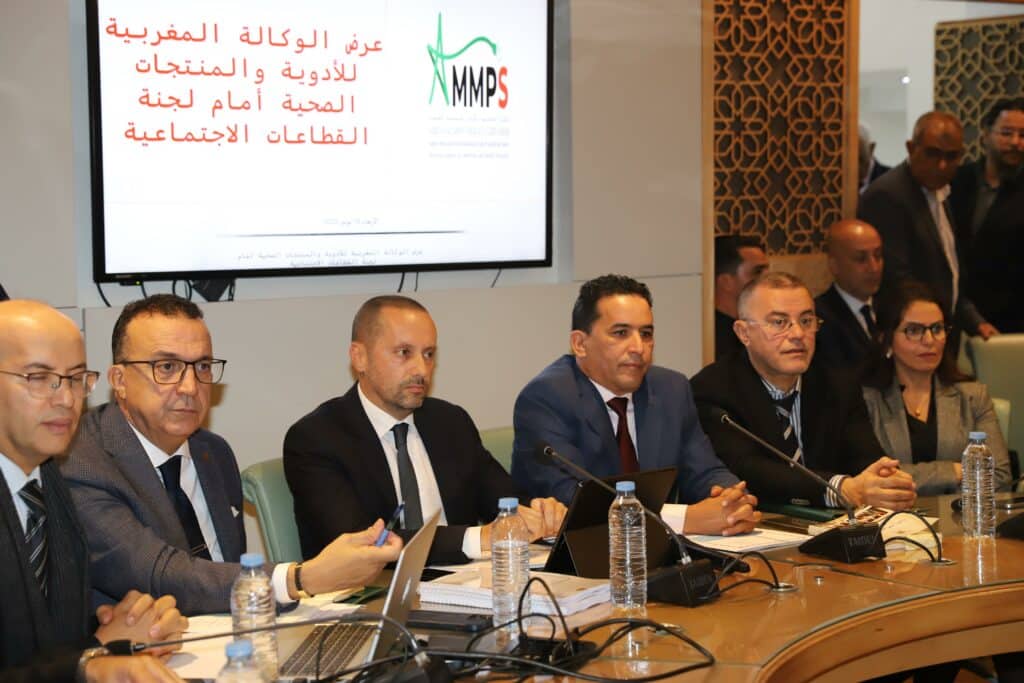
Following the parliamentary controversy over a potassium chloride acquisition deal, the government convened a meeting of the Social Sectors Commission on Wednesday, November 19. During the session, the Minister of Health and the director of the Moroccan Agency for Medicines and Health Products (AMMPS) delivered clarifications. Below are the key points of their interventions.
A controversy recently erupted in Parliament after MP Abdellah Bouanou's statements on November 13. He raised the possibility of a conflict-of-interest, even unlawful gain, regarding a potassium chloride acquisition deal.
"The potassium chloride procurement deal was awarded to a local company"
According to the information we obtained, the meeting of the Social Sectors Commission started with an intervention by the Minister of Health, Amine Tahraoui, who discussed the reason behind establishing AMMPS, drug policy, and other key aspects of the sector.
However, the most anticipated statement concerned the potassium chloride procurement deal, at the center of the controversy, as well as the acquisitions mentioned in the conflict-of-interest allegations.
Regarding the potassium market, the minister stated that it had been "awarded to a local producing company, through a rigorous tender process, and not to an importing company with a temporary authorization, as claimed in Parliament."
On conflict-of-interest suspicions, Amine Tahraoui clarified that "public contracts are never concluded with individuals, but with companies governed by commercial law." He added that developing a regulatory framework on conflicts of interest extends beyond the health sector alone and constitutes a collective legislative project that Parliament can structure as it deems appropriate. He assured that the administration "strictly applies the current laws, without selectivity or exceptions."
The minister also emphasized that all drug procurement operations "are carried out exclusively within the framework of the law and are subject to public procurement regulations as well as a decree precisely defining competition rules, participation conditions, application procedures, and the principles of transparency and equal opportunity."
He stressed that these contracts "are published in advance on the national public procurement portal and subject to strict oversight by the competent services of the Ministry of Finance, which rules out any personal interpretation or individual decision."
Finally, the minister underlined that his appearance before the commission this Wednesday "is not a formal exercise," but a clear signal that "the ministry is not hiding anything, and that the institutional debate within the commission is the natural and healthy framework to address all issues related to the drug dossier, whether it concerns public contracts, exceptional authorizations, or conflict of interest allegations."
Potassium Chloride Situation in Morocco
Professor Samir Ahid, the Director of AMMPS, outlined the potassium chloride situation in Morocco.
He first specified that "this drug is a vital product, especially in resuscitation and cardiology services." Yet its national availability has been "affected by several constraints linked to the establishment holding the marketing authorization (MA), including:
- suspension of injectable production due to reconstruction work on the dedicated unit;
- repeated exchanges of technical documents between the establishment and regulators throughout 2023 and 2024;
- preliminary inspection results in February 2025 revealing the absence of essential equipment (weighing center, sampling space, sterilization devices…).
Thus, "although a four-month safety stock had been established" – current law requires a minimum of three months – "the delay in operationalizing the new unit placed significant strain on the availability of this drug," emphasized Prof. Ahid.
Indeed, according to figures presented by the Drug Agency Director, Promopharm’s potassium chloride stock declined after a sharp rise in 2023 — from 1,618 units in Q1 to 20,483 units in Q4. The trend reversed in 2024, with volumes dropping to 950 units in Q4. By 2025, production was minimal, barely reaching 684 units in Q3.
By contrast, the potassium chloride stock supplied by Sothema has risen since the start of the year — from 1,345 units in Q1 to about 9,000 units in Q3. In the current fourth quarter, the figure stands at 3,139 units, though it may rise further by year’s end.

According to our own research, Promopharm company held an MA for injectable potassium chloride, available in boxes of 100 ampoules of 5 ml or 10 ml, which they are renewing.

Source: Moroccan Agency for Drugs and Health Products
Sothema, which currently holds the marketing authorization (MA) for this drug, secured a procurement contract worth 637,785 DH (lot 119), covering several medicines, including potassium chloride.
The tender was launched in January by the Drug and Health Products Procurement Directorate, under the Ministry of Health. The award PV facsimile was published on May 28, 2025 (see below).


Regarding potassium chloride consumption, it fell from 26,000 units in 2020 to 17,000 units in 2024, as illustrated in the graph below.

Resumption of New Unit Operations on May 28, 2025
According to the AMMPS Director, "after several visits, the operation of the new unit was authorized on May 28, 2025, with the establishment confirming progress on the final production steps to submit the MA update dossier to the Agency."
He noted that "this situation posed a national challenge, given the clinical importance of the drug and the risks of cardiac rhythm disturbances in case of shortage."
To address the period marked by a sharp decline in locally produced KCl stocks, the Agency implemented several measures:
- Technical support to the manufacturer: continuous evaluation of technical files during rehabilitation and deployment of inspection teams for close monitoring.
- Exceptional import authorizations: granted immediately after urgent review of company requests to maintain national stock levels.
- Acceleration of the MA update review: commitment to fast‑track any KCl update request to restart national production and stabilize the market.
- Ongoing coordination with the Procurement Directorate and healthcare establishments: stock monitoring, identification of urgent needs, and ensuring regular supply for emergency and resuscitation services.
Procedure for Exceptional Import Authorizations
Prof. Ahid also outlined the exceptional import authorization procedure for potassium chloride, established to safeguard national stock levels. According to him, it is based on:
- Law 17-04, particularly Article 7 on the import of drugs unavailable in Morocco;
- Law 10-22 establishing the Moroccan Agency for Drugs and Health Products and defining its missions in relation to drug availability and access;
- Internal Agency procedures and the request model in force since 2010.
This is an exceptional authorization, granted only in cases of proven need for a prescribed but unregistered drug in Morocco. Such cases include:
- Essential prescribed drugs unavailable on the Moroccan market.
- Emergency situations endangering a patient’s life.
- Requests from healthcare establishments or public tenders for an unregistered or out‑of‑stock drug.
- Total absence of therapeutic alternatives.
- Authorization linked to registration dossier samples.
- Drugs required within the scope of clinical trials.
The request is submitted by the manufacturing pharmaceutical company to the AMMPS, which then conducts a regulatory evaluation of the dossier (document compliance, validity of submitted files, and correspondence between requested and authorized quantities). It also carries out a pharmaceutical and scientific assessment (medical justification, absence of market alternatives, efficacy and safety review, and determination of urgency) before issuing its decision.
If granted, the authorization must specify:
- The name of the manufacturing pharmaceutical company.
- The drug’s name, pharmaceutical form, and composition.
- The authorized quantity.
- The designated customs entry point.
- Conditions of use.
- The validity period of the authorization.
- Confirmation that it is non‑renewable, unless solid justification is provided.
Exceptional Import Permits Surge in 2024, Then Drop in 2025
Regarding the number of exceptional import authorizations granted, the AMMPS Director noted "a significant increase during 2024, driven by international market pressure, particularly for biological drugs and their raw materials."
In 2025, their number fell sharply (compared to 2024), a decline attributed to proactive and rationalization measures implemented by the Agency, including:
- Improved monitoring of national drug stocks and enhanced coordination with pharmaceutical manufacturers.
- Mandatory reserve stock compliance for biological drugs, in line with the ministerial decree governing this reserve.
- Accelerated review of marketing authorizations (MAs), particularly for essential drugs, to reduce reliance on exceptional imports.
- Rigorous market surveillance mechanisms enabling early intervention before stock depletion.
- Stricter conditions for applying this procedure, ensuring its use only in cases of maximum therapeutic urgency.
Below is the evolution of exceptional import authorizations granted between 2024 and 2025:


à lire aussi

Article : Le Honduras décide de suspendre sa reconnaissance de la “rasd”
Le Honduras a annoncé la suspension de sa reconnaissance de la pseudo “rasd”, une décision officielle notifiée à Rabat et aux Nations Unies.
Article : Engrais. Sous pression à cause du blocus d’Ormuz, l’Inde se tourne massivement vers le Maroc
Entre le blocus d'Ormuz qui paralyse la production indienne, les restrictions chinoises à l'export et la crise agricole américaine, le marché mondial des engrais phosphatés traverse une période de turbulences sans précédent. Dans ce contexte, l'Inde, plus exposée que jamais à la désorganisation des flux, consolide sa dépendance au Maroc.

Article : Hôtellerie : Marriott nomme Denis Laus à la tête du futur resort de Taghazout Bay
Prévu pour l’été 2026 aux portes d’Agadir, l’établissement comptera 250 chambres avec vue sur l’océan, plusieurs espaces de restauration et 600 m² dédiés aux réunions et événements.

Article : La réforme des Groupements sanitaires territoriaux cherche ses preuves sur le terrain
Cinq directeurs généraux nommés par le Roi, des indicateurs présentés comme probants dans une région pilote, mais des syndicats qui contestent et des décrets toujours manquants. La réorganisation du système de santé public marocain autour de groupements sanitaires territoriaux s'accélère. Le plus dur reste à faire.

Article : Casablanca : le Mégarama dément tout projet de démolition sur le front de mer
Le Mégarama de Casablanca ne fait l’objet d’aucun projet de destruction, a indiqué à Médias24 une source autorisée au sein de l’établissement, réagissant à des informations relayées en ligne sur une possible démolition de plusieurs installations du littoral.

Article : SIAM 2026 : Maroc Telecom dévoile ses solutions Agritech pour une agriculture intelligente
Partenaire officiel du SIAM, Maroc Telecom présente ses dernières innovations Agritech fondées sur l’IoT, l’intelligence artificielle et la 5G, afin d’accompagner la transformation digitale du secteur agricole.