Autonomy: Resolution 2797 turns the issue into a national project
With the explicit recognition of autonomy under Moroccan sovereignty, Resolution 2797 shifts the focus of the issue. Morocco must now define a comprehensive status — regional institutions, competencies, finances, democratic model, and the integration of populations. A constitutional revision appears to be looming.
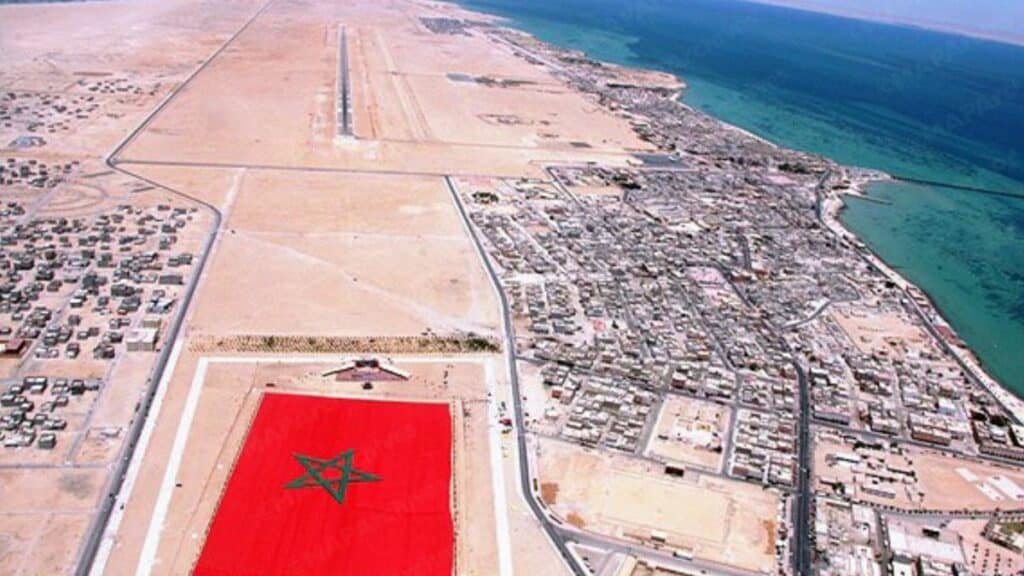
For Morocco, resolution 2797 on the Moroccan Sahara caps decades of diplomatic, political, and institutional efforts. It also brings one of the most complex challenges to the forefront: the overhaul and implementation of the autonomy plan, now regarded as the most realistic basis for a definitive resolution of the issue.
Adopted on October 31, the UN document for the first time presents"genuine autonomy under Moroccan sovereignty" as a central solution. In a speech delivered the same day, King Mohammed VI spoke of a "decisive turning point". He stated that there will now be "a before and an after October 31, 2025" and announced the updating and detailed formulation of the autonomy proposal.
The King involves political parties: an acknowledged political dynamic
On November 10, at the Royal Palace, the leaders of parties represented in Parliament were received by the King’s advisors and invited to submit written proposals on the new version of the autonomy plan. The RNI, the PJD, and the PPS were the first contributors.
For the parties involved, the exercise is delicate. It is no longer simply a matter of expressing general political support for the 2007 plan, but of actively participating in the detailed formulation of its updated version.
In practice, political parties are asked to express their positions on sensitive issues—regional institutions, distribution of powers, the economic and social model, links with advanced regionalization, and international law—without the precise content of their memorandums being made fully public at this stage.
Nonetheless, the exercise signals a clear evolution: the Sahara issue is now being treated as an internal legislative and institutional engineering project, rather than solely a matter of diplomacy and public communication.
A constitutional turning point ahead
A question quickly arises: can the autonomy plan be updated without changing the constitutional framework? Speaking at a conference on resolution 2797, Najib Ba Mohammed, a member of the Constitutional Court, stressed that the Sahara issue lies at the heart of a "national pact" built since independence around two constants: the territorial sovereignty and unity of the Moroccan nation-state on one hand, and a gradual process of democratic consolidation on the other.
In his analysis, he distinguishes two levels. First, a constitutional constant: the affirmation of the Kingdom's territorial sovereignty, unitary and indivisible, as reflected notably in Articles 1, 2, 5, and 42 of the Constitution, which define the King as the guarantor of the country's independence and territorial integrity. Second, a regional variable: advanced regionalization, enshrined in Article 1 and Title IX, which establishes the region as a political entity with its own powers.
According to him, resolution 2797 confirms the parallelism between these two dimensions: on one side, the affirmation of territorial sovereignty; on the other, the prospect of an autonomy status for the Sahara region. Hence a logical consequence: incorporating this status into the national legal framework requires a constitutional revision to provide a clear and lasting foundation.
This interpretation extends an idea already present in the 2007 version: the autonomy status was intended to be constitutionally recognized and hold a special place in the Kingdom's institutional architecture.
Reviving the 2007 plan: from blueprint to user manual
The plan submitted to the UN in April 2007 was presented as a compromise offer: an autonomous territory within a sovereign state. It outlined the main features of an Autonomous Region of the Sahara (ARS), with a regional parliament and a local government under a head of government representing the state in the region. This official would be appointed by the King but chosen from a regional majority to whom he is accountable.
The plan also envisaged courts established by the regional parliament, rendering decisions "in the name of the King," as well as a higher regional court with final jurisdiction over the interpretation of regional laws. The proposed status included its own taxation system and revenues from local taxes, natural resources, national solidarity funds, and regional heritage.
Simultaneously, the state was to retain its exclusive competencies: sovereignty, defense, foreign policy, currency, royal religious prerogatives. The plan also envisaged a regional consultation on external matters concerning the region and eventually a "free referendum" allowing local populations to decide on the autonomy status.
Originally designed to break a diplomatic deadlock, the 2007 text was intentionally broad. The announced update now marks a transition from blueprint to user manual: specifying institutions, defining constitutional coordination mechanisms, detailing the allocation of resources and powers, and making the plan comprehensible for both local populations and international partners.
Institutions, powers, finances: dense technical challenges
During the same conference, several speakers outlined the main internal challenges of the future text. The political organization will need to clarify the composition of the regional parliament, the electoral system, the status of the executive leader, his or her accountability to the assembly, and the role of the wali representing the King.
The distribution of powers will require a precise structure between the region's exclusive domains (local development, culture, planning, local services), shared competencies (social policies, environment, internal security at certain levels), and reserved state competencies (sovereignty, defense, diplomacy, currency, supreme justice, religious functions).
Additionally, the justice and security issue will involve coordination between regional courts and national tribunals, avenues of appeal to the Court of Cassation, and potential leeway for local police services under the coordination of the DGSN and the Royal Gendarmerie.
Lastly, the financial regime will have to define an autonomous budget, regional taxation, a share of natural resource revenues reserved for the Southern provinces, interregional solidarity mechanisms, and accountability tools.
All these technical challenges will determine the credibility of the future text, both as a development tool for the region and as a stability guarantee for the entire country.
International law and UN mechanism: Mohammed Zakaria Aboudahab's perspective
Also at the conference, international law professor Mohammed Zakaria Aboudahab offered a nuanced analysis of resolution 2797. He notes that Security Council resolutions continue to affirm the pursuit of a "durable and mutually acceptable" political solution ensuring "self-determination of the people of Western Sahara." However, he believes that an additional step is taken with the explicit recognition of autonomy under Moroccan sovereignty, without resolving all ambiguities.
He emphasizes the role of the preamble, which is an integral part of the resolution and holds the same normative value as the operative part: the mention of "Moroccan sovereignty" thus represents a substantial modification of the UN framework. He also notes that since the 2000s, the Security Council has exercised an almost normative function, thereby strengthening the de facto legality of Moroccan initiatives, especially regarding the development efforts in the Southern provinces.
He then discusses the institutional duality between the Security Council and the General Assembly, the ongoing issue of the referendum – the Moroccan plan itself providing for an approval referendum – and the debate on defining the "people of Western Sahara." Finally, he recalls that the territorialization of public policies and economic attractiveness could eventually influence UN doctrine in favor of internal autonomy.
His conclusion is measured: self-determination is not a fixed dogma but a flexible principle, with autonomy being one of the possible modalities.
History, archives, and identities: Jilali El Adnani's perspective
From a historical and archival perspective, historian Jilali El Adnani — also a speaker at the conference — situates the Moroccan identity of the Sahara across a long timeframe, marked, in his view, by a paradox: abundant documentary evidence that remains underutilized.
He notes that since 1975, Morocco has only mobilized a portion of the documentary evidence: a few bay‘a texts, treaties, maps. Extensive documentary collections on the negotiation and delimitation of the Algero-Moroccan borders are held in the French national archives, particularly in La Courneuve, and were originally compiled by the colonial administration. According to him, these archives provide crucial evidence for historically demonstrating the Moroccan identity of the Sahara.
His analysis traces the colonial origins of the conflict, the use of the concept of "confines" and the terra nullius fiction to justify territorial amputations, the integration into Algeria of territories historically linked to the Makhzen, Morocco's initial delay in mobilizing archives in 1975, and the documented continuity of the Sultan's authority in the Saharan region, extending to Taoudeni and beyond.
He calls for simultaneous work on borders, tribal and territorial identities, and the deconstruction of the terra nullius fiction, advocating, alongside the principle of border inviolability, a form of "inviolability of tribal and territorial identities."
In the context of the future autonomy plan, this approach is not only relevant to the past: it also shapes the definition of the populations concerned, their perceptions, and the mechanisms for the future reintegration of the Sahrawis.
Autonomy as internal self-determination
Legally, the analyses converge on a central idea: the autonomy envisioned by Morocco clearly falls under internal self-determination. It does not challenge the state's unity, the Kingdom's sovereignty, or the core prerogatives of the King.
However, it requires substantial democratic participation from local populations, effective competencies in development, culture, resource management, as well as guarantees of good governance and accountability.
It is on this dual requirement – internal coherence and external compatibility with international law – that the reception of the future plan will hinge, in Rabat, Laâyoune, Dakhla... and New York.
A plan to rewrite, a sequence to structure
By designating the autonomy plan as a central solution, resolution 2797 does not close the debate: it relocates it. Internally, it forces Morocco to clarify its project: Constitution, institutions, borders, archives, finances, social model, reconciliation and integration mechanisms. Externally, it refocuses the UN discussion on a political solution based on Moroccan sovereignty and internal self-determination.
From this, one certainty emerges: the text submitted to the UN cannot be a mere touch-up. It will be a complete rewrite, at the intersection of law, history, and politics.

à lire aussi
Article : Le Maroc et l’UE lancent un programme de 3,7 milliards de DH pour la politique nationale de l’eau
L’enveloppe combine 48 millions d’euros de subventions européennes et 300 millions d’euros de prêts concessionnels mobilisés auprès de la KfW, de la CDP italienne et de l’AFD, avec un appui ciblé sur les sécheresses, les inondations et la préservation des eaux souterraines.

Article : Mafoder lance une nouvelle filiale à Dakhla
Le groupe porté par Ibrahim Slaoui accélère son développement en s’implantant à Dakhla.
Article : Médicaments : derrière la réforme des AMM, la bataille des délais et des prix
Le Parlement a commencé à examiner l’une des réformes les plus sensibles du secteur pharmaceutique. Adopté lundi 1er juin 2026 en commission, le projet de loi 27.26 est présenté par le gouvernement comme une mise à niveau urgente, mais plusieurs parlementaires y voient une réponse encore trop partielle aux blocages du secteur. Au centre du débat, les AMM, ces autorisations techniques dont les retards peuvent peser directement sur la concurrence et le portefeuille des patients. Explications.

Article : Mineures de Kariat Ba Mohamed : la FLDF veut se constituer partie civile
L’organisation féministe réclame une prise en charge psychologique, sociale et médicale des victimes présumées et appelle à la création d’un comité d’avocats pour suivre la procédure ouverte après plusieurs interpellations.
Article : Bourse de Casablanca. Le MASI décroche de 1,8%, plombé par le repli des valeurs minières
La Bourse de Casablanca a terminé la séance du 2 juin 2026 dans le rouge. Le MASI a perdu 1,79%, pénalisé notamment par le repli des valeurs minières. La capitalisation boursière est revenue à 1.082,6 milliards de dirhams, tandis que les échanges ont atteint 334,3 MDH.

Article : Comarit : douze ans après la faillite, les biens de feu Abdelali Abdelmoula toujours dans le viseur
Plus de deux ans après le décès du fondateur de la Comarit, le juge-commissaire poursuit les opérations de réalisation de son patrimoine. Depuis mars 2026, plusieurs biens immobiliers situés à Tanger font l'objet de nouvelles expertises en vue de leur vente. Une énième séquence d'une procédure ouverte en 2014 et qui continue de mobiliser des créanciers représentant plusieurs centaines de millions de dirhams.