
Young footballers, one year on: has Evosport’s training program lived up to its promises? The CEO responds
More than a year after its launch by the Royal Moroccan Football Federation, the national youth training program — managed by Evosport, a subsidiary of UM6P — is beginning to make its mark on the Moroccan football scene. Médias24 takes stock with Ismail Lyoubi, Evosport’s general manager.
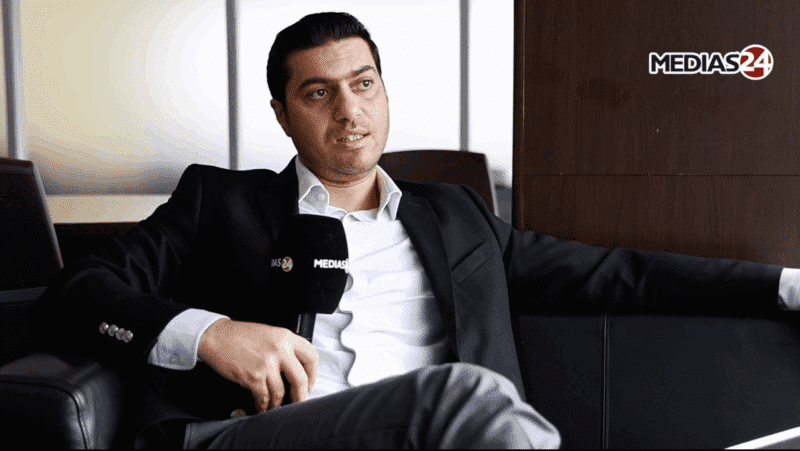
The first year of any project often lends itself more to trial and error than to outright success. Yet Morocco’s national youth talent development program is proving to be an exception.
Implemented by the Royal Moroccan Football Federation (FRMF) ahead of the 2024-2025 season and managed by Evosport, a subsidiary of the Mohammed VI Polytechnic University (UM6P), the initiative seeks to structure and professionalize the training of tomorrow's football stars.
In an interview with Médias24, Ismail Lyoubi explains that the structures now in place have laid solid foundations for the development of young players.
The training centers of affiliated clubs now benefit from consistent supervision, tailored pedagogical tools, and standardized methodologies, offering a more professional framework than before.
If this first year has helped consolidate the program’s foundations, the coming seasons will be decisive in delivering a real impact on the quality of trained players and their integration into professional teams.

- Médias24: In your view, what have been the main achievements of the youth talent development program during its first season?
Ismail Lyoubi: The first season has laid solid, structuring foundations. Several young talents have joined the first teams of professional clubs, confirming the relevance of the model in place.
One example that comes to mind is the young Yahya Iguiz, identified by the National Technical Directorate (DTN), who was selected and signed by his club at the end of last season.
In total, more than forty young talents have secured professional contracts, sending a strong signal to the entire ecosystem.
Beyond signings, we have observed an overall improvement: a better training environment, more structured pedagogical content, strengthened medical and nutritional support, and the professionalization of technical staff.
The progress made by coaches is also a key indicator. The program targets not only player development but also the advancement of coaching staff. Strengthening trainers’ skills is a major strategic lever to ensure the project’s long-term sustainability.
- Were there centers where implementing the program proved more challenging?
As in any national transformation project, the centers progressed at different speeds, depending on their initial maturity level and internal transitions specific to each club.
The important thing is that the deployment took place without major disruptions. The adjustments made during the season gradually brought all centers into alignment with common standards.
At the end of the season, an evaluation meeting was held with Mr. Fouzi Lekjaa, president of the FRMF, to review the achievements of the 2024/2025 season and to define the improvement action plan. On this occasion, collective commitment to the program was reaffirmed.
The message is clear. Youth development is a strategic investment for the future of clubs and Moroccan football.
Clubs have committed to strengthening investment in infrastructure
- Some academies still need to upgrade their infrastructure. How do you address this disparity?
Historical gaps exist between structures. One of the program's objectives is precisely to reduce these disparities by harmonizing standards.
The National Football Training Fund, established earlier, has supported the financing of all aspects related to the operation of training centers, in line with the highest standards.
Furthermore, clubs have committed to increasing investment in infrastructure, which will lay the foundations for professional working conditions.
Our approach is progressive: first establishing a strong common foundation, then guiding each club towards a level of excellence.
- After the first season, staff changes took place. What’s your reading of them?
Any structural transformation entails adjustments. The program relies on a demanding methodology, centered on performance and discipline.
The changes made are part of a normal adaptation process. The goal is to build teams fully aligned with the project's philosophy.
Long-term stability is ensured by clear processes, enhanced supervision, and regular monitoring.
- Is academic monitoring sufficient?
The dual athletic and academic project is a central pillar. During the first year, organizational constraints were identified.
In collaboration with the Ministry of National Education, Preschool, and Sports, adjustments were made to adapt schedules and ensure better coordination between sports and studies.
Educational monitoring has been strengthened with dedicated officials, so that academic success remains inseparable from athletic performance.
- Will the integration of U21 reduce the focus on younger age groups?
Their temporary inclusion follows a logic of continuity, designed to ensure smooth transitions without disruption.
The impact of this extension is under evaluation, but U13 to U16 remain the core priority, as these are the formative years for technical and mental development.
Our strategy continues to be anchored in the progressive and coherent nurturing of young talents.
We have enhanced medical, nutritional, and recovery aspects
- What new pedagogical and technological innovations have been introduced?
We have enhanced medical, nutritional, and recovery aspects. Centers now have performance monitoring tools and video analysis, allowing for individualized evaluation.
These tools are deployed in all centers, following a national harmonization approach.
The goal is to foster a true performance culture, based on scientific criteria and measurable results.
- Could Evosport expand to other disciplines?
Diversification will depend on institutional orientations. We have already launched a basketball program in partnership with the NBA.
Close to 2,000 young individuals currently benefit from the Junior NBA program, supervised by coaches trained to international standards.
In the medium term, the ambition is to elevate this partnership to more selective and elite formats. Any expansion to other disciplines will be considered based on resource availability and strategic coherence.
- What are the main objectives for 2025-2026 and beyond?
We continue our efforts to professionalize football and develop the Moroccan sports ecosystem.
The goal is to structure training, improve governance, and ensure the program's sustainability, while creating durable economic models.
We also aim to enhance the visibility of Moroccan talents internationally.
The ultimate goal is to make sports a driver of human and socio-economic development, both in football and other disciplines.

à lire aussi
Article : Can U17. Le Maroc défait par l’Égypte et finit hors du podium (0-2)
En dépit de leur bonne volonté, les Lionceaux de l’Atlas se sont fait piéger par l’Égypte lors du match pour la 3e place de la Coupe d’Afrique des nations U17, ce lundi 1er juin au Complexe Mohammed VI de Salé (0-2). Une nouvelle déception qui nourrira sans doute les ambitions d’Iliane Hadidi et ses coéquipiers lors du Mondial de la catégorie, en novembre prochain.

Article : Carburants : les prix à la pompe ont globalement suivi les cours internationaux (Conseil de la concurrence)
Entre le 1er mars et le 16 mai 2026, les prix des carburants au Maroc ont globalement évolué dans le même sens que les cotations internationales, selon une nouvelle analyse du Conseil de la concurrence.
Article : Gaz marocain : pourquoi Sound Energy quitte Tendrara au moment où le projet démarre enfin
Endettée et incapable de financer la phase II, la compagnie britannique cède ses dernières parts à Mana Energy alors que la production commerciale est attendue au T3-2026. Pour le Maroc, ce retrait pourrait accélérer le développement d’un projet stratégique pour la production locale de gaz et l’alimentation électrique via le gazoduc Maghreb-Europe.
Article : WAFIRA II : 3.000 travailleurs marocains attendus en Espagne et en France d’ici 2028
Financé à 95% par l’Union européenne, ce programme de migration circulaire cible notamment l’agriculture et le transport routier, avec un accompagnement des bénéficiaires avant leur départ et à leur retour, ainsi qu’un volet dédié à l’entrepreneuriat.
Article : Ponts de l'Aïd : l'économie marocaine y laisse quelques milliards, selon nos estimations
Les deux journées de congé exceptionnel accordées en 2026 à l’occasion de Aïd al-Fitr et Aïd al-Adha pourraient coûter entre 3,6 et 6 MMDH, soit près de 0,4% du PIB, selon nos calculs. Une perte loin d’être négligeable pour une économie où la production reste encore fortement dépendante du travail.
Article : Maroc-Madagascar : quelle heure, quelles chaînes
Dans le cadre de ses préparatifs intensifs pour la Coupe du monde de football 2026, la sélection nationale affronte son homologue de Madagascar lors d'une rencontre amicale ce mardi 2 juin 2026 au Stade Prince Moulay Abdellah de Rabat.