
Righa. This forgotten site may have been an ancient capital of Morocco
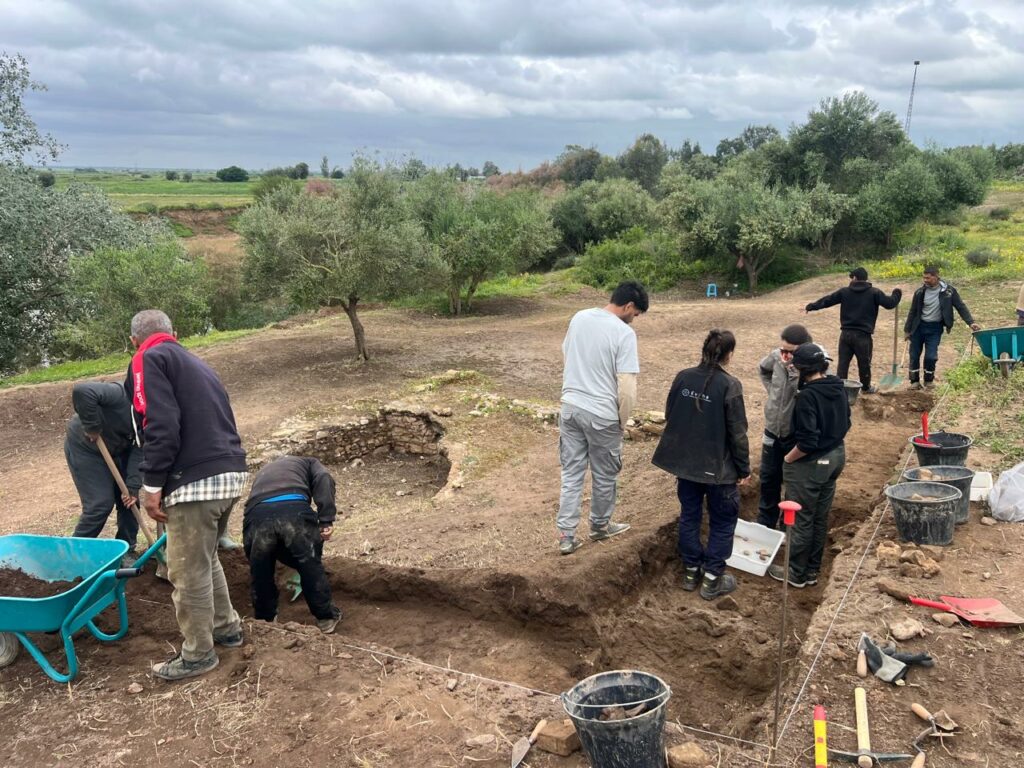
Located 8 kilometres north of Sidi Slimane, in the meanders of the Oued Beht, Righa has emerged as one of Morocco’s most promising archaeological sites. After twenty years of research, the Franco-Moroccan mission has further elevated the site’s importance: the discovery of Roman baths and previously unknown wine presses has strengthened the hypothesis that this ten-hectare city, long overshadowed by Volubilis, may have been one of the capitals of the Mauretanian kingdom.
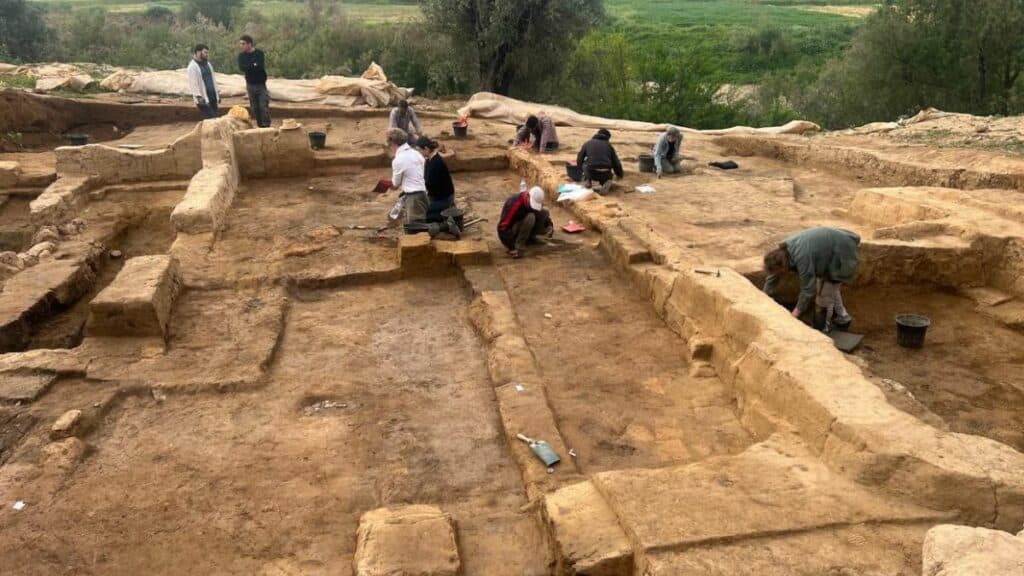
Archaeology is a science of patience, and Dr Mohamed Alaoui Kbiri, a professor at the National Institute of Archaeological Sciences and Heritage (INSAP), sets its pace. For two decades, he has been co-leading a major international mission bringing together INSAP in Rabat (under the Ministry of Youth, Culture and Communication) and Paul-Valéry University Montpellier 3, through the ASM laboratory (Archaeology of Mediterranean Societies).
The program also benefits from institutional support from Morocco’s Directorate of Cultural Heritage and the French Ministry for Europe and Foreign Affairs, through the French Embassy in Rabat. However, despite this backing, Dr Kbiri said in an interview with Médias24 that only "3–4% of the site’s 10 hectares" have been excavated.
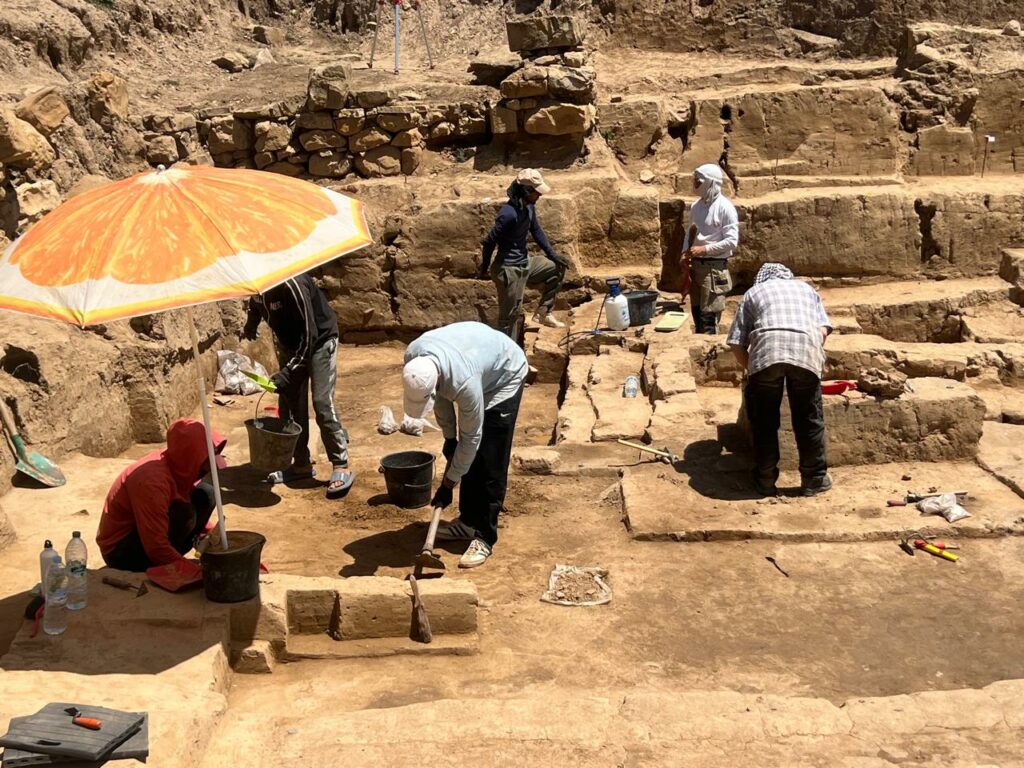
To understand the slow pace of research at Righa, the answer lies in Volubilis. In 1915, under the protectorate, excavations there were carried out by German prisoners under the supervision of French military officers. "It was crude clearance work," explains Dr Kbiri. "The objective was to reach the Roman pavement in order to ideologically justify the French occupation by presenting it as the heir to Rome."
In this rush, centuries of Islamic history, particularly Idrissid, were literally swept away, destroyed without any documentation. At Righa, the current mission takes a radically different approach. Each layer of occupation, whether Merinid (14th century) or Idrissid (9th century), is documented, analyzed and mapped before excavation continues down to the Roman and Mauretanian levels below.
Research has also become a complex multidisciplinary operation. In the field, the team is not limited to archaeologists. Geomorphologists study the relationship between the city and the river’s meanders, while specialists in fauna and flora analyze even the smallest organic remains.
West zone: five centuries of earthen architecture
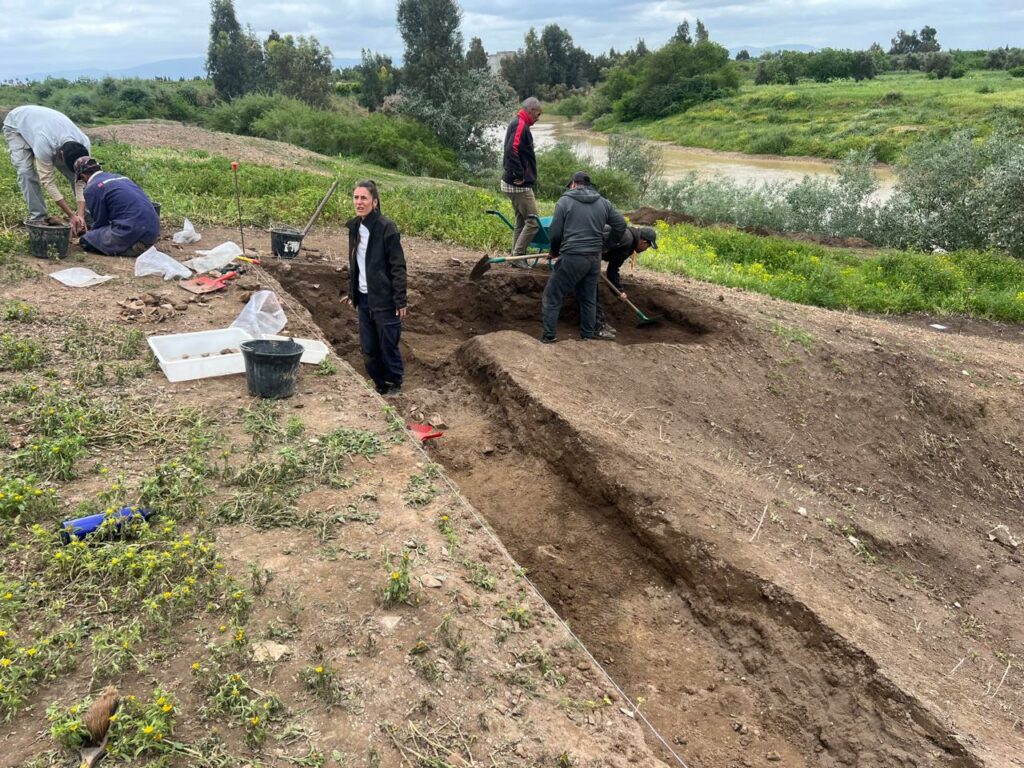
At Righa, research has focused on two key sectors. In the west, the "tell zone" has revealed a Mauretanian quarter built entirely of mudbrick, with a chronology stretching from the 5th century BC to the early 1st century AD.
The aim of the excavations here is to establish a "stratigraphy of habitation" to understand how local populations adapted their architectural layouts and lifestyles over a 500-year period, long before Roman standardization. Artefacts uncovered in these layers now allow archaeologists to date each phase of this pre-Roman occupation with precision.
East zone: a Roman domus and the earliest evidence of red wine in Morocco
The eastern part of the site tells a more complex story. Archaeologists have uncovered a large peristyle house (a courtyard surrounded by columns) dating from the Roman period. But the most striking feature is the adjacent winemaking facility.
Through detailed laboratory analyses and the discovery of grape seed residues, the team has demonstrated that these were presses used to produce red wine. While their mechanism resembles that of olive presses, identifying them as a wine production facility marks a first in Morocco. This industrial and residential quarter was ultimately destroyed, however. Evidence of a major fire in the 3rd century AD points to a sudden destruction that froze the structures in time.
2026 campaign: the discovery of public baths
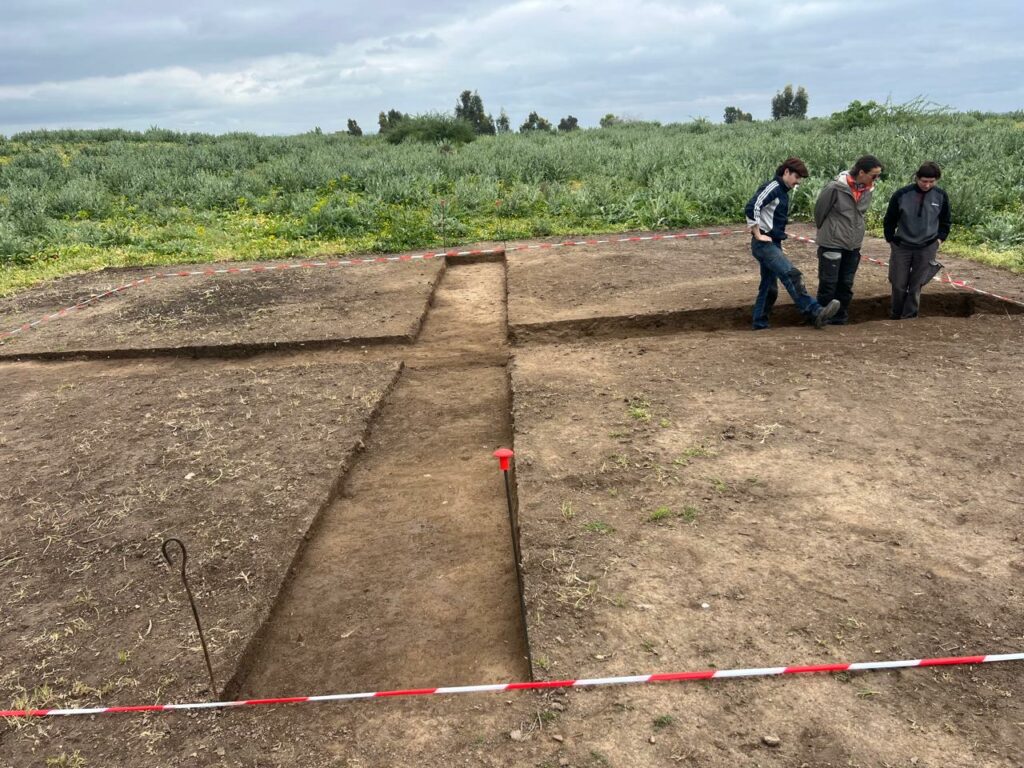
Since April 6, the excavation campaign has entered a new phase. Guided by geophysical surveys (subsurface imaging), researchers have opened a new trench in the central part of the site, near the Oued Beht.
It is here that a long-standing misinterpretation has been corrected. "Based on earlier studies, it was initially thought to be a water channel. But current excavations confirm that it is a Roman public bath complex," explains Dr Kbiri. The uncovering of these baths shows that Righa possessed high-status urban infrastructure comparable to that of Banasa and Thamusida, the two other major cities of the Gharb plain.
A “layered” city: from the Idrissids to the Merinids
Righa is not just an ancient site; it is a “layered” city in chronological terms. After the Roman withdrawal, it remained an active settlement. The Roman house was gradually covered by Islamic occupation layers. Archaeologists have identified structures (ovens, pits) dating back to the 9th century (Idrissid period) through ceramics and carbon-14 analysis. Even more strikingly, remains from the 14th century (Merinid period) have been found, demonstrating an urban continuity spanning nearly 2,000 years, up to the early modern period.

à lire aussi

Article : Le Honduras décide de suspendre sa reconnaissance de la “rasd”
Le Honduras a annoncé la suspension de sa reconnaissance de la pseudo “rasd”, une décision officielle notifiée à Rabat et aux Nations Unies.
Article : Engrais. Sous pression à cause du blocus d’Ormuz, l’Inde se tourne massivement vers le Maroc
Entre le blocus d'Ormuz qui paralyse la production indienne, les restrictions chinoises à l'export et la crise agricole américaine, le marché mondial des engrais phosphatés traverse une période de turbulences sans précédent. Dans ce contexte, l'Inde, plus exposée que jamais à la désorganisation des flux, consolide sa dépendance au Maroc.

Article : Hôtellerie : Marriott nomme Denis Laus à la tête du futur resort de Taghazout Bay
Prévu pour l’été 2026 aux portes d’Agadir, l’établissement comptera 250 chambres avec vue sur l’océan, plusieurs espaces de restauration et 600 m² dédiés aux réunions et événements.
Article : La réforme des Groupements sanitaires territoriaux cherche ses preuves sur le terrain
Cinq directeurs généraux nommés par le Roi, des indicateurs présentés comme probants dans une région pilote, mais des syndicats qui contestent et des décrets toujours manquants. La réorganisation du système de santé public marocain autour de groupements sanitaires territoriaux s'accélère. Le plus dur reste à faire.
Article : Casablanca : le Mégarama dément tout projet de démolition sur le front de mer
Le Mégarama de Casablanca ne fait l’objet d’aucun projet de destruction, a indiqué à Médias24 une source autorisée au sein de l’établissement, réagissant à des informations relayées en ligne sur une possible démolition de plusieurs installations du littoral.
Article : SIAM 2026 : Maroc Telecom dévoile ses solutions Agritech pour une agriculture intelligente
Partenaire officiel du SIAM, Maroc Telecom présente ses dernières innovations Agritech fondées sur l’IoT, l’intelligence artificielle et la 5G, afin d’accompagner la transformation digitale du secteur agricole.