Moroccan Sahara. Mapping Foreign Investments
Driven by a pragmatic and assertive Moroccan diplomacy, U.S. recognition marked a turning point in the Moroccan Sahara dossier. It helped broaden international support for Morocco and gradually reshape perceptions of the territory. This shift has paved the way for new investment projects in the Southern Provinces.

Key points:
- Since the U.S. recognition of December 2020, the economic perception of the Moroccan Sahara has evolved.
- Several major projects led by foreign investors are now associated with the Southern Provinces.
- Exploratory missions, along with growing interest from foreign players, point to a broader economic view of the region.
- Morocco’s public investment effort remains the foundation of this transformation. Infrastructure, notably the Dakhla Atlantique port, is strengthening the Sahara’s positioning.
- Médias24 lists the main foreign investments announced or planned in the Southern Provinces.
-oOo-
Details:
The U.S. recognition of December 2020 has contributed to changing the perception of the Moroccan Sahara among investors. This evolution is also reflected in recent investment momentum.
Since 2021, several financing arrangements, industrial projects and investment announcements have been associated with the Southern Provinces.
Médias24 has compiled, by issuing country or partner, the main investment announcements related to the region.
Foreign investments associated with the Sahara
The list below is not exhaustive. Similarly, the investments and investment projects mentioned are not all already realized.
Here is the list of investments and projects identified:
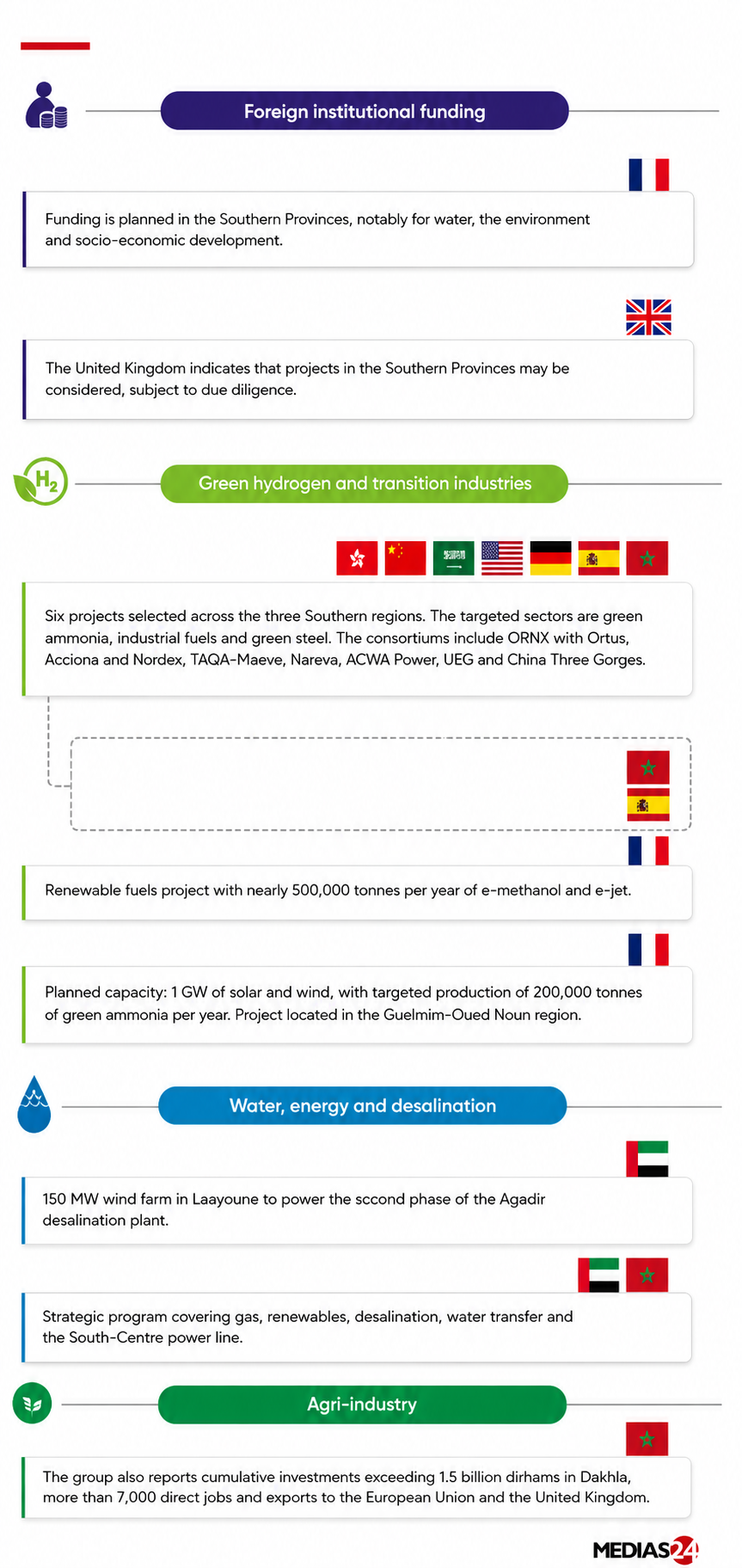
The French Development Agency (AFD) plans to invest €150 million in the Southern Provinces. This envelope is intended to support local development momentum.
UK Export Finance, the British export credit agency, is making up to £5 billion available to support new business in Morocco. The UK-Morocco joint communiqué specifies that projects located in the Moroccan Sahara can be reviewed by UKEF.
Regarding Morocco’s Green Hydrogen Offer, the announced amount reaches MAD 319 billion for six projects in the three Southern regions. The projects involve green ammonia, industrial fuels and green steel. The consortiums include ORNX, with Ortus in the United States, Acciona in Spain and Nordex in Germany, as well as TAQA-Moeve, Nareva, ACWA Power, UEG and China Three Gorges.
The Janassim project, led by MGH Energy, a French player in renewable fuels, is announced at around MAD 50 billion in Dakhla-Oued Eddahab. It aims for nearly 500,000 tonnes per year of renewable fuels, notably e-methanol and e-jet.
The Chbika project is led by TE H2, a French joint venture between TotalEnergies and Eren, with two Danish partners, Copenhagen Infrastructure Partners and A.P. Møller Capital. The investment amount has not yet been disclosed. The project plans 1 GW of onshore solar and wind capacity in the Guelmim-Oued Noun region, in order to produce green hydrogen and then 200,000 tonnes of green ammonia per year for the European market.
AMEA Power, a UAE group, is involved in a water-energy project around desalination in Agadir and wind power in Laâyoune. The announced amount exceeds €250 million for the expansion of the desalination plant and the associated wind farm. The component directly linked to the Southern Provinces comes from the more than 150 MW wind farm in Laâyoune, which is intended to supply the expansion of the Agadir plant.
The partnership between TAQA Morocco, Nareva, ONEE and the Mohammed VI Fund represents around MAD 130 billion by 2030. The partners are Moroccan, with an Emirati component through TAQA. The program covers several strategic water and energy infrastructure projects.
Azura, a Franco-Moroccan group active in agri-industry, plans to inject an additional MAD 200 million by the end of 2025, in addition to cumulative investments already exceeding MAD 1.5 billion in the region.
Furthermore, Hungarian companies have expressed interest in Dakhla-Oued Eddahab, particularly in tourism, agriculture, fisheries and renewable energy. Polish companies have also explored Laâyoune and Dakhla, while the LUG group opened a branch in Laâyoune.
At this stage, these initiatives are more a matter of economic exploration than confirmed investments, but they support the observation: the Southern Provinces are now seen as a territory of economic opportunities by a growing number of foreign players.
This evolution is also explained by Morocco’s public investment effort. The infrastructure built in the Southern Provinces has changed the perception of the territory.
The Dakhla Atlantique port is the most strategic example. Its upcoming commissioning is expected to strengthen Dakhla’s position, and more broadly that of the Moroccan Sahara, as a logistics and industrial platform.

à lire aussi
Article : OFPPT : 65 nouvelles filières, 3 nouvelles Cités des métiers et 6,3 milliards de DH pour le plan d'action 2026
Nouvelles filières liées aux métiers émergents, achèvement des Cités des métiers et des compétences, développement du secteur aéronautique et renforcement de la cybersécurité... Le plan d’action 2026 de l’OFPPT fixe les grandes priorités de l’Office, pour un budget estimé à 6,31 milliards de DH.
Article : Maroc-Éthiopie (CAN U17) : quelle heure, quelles chaînes
Après une entrée en matière décevante face à la Tunisie, la sélection nationale marocaine U17 affronte l’Éthiopie, ce samedi 16 mai 2026 au Complexe Mohammed VI de football, dans un match déjà important pour la qualification.
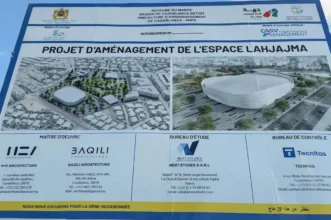
Article : À Casablanca, le projet d’aménagement de la zone Lahjajma prend forme
Le projet d’aménagement de la zone Lahjajma comprend un terrain de sport couvert, une piscine couverte, une mosquée, ainsi qu’un marché couvert. Il prévoit également des équipements socioculturels, un parc et un espace vert, une place publique piétonne et un parking souterrain.
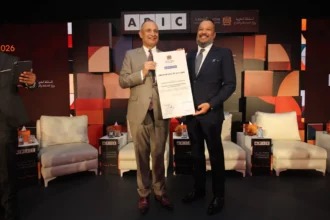
Article : Céramique : l’APIC et le ministère de l’Industrie scellent une feuille de route 2026-2030
Signé à Casablanca lors de la première Journée nationale du secteur, l’accord vise à structurer la filière autour de la compétitivité, de l’efficacité énergétique, de l’innovation, de la montée en gamme et de la valorisation du “made in Morocco”.
Article : Commerce : une mission d’entreprises brésiliennes attendue au Maroc en juin 2026
La délégation, portée par la chambre de commerce arabo-brésilienne, fera étape à Rabat, Casablanca et Tanger, avec des rencontres institutionnelles, des rendez-vous B2B et une visite du port Tanger Med, dans un contexte d’échanges bilatéraux de 2,78 milliards de dollars en 2025.

Article : Automobile : le chinois Lingyun confirme le rôle du Maroc dans son déploiement international
Le groupe coté à Shanghai indique structurer ses activités hors de Chine autour de quatre zones, avec l’Allemagne et le Royaume comme pivots européens, afin d’accompagner ses lignes de pièces métalliques de structure et de conduites pour véhicules.