
Celebrating 75 Years of the United Nations
NEW YORK – As the United Nations marks its 75th anniversary, the world is in turmoil. The COVID-19 pandemic has resulted in nearly one million deaths so far and is nowhere close to being contained. The world economy is experiencing its worst recession since the Great Depression of the 1930s. Extraordinarily severe natural disasters, from floods to wildfires, are wreaking havoc on many countries. And the United States – long the world’s
leading proponent of multilateral cooperation – is rejecting and even antagonizing its friends and partners. The UN, and the belief in global solidarity that it embodies, have never been more essential.
The UN was built on three pillars. The first was peace. Its overriding aim was to succeed where its ill-fated predecessor, the League of Nations, had failed: avoid another world war. Established at the dawn of the Cold War, the UN became an essential forum for dialogue; since the fall of the Berlin Wall, it has played an important peace-building role in several countries.
The second pillar was human rights. In 1948, the UN General Assembly approved the Universal Declaration of Human Rights, which set out for the first time the fundamental rights – including civil, political, economic, social, and cultural rights – that all countries were obliged to uphold. Though the mechanisms the UN created to protect those rights have a mixed record, there is no doubt that the UDHR was a major milestone in making human rights an international priority.
The third pillar was development. According to the UN Charter, member countries are committed to “promote social progress and better standards of life in larger freedom.” The development agenda also encompassed the objective of reducing inequalities among countries, including through decolonization, which was also part of the post-World War II agenda.
To promote development, the UN created five regional commissions between 1947 and 1973, and supported developing countries with technical assistance, an activity that became institutionalized with the creation of the United Nations Development Programme (UNDP) in 1965. Moreover, in January 1961, the UN resolved that the 1960s would be its first “decade of development” – an initiative promoted by US President John F. Kennedy.
As an essential element of that agenda, the UN sought to support the creation of a fairer global economic system that would enable shared progress. As the decolonization process progressed, and a growing number of developing countries became UN members, the organization became the world’s foremost platform for discussing and implementing changes to the world economic order. The UN Conference on Trade and Development – created in 1964 – supported this process. Among its achievements was the introduction in the global trading system of “special and differential treatment” for developing countries.
The UN later expanded its focus to ensuring that developing countries can access the financing they need. The 2002 International Conference on Financing for Development – held in Monterrey, Mexico, and supported by the International Monetary Fund and the World Bank – was a milestone in this regard. Two more such conferences have since been held – in Doha, Qatar, in 2008, and in Addis Ababa, Ethiopia, in 2015 – to advance the agenda set out in 2002. Similarly, the UN has played a central role in debates on financing developing countries’ responses to the COVID-19 crisis.
But economic progress represents only part of the development equation. This recognition first emerged in 1978, when the International Labor Organization (ILO) published a study that defined the “basic needs” of people in developing countries: food, clothing, housing, education, and public transportation. This paved the way for the concept of “human development” that the UNDP later operationalized in its Human Development Reports.
After the fall of the Berlin Wall, a series of global conferences broadened the human-development agenda further. For example, the Fourth World Conference on Women, held in 1995, produced the Beijing Declaration and Platform for Action, the most progressive blueprint ever for advancing women’s rights. In January 2011, a designated entity – UN Women – was established to advance these objectives.
UN Women is just the latest addition to a dense network of specialized agencies reflecting the UN’s commitment to social development. These include UNESCO (the UN’s educational and cultural agency), the World Health Organization (WHO), the UN Children’s Fund (UNICEF), and the Food and Agriculture Organization (FAO). The ILO was also integrated into the UN system. Yet another essential node of this network is the UN Environment Programme, established at the 1972 UN Conference on the Human Environment in Stockholm. Since then, a series of UN-sponsored conferences – from the 1992 Conference on Environment and Development in Rio de Janeiro to the 2015 Climate Change Conference (COP 21) in Paris – have produced landmark agreements to combat climate change, protect biodiversity, and stop desertification. They represent our best hope for keeping our planet habitable. At a moment when the effects of climate change are becoming increasingly apparent, the importance of such efforts cannot be overstated.
In fact, it is the UN that has championed the broad concept of “sustainable development,” which recognizes that healthy, long-term development must account for economic, social and environmental issues. In 2000, the UN led the way in establishing the Millennium Development Goals, followed in 2015 by the Sustainable Development Goals, which are today the world’s main framework for advancing this agenda.
The UN remains a highly influential institution. More important, it embodies the best of humanity – the belief that all people deserve basic dignity, and that working together is the only way to deliver it. Seventy-five years after its birth, the world – beginning with the US – must revive that belief, and recommit to the multilateralism that it embodies.
à lire aussi

Article : Carreaux céramiques : ouverture d'une enquête antidumping sur les importations indiennes
Le Maroc ouvre une enquête antidumping sur les importations de carreaux céramiques en provenance d’Inde. À l’origine de cette procédure, les industriels marocains du secteur dénoncent des pratiques de dumping et une hausse soutenue des importations indiennes, jugées menaçantes pour la production nationale.
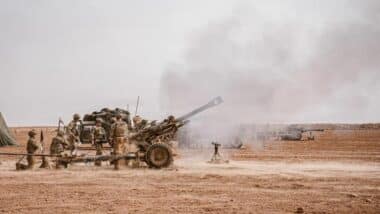
Article : African Lion 2026 : une édition placée sous le signe de l’innovation technologique et de la maturité stratégique
L’édition 2026 de l’exercice militaire African Lion, le plus grand rassemblement de forces armées sur le continent, se déroule du 20 avril au 8 mai. Entre l’utilisation de nouvelles technologies de pointe et une intégration accrue entre les forces marocaines et américaines, cette cuvée marque un tournant qualitatif, malgré une certaine discrétion médiatique dictée par le contexte international.
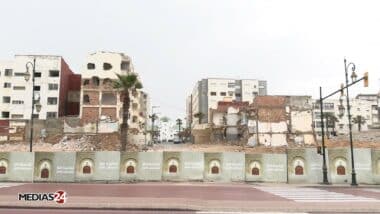
Article : Quartier Océan à Rabat: démolitions en chaîne et incertitudes sur l’avenir du quartier
Les opérations de démolition se poursuivent dans le quartier de l’Océan à Rabat, où le paysage urbain évolue rapidement sous l’effet d’un chantier de requalification d’ampleur. Entre annonces jugées tardives, incertitudes sur le périmètre concerné et contestation des indemnisations, les témoignages recueillis sur place reflètent une situation confuse.
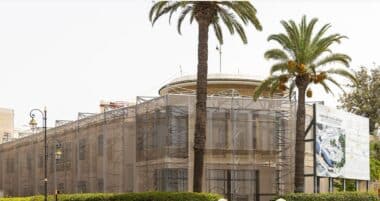
Article : Le musée du continent africain devrait ouvrir à la fin de 2027 (Mehdi Qotbi)
Porté par la Fondation nationale des musées, le futur musée du continent africain a franchi une étape décisive. Le président Mehdi Qotbi nous annonce que le plus grand complexe muséal d'Afrique, dont les travaux de gros œuvre ont dépassé 85%, entre dans sa phase finale avant une ouverture au public lors du dernier trimestre 2027.

Article : Le jardinier marocain de Jany Le Pen expulsé vers le Maroc pour séjour irrégulier
Selon une information révélée par Le Parisien, Hatim B., un Marocain de 32 ans qui effectuait des travaux de jardinage chez Jany Le Pen, veuve de Jean-Marie Le Pen, a été expulsé le jeudi 23 avril vers le Maroc. En situation irrégulière en France depuis 2017, il faisait l’objet d’une mesure d’éloignement décidée par le préfet des Hauts-de-Seine.

Article : Maghreb : une visite américaine dans un contexte de pression croissante sur l’Algérie
Annoncée par le département d’État, la tournée de Christopher Landau, du 27 avril au 1er mai, intervient dans un contexte marqué par l’implication croissante de Washington dans le suivi du dossier du Sahara et de ses prolongements onusiens.