
Reflections on Achieving the Global Education Goals
NEW YORK – Throughout my life, I have seen the power of education. I have witnessed how quality education for all can support the creation of dynamic economies and help to sustain peace, prosperity, and stability. I have also observed how education instills in individuals, no matter their circumstances, a strong sense of self, as well as confidence in their place in the world and their future prospects. But I have also seen what happens when young people and their communities are robbed of education – and of the optimism it engenders. In my country, Nigeria, the militant Islamist group Boko Haram purposely removes young people, especially young girls, from education to engineer a lost generation. The consequences are manifold: loss of dignity, exclusion, declining health, poverty and stagnating economic growth, and the denial of rights. We know that each additional year of schooling raises average annual GDP growth by 0.37%, while increasing an individual’s earnings by up to 10%. If every girl worldwide received 12 years of quality education, lifetime earnings for women could double, reaching $30 trillion. And if all girls and boys completed secondary education, an estimated 420 million people could be lifted out of poverty. According to a 2018 World Bank report, universal secondary education could even eliminate child marriage. In today’s deeply interconnected world, the benefits of strong and inclusive education systems extend even further. Education gives people the knowledge they need to recognize the importance of safeguarding the planet’s finite resources, appreciate diversity and resist intolerance, and act as informed global citizens. The United Nations Millennium Development Goals, created in 2000 to guide global development over the subsequent 15 years, gave new impetus to efforts to ensure education for all. From 2000 to 2015, primary-school enrolment in the developing world rose from 83% to 91%, reducing the number of out-of-school primary-school-age children from 100 million to 57 million. Moreover, from 1990 to 2015, the global literacy rate among people aged 15 to 24 increased from 83% to 91%, with the gap between men and women declining substantially. But much remains to be done. Globally, at least 263 million children were out of school in 2016. This includes half of all children with disabilities in developing countries. Furthermore, half of all children of preschool-age – the most crucial years for their cognitive development – are not enrolled in early-childhood education. The situation deteriorates further in conflict zones, where girls are almost two and a half times as likely to be out of school as their peers in stable countries. And this does not cover the estimated 617 million children and adolescents of primary and lower-secondary-school age – 58% of that age group – who are not achieving minimum proficiency in reading and mathematics. To help close these gaps, the successor to the MDGs, the Sustainable Development Goals, also emphasizes education. SDG4 commits the world to ensure inclusive and equitable quality education and promote lifelong learning opportunities for all – essentially to harness the power of education to unlock every person’s potential. Despite the scale of the challenge and the diverse barriers that can restrict and disrupt learning, we know what an effective strategy would entail. First, to be a true force for change, education itself must be transformed in response to the realities of accelerating globalization, climate change and labor market shifts. While advanced technologies – such as artificial intelligence, cloud computing, and blockchain – raise new challenges, they may be able to play a role in improving educational outcomes. Digital skills must be part of any curriculum, and new alliances with the tech sector – which can provide valuable insights into these topics – should be actively pursued. Second, an inclusive and lifelong approach, focused on reaching the most marginalized and vulnerable populations, is essential. As UNICEF’s Innocenti Report Card 15 shows, this does not mean sacrificing high standards. In fact, as the report points out, children of all backgrounds tend to do better when they are in a more socially integrated school environment. Such an inclusive approach will require sharing best practices and investing in what is proven to work. Meanwhile, development partners must provide long-term support that emphasizes capacity-building and institutions, and balances humanitarian, economic, and security imperatives. For education systems and services to be truly inclusive, however, they must also leave no one behind, such as refugees. UNESCO’s latest Global Monitoring Report estimates that refugees have missed 1.5 billion school days since 2016. While eight of the top ten hosting countries, including several low- and middle-income countries, have shouldered considerable costs despite the strain on education systems to ensure that refugees attend school alongside nationals, most countries either exclude refugees from national education systems or assign them to separate facilities. This entrenches disadvantage and hampers social integration. The two landmark global compacts on migration and refugees adopted by UN member states last December point the way toward addressing this challenge. Achieving the needed educational transformation will require far more financing than is currently on offer. As it stands, the global annual funding gap for education amounts to nearly $40 billion. Closing this gap will require not just increased domestic financing, but also a renewed commitment from international donors. Everyone has the right to an education. Upholding this right – and achieving SDG4 – will require well-designed strategies, coupled with a prolonged commitment to implementation and effective cooperation among all relevant stakeholders. The UN and its agencies will continue to support such actions, as we strive to ensure that no one is left behind. © Project Syndicate 1995–2019
à lire aussi
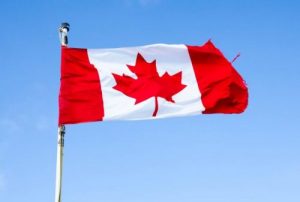
Article : Le Canada reconnaît le plan d’autonomie proposé par le Maroc comme base pour une solution du différend régional autour du Sahara marocain
Le Canada "reconnaît le plan d’autonomie" proposé par le Maroc "comme base pour une solution mutuellement acceptable" au différend régional autour du Sahara marocain.

Article : Secteur privé. Le grand manque à gagner pour l’économie marocaine (Banque mondiale)
La Banque mondiale accorde une large place au secteur privé dans son rapport croissance-emploi sur le Maroc. Si le Royaume a su préserver une stabilité macroéconomique et maintenir un niveau d’investissement élevé sur les deux dernières décennies, cette dynamique ne se traduit pas suffisamment en productivité, en emploi formel durable et en revenus privés.
Article : Chatbot Médias24. La Banque mondiale publie son diagnostic du secteur privé au Maroc
Le rapport "Diagnostic-pays du secteur privé", élaboré par le Groupe de la Banque mondiale et publié ce mardi 28 avril 2026, vise à identifier les opportunités d’investissement privé inexploitées ainsi que les obstacles connexes. Il analyse les moyens de stimuler l'investissement privé au Maroc pour favoriser une croissance inclusive et créer des emplois de meilleure qualité. Explorez le document via ce chatbot.

Article : Hydrocarbures au Maroc. Et si l'on cherchait au mauvais endroit ?
Et si le Maroc était à l'aube de son "moment norvégien" ? Une étude scientifique récente plaide pour un changement de paradigme des cibles d’exploration offshore au Maroc et révèle que les ressources les plus importantes pourraient se cacher dans des cibles négligées jusqu'alors. Un pari à tenter ?
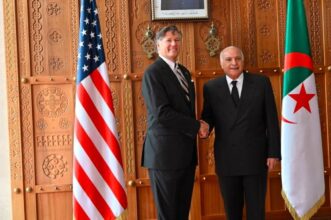
Article : Christopher Landau à Alger : le Sahara marocain au cœur des échanges, sur fond de soutien croissant à l’autonomie
La visite du secrétaire d’État adjoint américain Christopher Landau à Alger intervient dans un contexte de consolidation des soutiens internationaux à la souveraineté du Maroc sur le Sahara, alors que Washington maintient sa position en faveur de l’initiative marocaine d’autonomie.
Article : Enseignement supérieur. La promesse d’une hausse de 1.000 DH nets remise en cause ?
La revalorisation salariale de 1.000 DH annoncée dans l’enseignement supérieur suscite de vives tensions avec les syndicats. Les modalités de calcul de cette augmentation sont jugées inéquitables et engendrent des disparités importantes entre les fonctionnaires.