

Mohamed A. El-Erian
Chief economic adviser at AllianzThe US Recovery’s Promising Moment
LAGUNA BEACH – President Joe Biden’s announcement that the US will have enough COVID-19 vaccines for every American by the end of May has contributed to a rising tide of optimism about the country’s economic prospects this year. This, and other good reasons to be hopeful about the economy, opens a valuable window for the administration to address the complex policy challenges it is facing in 2021 and beyond.
On the positive side, Biden’s vaccine announcement came on the heels of economic data that beat the consensus expectations of economists and market analysts. The latest figures show that personal income grew by 10% between December and January, that manufacturing expanded by nearly ten percentage points year on year, and that 379,000 jobs were created in February (well above the consensus expectation of some 200,000). In keeping with with these trends, the Federal Reserve Bank of Atlanta’s much-watched (and notably volatile) GDPNow model now estimates annualized first-quarter GDP growth to have reached around 10%.
This notable economic pickup is being driven by the release of pent-up demand – both in the US and internationally – and by the fiscal stimulus package that Congress approved at the end of last year. Moreover, these public- and private-sector effects are both likely to intensify as vaccines continue to be administered more quickly, and as the Biden administration progresses with its two-stage rescue and recovery effort.
But three main challenges will need to be addressed quickly. First, progress toward increased vaccine availability is necessary but insufficient. To end the public-health crisis, stepped-up vaccine production will need to be accompanied by a high rate of vaccine acceptance, vigilant efforts to prevent a resurgence of infections, and ongoing resilience in the face of new variants of the virus.
Second, with competing signals from different labor-market data, the pickup in economic activity has yet to be accompanied by a sustained, strong rebound in employment. Moreover, the labor-force participation rate needs to recover more strongly.
The third challenge is highlighted by the debate among economists about whether the Biden administration’s proposed $1.9 trillion American Rescue Plan will lead to economic overheating. The fear is that the additional stimulus will trigger a spike in inflation and market interest rates, which could derail a sustained recovery and heighten the risk of financial-market accidents. Indeed, in recent weeks, there have already been two near-accidents that, fortunately, were countered by endogenous market flows.
In thinking about these challenges, one also must look beyond 2021. To develop into the type of recovery the US (and global) economy needs and is able to deliver, the current economic bounce will need to prove durable, inclusive, and sustainable. Policymakers will not only have to avoid some significant pitfalls this year; they will also have to do more to counter the pandemic’s lingering aftereffects, particularly those that could undermine households’ balance sheets and hamper productivity and growth both at home and globally.
Judging by the current course of the recovery, major headwinds could emanate from several sources. These include the likely widening of the economic, financial, and health divergence between advanced and developing economies; the deepening disconnect between Main Street (economic and social conditions) and Wall Street (financial asset prices); sovereign- and corporate-debt challenges (particularly in the developing world); and the social, political, institutional, and economic fallout from the recent spikes in inequality of income, wealth, and opportunity.
Good policy design and implementation can do a lot to minimize these risks. But sustaining the recovery will require an ongoing policy push. After the $1.9 trillion bill passes, the US will need to move expeditiously to enact the Biden administration’s second proposed fiscal package, which is aimed squarely at boosting longer-term productivity and inclusive growth.
Moreover, US policymakers need to look closely at the functioning of the labor market, both directly and in cooperation with the private sector. And they will have to embrace the delicate task of rebalancing the macroeconomic mix so that there is less reliance on unconventional monetary policies (particularly open-ended large-scale asset purchases and highly repressed policy rates), and more emphasis on structural reforms and macro-prudential measures.
After the annus horribilis of 2020, there is justifiable optimism about the US economy. A compelling vision of a much brighter future is coming into sharper focus. It can and should help policymakers to press ahead with preemptive action to mitigate the considerable risks on the horizon.
It would be a tragedy if world leaders were to repeat the mistakes of the post-2008 period, when it won the war against a depression but then failed to secure the peace through high, durable, inclusive, and sustainable growth. The US plays a critical role in this regard. By seizing the moment, policymakers can spare the US – and therefore the rest of the global economy – that unnecessary risk.
à lire aussi
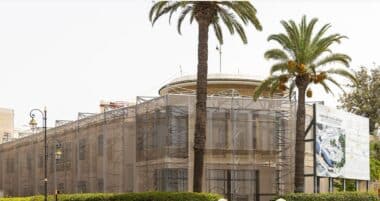
Article : Le musée du continent africain devrait ouvrir à la fin de 2027 (Mehdi Qotbi)
Porté par la Fondation nationale des musées, le futur musée du continent africain a franchi une étape décisive. Le président Mehdi Qotbi nous annonce que le plus grand complexe muséal d'Afrique, dont les travaux de gros œuvre ont dépassé 85%, entre dans sa phase finale avant une ouverture au public lors du dernier trimestre 2027.

Article : Le jardinier marocain de Jany Le Pen expulsé vers le Maroc pour séjour irrégulier
Selon une information révélée par Le Parisien, Hatim B., un Marocain de 32 ans qui effectuait des travaux de jardinage chez Jany Le Pen, veuve de Jean-Marie Le Pen, a été expulsé le jeudi 23 avril vers le Maroc. En situation irrégulière en France depuis 2017, il faisait l’objet d’une mesure d’éloignement décidée par le préfet des Hauts-de-Seine.
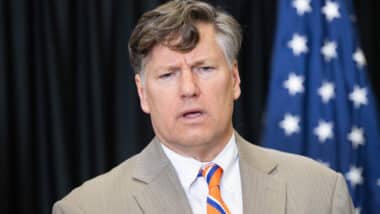
Article : Maghreb : une visite américaine dans un contexte de pression croissante sur l’Algérie
Annoncée par le département d’État, la tournée de Christopher Landau, du 27 avril au 1er mai, intervient dans un contexte marqué par l’implication croissante de Washington dans le suivi du dossier du Sahara et de ses prolongements onusiens.

Article : Ordre des experts-comptables : le scrutin s’annonce serré (liste)
Le scrutin du 21 mai pour le renouvellement du Conseil national de l’Ordre des experts-comptables met en concurrence 41 candidats pour 11 sièges. Parmi eux, se dégagent des profils issus de grands cabinets internationaux, comme EY, Deloitte, Mazars, BDO, KPMG ou Grant Thornton, des figures expérimentées déjà présentes dans les instances de l’Ordre et des profils plus récents, illustrant les équilibres internes de la profession.

Article : Protection des femmes victimes de violence : lancement officiel de la cellule centrale à Rabat
À Rabat, le ministère de la Solidarité a lancé la cellule centrale de prise en charge des femmes victimes de violence, chargée de renforcer la coordination institutionnelle, de superviser les structures territoriales et d'améliorer l’accompagnement juridique, psychologique et social des victimes.

Article : Bourse de Casablanca : le MASI chute de 1,69%, les volumes grimpent à 667 MDH
La Bourse de Casablanca a clôturé la séance du 24 avril 2026 en baisse, avec un MASI en recul de 1,69% à 18.815,18 points. Les échanges ont atteint 667,11 MDH, dominés par Managem, Minière Touissit et Attijariwafa bank.