
Justice for Journalists
AMSTERDAM – It has been more than eight months since Jamal Khashoggi, a prominent Saudi journalist and critic of his home country’s government who had been living in self-exile, was tortured, killed, and dismembered inside the Saudi consulate in Istanbul. As the Saudis bent over backward to obscure the truth about Khashoggi’s fate, Turkey launched an investigation. As expected, not much has come of it.
Turkey is hardly a credible advocate for press freedom: in 2018, more than 80 journalists in the country received long prison sentences or fines for their work. But even if the Turkish government’s indignation over Khashoggi’s murder was exaggerated for diplomatic gain, Turkey’s judiciary has complied with its international obligations to investigate.
Saudi Arabia, by contrast, is utterly flouting its obligations on this front. Under international pressure, the Kingdom is conducting hearings for 11 suspects. But according to Agnes Callamard, the United Nations special rapporteur on extrajudicial, summary, or arbitrary executions, these secretive, closed-door hearings are more about saving face than securing justice.
“We do not know who are charged as defendants, who among them face death sentences, and what are the charges” Callamard noted at a recent conference in Berlin. Western governments, she continued, “should not rubber-stamp a trial process that is ignoring all international standards.”
By accepting the results of criminal proceedings that lack transparency and due process, the international community would fail Khashoggi and severely damage the broader effort to end impunity for crimes against journalists. Unfortunately, there is precedent for precisely this outcome.
In 1982, at the height of El Salvador’s civil war, Colonel Mario Reyes Mena ordered his troops to set up an ambush just outside of the city of El Paraiso. Four journalists working for the Dutch broadcaster IKON, who were in the country to report on the war, walked right into the trap, and were essentially executed.
Amid the ensuing global outrage, El Savador’s government tried hard to conceal the truth, claiming that the reporters were accidentally caught in crossfire between the army and the rebels. The United States government, which trained, advised, and supplied the Salvadoran army, backed this explanation in public statements, spurring outraged protesters to descend on the US Consulate General in Amsterdam.
But the victims’ colleagues did not give up: their research indicated that the four journalists had, in fact, been deliberately targeted. Nearly a decade later, in 1993, the UN Truth Commission tasked with investigating the Salvadoran civil war confirmed this view. Yet Reyes Mena, now 79 years old, lives a quiet life in a suburb of Washington.
At first, this impunity could be explained by a 1993 amnesty law protecting the military, paramilitary groups, and guerrilla fighters from prosecution for human-rights abuses committed during the war. But the Salvadoran Supreme Court overturned that law in 2016, declaring it unconstitutional.
Now, an ill-equipped and understaffed Salvadoran prosecutor, acting on a criminal complaint filed by the lawyers of one of the slain journalists’ brothers, is investigating possible criminal charges against Reyes Mena, as well as Francisco Antonio Moran, the former head of El Salvador’s secret police. But it is hardly clear that justice will be served, not least because of an enduring culture of impunity for crimes against journalists.
That culture is on stark display in Saudi Arabia, and not just over the Khashoggi killing. Dozens of journalists are in prison in Saudi Arabia. One of them, Turki bin Abdulaziz al-Jasser, was reportedly tortured to death last year. Saudi Arabia has faced no diplomatic penalty for such behavior.
But impunity for perpetrators of crimes against journalists is not a foregone conclusion. Last year in Slovakia, the 27-year-old journalist Ján Kuciak, who had been investigating alleged political corruption linked to organized crime, and his fiancée, Martina Kušnírová, were shot dead. After the killings, people took to the streets to demand that the authorities prosecute those responsible.
Public pressure, together with the European Union’s demands for due process, had a powerful effect: the prime minister resigned, the general prosecutor was replaced, and an investigation was launched. In March, the businessman Marián Kočner was charged with ordering the murders.
Even in El Salvador, there is now a glimmer of hope that justice will be served. Thanks to the work of human-rights lawyers and activists, the resolve of the victims’ family members and former colleagues, and pressure from the Dutch government, the public prosecutor’s office is preparing to take statements from the relatives of the slain IKON journalists.
To support such efforts to secure justice for serious violent crimes against journalists, Free Press Unlimited, the Committee to Protect Journalists, and Reporters Without Borders have created “A Safe World for the Truth.” Investigations of such crimes – carried out by a team of journalists, forensic specialists, legal experts, and public data researchers – will be at the heart of the project.
To encourage public pressure like that seen in Slovakia, the investigators will publish their findings in documentaries and on social media, and deliver them to the relevant authorities. If this does not spur credible action to bring perpetrators to justice, we will create an international body to prosecute cases in a transparent and open People’s Tribunal on Crimes Against Journalists.
Journalists around the world risk their lives every day to shine a light on what those in power want to keep hidden. Those who end up paying the ultimate price – such as Khashoggi, Malta’s Daphne Caruana Galizia, and Belarus’s Pavel Sheremet – deserve justice, not just for their own sake, but for the sake of the journalists who are still here, working to reveal to their readers, viewers, and listeners the world as it really is.
à lire aussi

Article : OPCVM : les encours atteignent 846,7 MMDH à fin avril 2026, en hausse de 14,7% depuis janvier
Portés par une nouvelle hausse hebdomadaire, les encours des OPCVM atteignent 846,7 milliards de dirhams au 24 avril 2026, poursuivant leur progression dans un contexte de flux toujours orienté vers les supports monétaires et obligataires court terme.
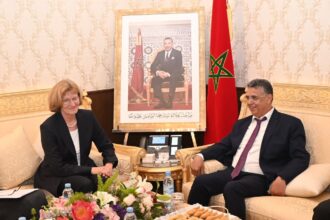
Article : Justice : le Maroc et l’Autriche veulent renforcer leur coopération judiciaire
Le Maroc et l’Autriche ont réaffirmé lundi 27 avril 2026 à Rabat leur volonté de renforcer leur coopération judiciaire, à l’occasion d’une rencontre entre le ministre marocain de la Justice, Abdelatif Ouahbi, et la procureure générale de la République d’Autriche, Margit Wachberger.
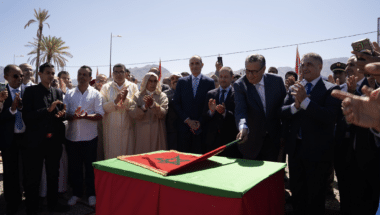
Article : Lancement à Tafraout des travaux d’un hôpital de proximité pour 227 MDH
Le futur établissement disposera de 45 lits et devra couvrir près de 70.000 habitants de la province de Tiznit, avec des services allant des urgences à la maternité, en passant par la chirurgie, la pédiatrie et l’imagerie médicale.
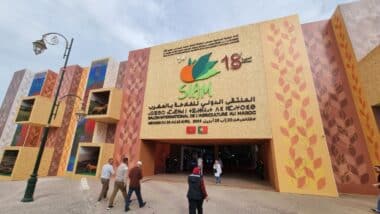
Article : SIAM 2026 : plus de 1,13 million de visiteurs
1.136.952 visiteurs, 1.590 exposants, 76 pays et 538 coopératives... la 18ᵉ édition du Salon international de l’agriculture au Maroc (SIAM) prend fin ce 28 avril à Meknès.

Article : Nouveau système d’entrée en Europe. Grève de 24 h le 5 mai, les transporteurs marocains passent à l’action
Réunis lundi 27 avril, les transporteurs routiers internationaux de marchandises ont décidé d’observer un arrêt de travail de 24 heures à partir du 5 mai, principalement au niveau de Tanger Med. Le mouvement, lié aux difficultés croissantes d’accès au marché européen, pourrait affecter près de 2.500 camions sur une journée normale.
Article : Marrakech accueille la 2e édition du Forum économique des Marocains du monde
Prévu le 8 mai 2026 à Marrakech, le Forum économique des Marocains du monde (FEMM) vise à favoriser le dialogue, les partenariats concrets et un investissement durable, inclusif et créateur de valeur.