

The End of the World As We Know It
BERLIN – After three decades of moving toward a single global market governed by the rules of the World Trade Organization, the international order has undergone a fundamental change. The United States and China are locked in a tariff war that at first seemed to be about the bilateral trade balance, but has turned out to be about much more. Until recently, one could find hope in the fact that, despite frequent exchanges of threats, the two countries were negotiating. Not anymore. Last month, under pressure from US President Donald Trump’s administration, Google terminated its cooperation with Huawei, thereby depriving the Chinese smartphone maker of the license to use Google’s Android software and related services. The move poses an existential threat to Huawei. But, more than that, it marks both a new pinnacle in the Sino-American conflict and the end of US-led globalization. The message from the US is clear: technology and software exports are no longer just a matter of business; they are about power. From now on, the US will put might over market. Now that the conflict has assumed the form of a hegemonic struggle, China may have to pull out all the stops to protect its national champions. That means withdrawing as quickly as possible from all supply chains that rely on US-made high-tech inputs, particularly semiconductors. China would have to start sourcing all the necessary components domestically, or from safe partners within its orbit. In the medium term, this adjustment would effectively divide the world into two spheres of economic competition. Sooner or later, all smaller powers dependent on global markets would have to choose a side, unless they are somehow strong enough to withstand both American and Chinese pressure. With China and the US both demanding clarity, even economic giants like the European Union, India, and Japan would be faced with an intractable economic dilemma. Assuming that an open, unified global market does indeed become a thing of the past, the question, then, will be how China plays its cards. As America’s largest creditor, would it see a currency war as its ace up the sleeve? If so, an already dangerous struggle for global technological preeminence would become a broader and more immediately perilous conflict. The danger is not just that economic rivalry, protectionism, and trade restrictions would threaten global prosperity; it is that these developments also would raise the risk of a serious political confrontation. Technological sovereignty would take the place of trade and exchange, and the nationality of corporations – even major multinationals – would become just as important as their business model. Still, it would be a mistake to conclude that this whole conflict was brought on solely by Trump and his neo-nationalist agenda. Two days after Google announced its decision, the New York Times published a commentary by Thomas L. Friedman, author of The World is Flat, echoing many of Trump’s attacks on China’s unfair trade practices. If that is where the previous ideological high priest of globalization now stands, China is facing off against not just Trump’s America, but liberal America, too. The Trump administration’s latest move is meant to signal that the US will not hand over its dominant global position without a fight. Yet by precipitating a break in the existing trade relationship with China, the US will incur immense costs of its own. No doubt turbulence awaits Europe, too. A rupture in the global economy would pose a fundamental challenge to the European – and especially the German – export model. Though the European Union will remain dependent on the American security guarantee and trade with the US, the bloc’s exporters have become increasingly reliant on the Chinese market. A scenario in which they are forced to decide between the two would thus produce a lose-lose outcome. True, in a full-scale technology war, the EU’s value as an ally to the US would increase, and the risks of punitive US tariffs on European exports would decline. But European exporters that have become more dependent on China would be squeezed. Past experience has shown that Europe usually needs a crisis in order to move to the next stage of its development. If there is any silver lining in the current situation, it is that Europe may now have no choice but to develop a geopolitical strategy for the twenty-first century. The EU was largely spared a populist upset in the recent European Parliament election. Now it must get to work safeguarding its prosperity and sovereignty in an age of Sino-American rupture. © Project Syndicate 1995–2019
à lire aussi

Article : Mondial 2026 : la FIFA augmente de 15% sa dotation aux équipes participantes
Le Conseil de la FIFA, réuni mardi 28 avril 2026 à Vancouver, au Canada, a décidé d'augmenter de 15% supplémentaires la contribution financière à distribuer aux 48 équipes participantes à la Coupe du monde de football 2026.
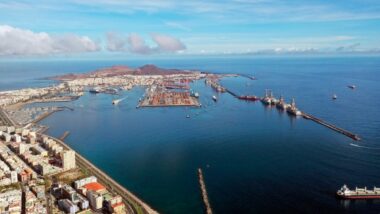
Article : Las Palmas veut une liaison maritime directe avec le port d’Agadir
Las Palmas veut renforcer sa coopération avec le port d’Agadir via une liaison maritime directe dédiée notamment aux produits de la pêche, afin de réduire les coûts, accélérer les échanges et développer des synergies dans le secteur naval.

Article : Tensions au Moyen-Orient : le gouvernement rassure sur l’approvisionnement et les prix
Face aux tensions géopolitiques au Moyen-Orient et à leurs répercussions sur les marchés internationaux, le gouvernement se veut "rassurant" sur l’approvisionnement en énergie et en produits de base.
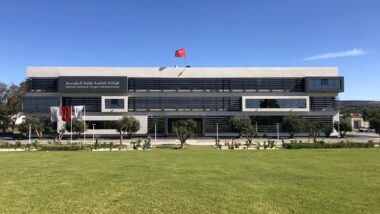
Article : Tanger Med boucle 2025 avec 13 milliards de DH de chiffre d’affaires, en hausse de 16 %
Porté par la dynamique de ses activités portuaires, logistiques et industrielles, le Groupe Tanger Med a enregistré en 2025 un chiffre d’affaires consolidé brut de 13 milliards de dirhams, en progression de 16 % sur un an.
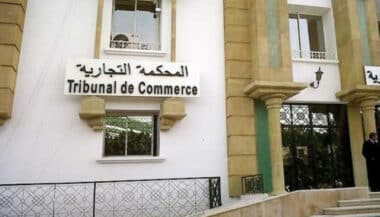
Article : Ozone. Le tribunal refuse d’étendre le redressement aux filiales du groupe de Aziz El Badraoui
Le tribunal de commerce de Rabat a rejeté la demande d’extension du redressement judiciaire d’Ozone à ses filiales. La procédure reste limitée à la société mère. Les juges s'attèlent sur le cas des dirigeants, dont Aziz El Badraoui, visés par une demandes de sanctions patrimoniales pour faute de gestion.
Article : Le dirham s'apprécie face au dollar
Ce mercredi 29 avril 2026 vers 8h30, la première cotation centrale USD/MAD de la journée, telle que publiée par Bank Al-Maghrib (BAM), fait ressortir la […]