
Springtime for Nationalism?
LONDON – Is populism still on the rise? That question will be looming over elections in Israel, India, Indonesia, the Philippines, Spain, and the European Union over the next two months. Yet it will be misplaced, for the real contest is between nationalism and internationalism.
To be sure, the nationalist-internationalist division is being prized open by populists themselves, particularly US President Donald Trump, whose instinctive disdain for international laws and institutions has long been clear. But it is also being exploited by more mainstream politicians, including some in that most multilateral of institutions, the European Union, which is experiencing a profound change in its internal political dynamics.
The term populism merely describes a campaigning technique used by insurgent politicians of all stripes. Hence, its power as a political epithet has diminished with use, especially in the years since the Brexit referendum and Trump’s election. Once in power, populists still have to govern to voters’ liking, or else risk defeat at the next election.
Consider the Five Star Movement (M5S), which came to power in June 2018 as the senior partner in Italy’s governing coalition, but has since lost a string of regional elections, halving its vote from a year earlier. That decline does not reflect voters’ disillusionment with M5S’s populist policy proposals; after all, it has succeeded in implementing its promised basic income for jobseekers. Rather, M5S’s participation in the coalition has been overshadowed by the strong nationalist rhetoric of its governing partner, the right-wing League party.
Now, consider Indian Prime Minister Narendra Modi, Philippine President Rodrigo Duterte, and that consummate survivor, Israeli Prime Minister Binyamin Netanyahu. Unlike M5S, all three campaigned as populists but have governed as tough-guy nationalists. In elections on April 9 (Israel), April 11-May 19 (India), and May 13 (Philippines), it is that nationalist approach that will be tested.
Modi, Duterte, and Netanyahu have each used fear – of terrorist attacks from Pakistan, drug cartels, and Hamas rockets, respectively – and appeals to national pride. Their stated goal is to strengthen the nation-state against threats foreign and domestic, through both economic and political means. They have little regard for international institutions or laws, and if they consider the international context at all, it is usually through the scope of bilateral relations with the United States and/or China, rather than multilateralism.
Similar issues are in play in the run-up to Indonesia’s April 17 presidential election, where the incumbent, President Joko Widodo (“Jokowi”), and his rival, Prabowo Subianto, can both be described as “populists.” The difference is that while Jokowi is running on his five-year record of leadership in both Indonesia and Southeast Asia generally, Prabowo is positioning himself more as a Duterte-style nationalist, as he did in 2014.
In Europe, the politics are different, but the key divisions are strikingly similar. The terms populist and Euroskeptic do not truly capture the rise of far-right parties such as Vox in Spain, the Freedom Party of Austria, and the Alternative für Deutschland (AfD) in Germany; nor are they sufficient for understanding the policies of Hungarian Prime Minister Viktor Orbán and Poland’s ruling Law and Justice (PiS) party.
To be sure, these parties are all nationalist, conservative, and generally opposed to immigration. But with constant reference to “law and order,” they are exploiting cultural rather than military or geostrategic fears. Hence, should the far-right make significant gains in Spain’s general election this April, and then in the European Parliament elections in May, the right way to think about it will not be as an anti-EU phenomenon.
A rebalancing of power toward the nationalist right would represent a changing view of the EU, but not an outright Brexit-style rejection of it. It would augur a further shift away from integration, and toward a more ad hoc intergovernmental approach for tackling issues related to immigration and the rule of law. The scope for top-down policies issued from Brussels would be significantly narrowed. And as individual EU member states began to pursue their own policies toward Russia, Libya, and other third countries, there would be a broad retreat from efforts to negotiate common foreign and security policies.
So, forget populism. The real contest in elections this year, as well as in the US presidential election in 2020, will be between nationalism and internationalism. Amid rising geopolitical tensions, increased migration flows, and the lingering stresses of past financial crises, the question is whether appeals to a rules-based international order can still win voters’ hearts and calm their fears. In the absence of US leadership to lend that idea credibility, the answer is anyone’s guess.
à lire aussi
Article : Le Canada reconnaît le plan d’autonomie proposé par le Maroc comme base pour une solution du différend régional autour du Sahara marocain
Le Canada "reconnaît le plan d’autonomie" proposé par le Maroc "comme base pour une solution mutuellement acceptable" au différend régional autour du Sahara marocain.

Article : Secteur privé. Le grand manque à gagner pour l’économie marocaine (Banque mondiale)
La Banque mondiale accorde une large place au secteur privé dans son rapport croissance-emploi sur le Maroc. Si le Royaume a su préserver une stabilité macroéconomique et maintenir un niveau d’investissement élevé sur les deux dernières décennies, cette dynamique ne se traduit pas suffisamment en productivité, en emploi formel durable et en revenus privés.
Article : Chatbot Médias24. La Banque mondiale publie son diagnostic du secteur privé au Maroc
Le rapport "Diagnostic-pays du secteur privé", élaboré par le Groupe de la Banque mondiale et publié ce mardi 28 avril 2026, vise à identifier les opportunités d’investissement privé inexploitées ainsi que les obstacles connexes. Il analyse les moyens de stimuler l'investissement privé au Maroc pour favoriser une croissance inclusive et créer des emplois de meilleure qualité. Explorez le document via ce chatbot.
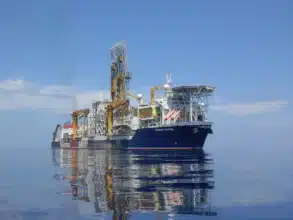
Article : Hydrocarbures au Maroc. Et si l'on cherchait au mauvais endroit ?
Et si le Maroc était à l'aube de son "moment norvégien" ? Une étude scientifique récente plaide pour un changement de paradigme des cibles d’exploration offshore au Maroc et révèle que les ressources les plus importantes pourraient se cacher dans des cibles négligées jusqu'alors. Un pari à tenter ?
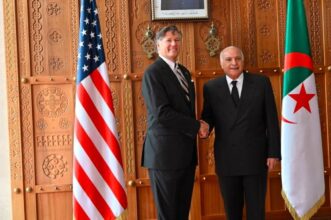
Article : Christopher Landau à Alger : le Sahara marocain au cœur des échanges, sur fond de soutien croissant à l’autonomie
La visite du secrétaire d’État adjoint américain Christopher Landau à Alger intervient dans un contexte de consolidation des soutiens internationaux à la souveraineté du Maroc sur le Sahara, alors que Washington maintient sa position en faveur de l’initiative marocaine d’autonomie.

Article : Enseignement supérieur. La promesse d’une hausse de 1.000 DH nets remise en cause ?
La revalorisation salariale de 1.000 DH annoncée dans l’enseignement supérieur suscite de vives tensions avec les syndicats. Les modalités de calcul de cette augmentation sont jugées inéquitables et engendrent des disparités importantes entre les fonctionnaires.