
The Pharaoh-Friendly West
WASHINGTON, DC – Last month, Egypt’s parliament overwhelmingly approved draft constitutional changes that would allow President Abdel Fattah el-Sisi to remain in office until 2034. And the West – fixated on upholding political stability and maintaining access to lucrative weapons markets – is content to let it happen.
Amending Article 140 of the 2014 constitution – approved by 485 of 596 MPs – will extend the two allowed presidential terms from four to six years, and permit Sisi to run for two additional terms when his current one ends in 2022. Parliament will hold a second vote within 60 days. The decision would then need to be ratified by a public referendum.
Sisi’s desire to remain president is unsurprising. To be sure, he displayed humility upon coming to power. In an interview in 2013, he claimed that he did not “aspire for authority.” In 2017, he vowed, “I am not for any amendments to be made to the constitution … the one who is in the president’s seat will not be able to stay after the term allowed by law and the constitution.” Likewise, in his first speech to parliament in 1981, former President Hosni Mubarak – ousted in the Arab Spring uprising in 2011 after clinging to his position for 30 years – said, “God knows I never dreamed of this job.”
In the land of the pharaohs, presidents tend eventually to become enthralled by myths touting their longevity, infallibility, and even divine right to rule. Mubarak displayed that mindset in 2003, for example, when a writer asked him if it was true that Saudi Arabia had attempted to persuade Iraqi dictator Saddam Hussein to step down, to prevent an American-led invasion. “Impossible!” Mubarak declared, “No president ever steps down!”
As for Sisi, his messianic pretentions were revealed in leaked recordings, in which he declared that former President Anwar Sadat informed him in a dream that he would be president. In another dream, Sisi reportedly heard a voice promising, “We will give you what we have given to no other.”
Westerners may scoff at such claims, but Egyptians take them very seriously. In the Judeo-Islamic tradition, dreams are considered a low stage of prophecy. In the Book of Genesis, Joseph saved Egypt from famine and drought by divining the true meaning of the pharaoh’s dreams.
The timing of Sisi’s announcement, however, was determined not by a dream, but by political conditions. The socioeconomic turmoil unleashed by the 2011 revolt is finally subsiding. After several years of economic growth that barely kept up (if it all) with population increases, the economy grew by 5.3% in the fiscal year that ended last June.
Moreover, an International Monetary Fund-mandated austerity program – which required energy and food subsidies to be slashed, even as incomes fell – is reaching its denouement. As it winds down, so will the likelihood of economic protests. Already, labor and student demonstrations have abated, owing to a security-services clampdown and a lack of support from other segments of society. And though Egypt’s power structure is opaque, frequent military and security-service purges suggest that Sisi has consolidated his position behind the scenes.
Sisi’s foreign-policy credentials have also lately received a much-needed (though largely undeserved) boost from the pause in construction of the Grand Ethiopian Renaissance Dam on the Nile, Africa’s longest river. Ethiopia initiated the project to alleviate domestic and regional energy shortfalls. But Egypt – which receives just 51 millimeters of precipitation per year, the lowest amount in the world – depends on the Nile for its water supply, which would be reduced by an expected 10% annually as the dam’s reservoir is filled.
Though negotiations failed to assuage Egyptian concerns, recent political changes in Ethiopia have done so. The election of a new prime minister more focused on enacting widespread economic reforms and rooting out corruption than building a dam – together with funding shortages and faulty electromechanical work – have brought the project to a virtual halt. Egypt’s pro-government media have spun this development as an example of Sisi’s acumen.
In his relations with the West, however, Sisi actually has shown acuity. Whereas Turkish President Recep Tayyip Erdoğan engaged in a war of words with his American counterpart, Donald Trump, before releasing the American pastor Andrew Brunson, Sisi quietly freed an American aid worker, Aya Hijazi, who had been held for three years on false charges. Add to that America’s trade surplus with Egypt – which amounted to $2.4 billion in 2017 – and Trump is more than pleased with Sisi. This has blunted the US State Department’s influence, thereby mitigating any potential backlash against the proposed constitutional amendment.
As for Europe, despite paying lip service to democracy and human rights, its leaders are far more concerned with preventing migrants from landing on their shores, supporting a bulwark against terrorism, and selling their military wares abroad than they are with protesting repression in distant lands. When Sisi visited France in October 2017, French President Emmanuel Macron declared, “I believe in the sovereignty of states, and therefore, just as I don’t accept being lectured on how to govern my country, I don’t lecture others.”
During a visit to Cairo in January, Macron expressed concern that Sisi’s crackdown on opponents is undermining stability, but emphasized that he would not cut off dialogue. Egypt is, after all, an important strategic partner to France in the region, including in Libya. From 2014 to 2017, when Egypt was the world’s third-largest arms purchaser, France was Cairo’s main weapons supplier ($2.4 billion), while Germany was fourth with $389 million.
What Western countries fail to recognize adequately is that the jihadists and migrants they so fear are being incubated by the authoritarian regimes they prop up. Before 9/11, many of al-Qaeda’s senior leaders were Egyptian. And while then-US President George W. Bush doted on his Yemeni counterpart, Ali Abdullah Saleh, a virulent al-Qaeda affiliate was taking root in that country.
The US and European response to Sisi’s likely power grab suggests that the West has not abandoned its belief that tacitly supporting authoritarian Arab regimes will secure stability. Some illusions die very hard indeed.
à lire aussi
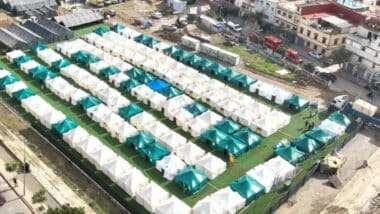
Article : Revue des FAR. Inondations de Ksar El Kébir et de la plaine du Gharb, récit d’une mobilisation historique de notre armée
Face aux intempéries exceptionnelles qui ont frappé le nord-ouest du Royaume début 2026, les Forces armées royales (FAR) avaient déployé un dispositif d’urgence d’une envergure rare. De Ksar El Kébir à la plaine du Gharb, les unités de génie, la Marine royale et l’Intendance ont conjugué leurs efforts pour secourir les populations sinistrées, illustrant une fois de plus leur rôle central dans la gestion des catastrophes naturelles.

Article : Cash Plus lance le virement bancaire instantané sur son application mobile
Cash Plus lance le virement bancaire instantané sur son application Cash Plus Mobile. Ce nouveau service permet aux utilisateurs d’envoyer et de recevoir de l’argent en temps réel, 24h/24 et 7j/7, vers toutes les banques marocaines.
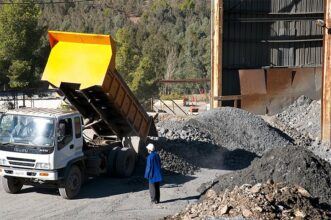
Article : CMT. Ayrad Group franchit plusieurs seuils et se positionne pour le contrôle du groupe minier marocain
À la faveur du rachat d’OSEAD Fund, le holding porte indirectement sa participation à 37,04 % du capital via OSEAD Maroc Mining, selon une déclaration publiée le 27 avril par l’AMMC.

Article : Affaire Agrodep. Peut-on être condamné pour un faux sans en connaître le contenu ? La justice répond
Dans le litige opposant Hassan Derham à Pierrick Puech autour d'Agrodep, groupe actif dans la pêche et l’agroalimentaire, un volet pénal portant sur un faux présumé, lié à des flux financiers d’environ 100 millions de dirhams, a conduit un agent communal d’Agadir jusqu’à la Cour de cassation. Au cœur de la décision, une question juridique sensible : dans quelle mesure la responsabilité d’un agent chargé d’une simple légalisation de signature peut-elle être engagée ? Les juges apportent une réponse de principe.
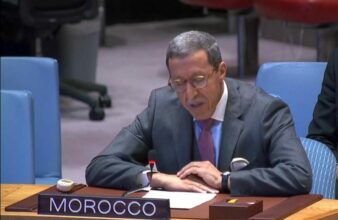
Article : Le Maroc dénonce à l’ONU “l'instrumentalisation” des détroits et met en garde contre les menaces sur la navigation
Réuni le 27 avril 2026 en séance de haut niveau sur la sécurité maritime, le Conseil de sécurité a entendu l’ambassadeur marocain Omar Hilale condamner les attaques visant des navires en mer Rouge, dans le golfe d’Aden et en mer d’Arabie, tout en rappelant que plus de 90 % des échanges commerciaux mondiaux transitent par les routes maritimes.
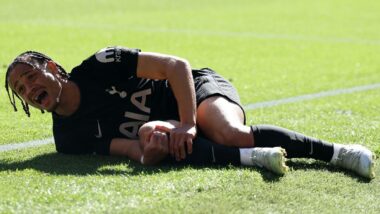
Article : Coupe du monde 2026. La peur de la blessure, grande plaie de la fin de saison
À moins de deux mois du coup d’envoi du Mondial 2026, l’hécatombe de blessures qui touche plusieurs internationaux inquiète autant les joueurs que les clubs. Une situation qui interroge sur l’implication de certains, dont l’intensité et la gestion de l’effort peuvent crisper. À l’opposé de ceux qui jouent leur place à fond, au risque de se blesser.