
Recognizing the High Value of Africa’s Migrants
LOME – As we mark International Migrants Day on December 18, it’s time to rethink how we value the informal skills and resources of many of Africa’s migrants. In particular, we need to recognize that migration can help boost long-term economic growth in Africa and the rest of the world.
On one hand, African migration is less globally significant than many think. According to a report produced by the Mo Ibrahim Foundation, just 14% of the world’s migrants in 2017 came from Africa, while 41% came from Asia and 24% from Europe. The 36.3 million Africans who migrated that year represented less than 3% of the continent’s population (and almost 90% of African refugees remain within the continent.)
On the other hand, those Africans who do exercise their human right to work where their skills are needed make a significant contribution to the continent’s large informal economy. African cities are full of creative traders negotiating prices, supplying jerseys for sports events, and selling drinks to thirsty drivers stuck in traffic jams. In fact, trading skills –especially those of women – should be at the center of the African migration narrative.
In Togo, for example, women previously dominated domestic and international trade in textiles, wax prints, and women’s clothing, running businesses that expanded to Burkina Faso, Mali, Niger, Chad, and other countries in the region. From 1976 to 1984, these “Nana Benz” women – so called because their wealth enabled them to own Mercedes-Benz cars – controlled at least 40% of informal-sector business in Togo. While they are no longer quite so dominant, a third generation of women is keeping their entrepreneurial model alive.
The Nana Benz demonstrated that informal economies could create pathways to success for their children and communities. They not only built mansions in Togo and owned properties around the world, but also invested in their children’s education at home and abroad. And they commanded respect despite their own lack of formal education. European business partners offered them favorable terms to expand their businesses.
Today, the informal economy accounts for more than 70% of total employment in Sub-Saharan Africa. At the same time, however, almost 16 million young Africans are unemployed, in many cases because potential employers undervalue the informal skills that these job seekers learned outside school. So, although we need to create more formal-sector jobs on the continent, we also must recognize the value and skills embedded in the rest of the economy – including through the contribution of internal and cross-border migrants.
Of course, informal employment is not just an African phenomenon. According to the International Labor Organization, two billion people worldwide work in the informal economy, including 1.3 billion in the Asia-Pacific region. And even in Europe and Central Asia, where the share of formal employment is highest, 25% of the employed population work informally. It is a global coping mechanism through which creative minds address market opportunities.
To continue Africa’s social and economic transformation, we must recognize the informal economy as a key lever of development and a facilitator of trade-based migration. African investors could help this process by providing digitally connected migrants with tailor-made safety mechanisms such as insurance and other financial products.
The informal economy sometimes is associated with poverty, disease, and low levels of education. But most African migrants are young, educated women and men who can help economies in Europe, Asia, and North America address the challenges posed by aging populations. Between now and 2100, Africa’s young population (aged 15-34) is expected to grow by 181%, while Europe’s will shrink by 21% and Asia’s by almost 28%. But if politicians in destination countries fail to make a positive case for migration, the world will miss out on this opportunity.
At the same time, Africa must invest in education, like the Nana Benz did, to ensure that its young people are better educated, healthier, and more connected than previous generations. Without broader access to quality education, intergenerational transfers of wealth within Africa will damage the future prospects of the 16 million young people looking for work.
There is thus a case for legal migration, which would help to generate additional tax revenues for host-country governments and enable migrants to send remittances back to their home countries. On average, African migrants spend or invest about 85% of their income in their destination country, and remit the remaining 15%. These remittances, which represented 3.5% of Africa’s $2.3 trillion GDP in 2018, should be pooled to accelerate the continent’s economic transformation.
In the longer term, the facilitation of free movement envisaged under the African Union’s Agenda 2063 will determine the extent to which informal-sector skills transform the continent’s economies. And although market conditions have changed over the last few decades, the Nana Benz women of Togo already have shown us the way.
In Africa and elsewhere, development processes are stronger when they are built on existing networks and mechanisms. Far from being a handicap, therefore, Africa’s informal economy, and the migrants who help drive it, are one of the continent’s most valuable assets.
à lire aussi

Article : Affaire Agrodep. Peut-on être condamné pour un faux sans en connaître le contenu ? La justice répond
Dans le litige opposant Hassan Derham à Pierrick Puech autour d'Agrodep, groupe actif dans la pêche et l’agroalimentaire, un volet pénal portant sur un faux présumé, lié à des flux financiers d’environ 100 millions de dirhams, a conduit un agent communal d’Agadir jusqu’à la Cour de cassation. Au cœur de la décision, une question juridique sensible : dans quelle mesure la responsabilité d’un agent chargé d’une simple légalisation de signature peut-elle être engagée ? Les juges apportent une réponse de principe.
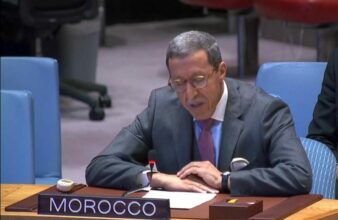
Article : Le Maroc dénonce à l’ONU “l'instrumentalisation” des détroits et met en garde contre les menaces sur la navigation
Réuni le 27 avril 2026 en séance de haut niveau sur la sécurité maritime, le Conseil de sécurité a entendu l’ambassadeur marocain Omar Hilale condamner les attaques visant des navires en mer Rouge, dans le golfe d’Aden et en mer d’Arabie, tout en rappelant que plus de 90 % des échanges commerciaux mondiaux transitent par les routes maritimes.

Article : Coupe du monde 2026. La peur de la blessure, grande plaie de la fin de saison
À moins de deux mois du coup d’envoi du Mondial 2026, l’hécatombe de blessures qui touche plusieurs internationaux inquiète autant les joueurs que les clubs. Une situation qui interroge sur l’implication de certains, dont l’intensité et la gestion de l’effort peuvent crisper. À l’opposé de ceux qui jouent leur place à fond, au risque de se blesser.

Article : Santé : le Coréen Synopex lance ses premières exportations de filtres de dialyse vers le Maroc
Synopex a effectué une première expédition de 12.000 unités de filtres sanguins destinés aux appareils de dialyse, dans le cadre d’un contrat d’approvisionnement de cinq ans conclu avec la société marocaine spécialisée Primedic.

Article : Inclusion financière : Al Barid Bank et Chari lancent un partenariat structurant
L’accord prévoit notamment la distribution de solutions d’acceptation de paiement (TPE, SoftPOS, e-commerce) auprès des commerçants, l’interconnexion des plateformes pour les transactions en ligne, ainsi que l’accès au réseau Barid Cash pour les opérations d’encaissement et de décaissement.

Article : Tourisme. Lecture de la trajectoire d’un secteur devenu clé (2008-2025)
Porté par la reprise post-Covid, le tourisme marocain a retrouvé puis dépassé ses niveaux d’avant-crise. Mais une lecture de long terme montre une trajectoire plus contrastée, marquée par le choc de 2008 suivi d’une phase d’expansion modérée, puis un changement d’échelle à partir de 2022.