

Who Will Win the Twenty-First Century?
BERLIN – The first two decades of the twenty-first century are beginning to cast a long shadow over the Western world. We have come a long way since the turn of the century, when people everywhere, but particularly in Europe, indulgently embraced the “end of history.”
According to that illusory notion, the West’s victory in the Cold War – the last of the three great wars of the twentieth century – had given rise to a global order for which there could be no alternatives. Thenceforth, it was thought, world history would march steadily toward the universalization of Western-style democracy and the market economy. The new century would merely be a continuation of the previous one, with a triumphant West extending its dominion.
The world is wiser now. The web of alliances and institutions that sustained the West’s dominance is proving to be a product of the twentieth century, its future now in doubt. The global order is undergoing a fundamental change, as its center of gravity shifts from the North Atlantic to the Pacific and East Asia. China is on the threshold – economically, technologically, and politically – of becoming a world power and the sole challenger of the incumbent hegemon, the United States.
At the same time, the US is growing tired of its global leadership role. It began to step back under former President Barack Obama; but under Donald Trump, it has accelerated its withdrawal in a chaotic and dangerous manner. America’s abdication of leadership poses a threat to the very existence of the transatlantic West, which rests on a foundation of shared values and political institutions. In the absence of any reasonable alternatives, the structure is crumbling.
Russia, meanwhile, is confronting the future by looking to its twentieth-century past. Like the Soviet Union, it is placing its bets entirely on nuclear weapons. Yet in the twenty-first century, power will be determined not by one’s nuclear arsenal, but by a wider spectrum of technological capabilities based on digitization. Those who aren’t at the forefront of artificial intelligence (AI) and Big Data will inexorably become dependent on, and ultimately controlled by, other powers. Data and technological sovereignty, not nuclear warheads, will determine the global distribution of power and wealth in this century. And in open societies, the same factors will also decide the future of democracy.
As for Europe, the Old Continent entered the new century in anything but optimal form. Living under the cozy post-historical illusion of everlasting peace, the European Union failed to complete the project of integration (though it did manage to expand eastward). The implicit withdrawal of the US security guarantee under Trump has struck Europe like a bolt from the blue.
The same could be said for the digital revolution. The first phase of digitization – consumer-facing platforms – has been led almost entirely by the US and China. There are no competitive European platform firms to speak of, nor are there any European cloud-computing companies capable of keeping up with the behemoths in Silicon Valley and China.
The most important issue facing the new European Commission, then, is Europe’s lack of digital sovereignty. Europe’s command of AI, Big Data, and related technologies will determine its overall competitiveness in the twenty-first century. But Europeans must decide who will own the data needed to achieve digital sovereignty, and what conditions should govern its collection and use. These questions will determine the fate of democracy in Europe, and whether the Old Continent’s future will be one of prosperity or decline. As such, they must be decided at the European level, not by individual nation-states. Equally important, these questions must be answered now. Europe needs to get the digital ball rolling – or be run over by it.
In the years ahead, automotive design and manufacturing, mechanical engineering, medicine, defense, energy, and private households will all be disrupted by digital technologies. The data generated from these sectors will largely be processed through the cloud, which means that control of the cloud will be vital to countries’ long-term economic and strategic fortunes.
To safeguard its digital sovereignty, Europe will need to make massive investments in cloud-computing capacity and the other physical resources underpinning the digital revolution. Europe has been far too slow and indecisive in this respect. Its challenge now is to catch up to the US and China, lest it be left behind permanently.
Europeans should not harbor any illusions that the private sector will take care of things on its own. Europe’s competitive disadvantage calls for a fundamental change in strategy at the highest level. The EU institutions will have to lead on setting regulations and, together with the member states, on providing the necessary financing. But securing Europe’s digital sovereignty will require a much broader effort, involving businesses, researchers, and politicians.
Following the recent 50th anniversary of the first Moon landing, there has been much media discussion about a potential manned flight to Mars. For Europe, though, space travel can wait. The top priority must be to establish and safeguard digital sovereignty, and to do whatever is necessary to arrest its own decline and protect democracy. For better or worse, the twenty-first century is well underway.
à lire aussi

Article : Carreaux céramiques : ouverture d'une enquête antidumping sur les importations indiennes
Le Maroc ouvre une enquête antidumping sur les importations de carreaux céramiques en provenance d’Inde. À l’origine de cette procédure, les industriels marocains du secteur dénoncent des pratiques de dumping et une hausse soutenue des importations indiennes, jugées menaçantes pour la production nationale.
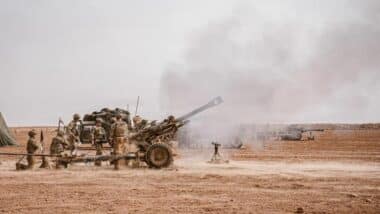
Article : African Lion 2026 : une édition placée sous le signe de l’innovation technologique et de la maturité stratégique
L’édition 2026 de l’exercice militaire African Lion, le plus grand rassemblement de forces armées sur le continent, se déroule du 20 avril au 8 mai. Entre l’utilisation de nouvelles technologies de pointe et une intégration accrue entre les forces marocaines et américaines, cette cuvée marque un tournant qualitatif, malgré une certaine discrétion médiatique dictée par le contexte international.

Article : Quartier Océan à Rabat: démolitions en chaîne et incertitudes sur l’avenir du quartier
Les opérations de démolition se poursuivent dans le quartier de l’Océan à Rabat, où le paysage urbain évolue rapidement sous l’effet d’un chantier de requalification d’ampleur. Entre annonces jugées tardives, incertitudes sur le périmètre concerné et contestation des indemnisations, les témoignages recueillis sur place reflètent une situation confuse.
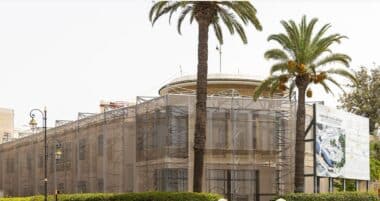
Article : Le musée du continent africain devrait ouvrir à la fin de 2027 (Mehdi Qotbi)
Porté par la Fondation nationale des musées, le futur musée du continent africain a franchi une étape décisive. Le président Mehdi Qotbi nous annonce que le plus grand complexe muséal d'Afrique, dont les travaux de gros œuvre ont dépassé 85%, entre dans sa phase finale avant une ouverture au public lors du dernier trimestre 2027.
Article : Le jardinier marocain de Jany Le Pen expulsé vers le Maroc pour séjour irrégulier
Selon une information révélée par Le Parisien, Hatim B., un Marocain de 32 ans qui effectuait des travaux de jardinage chez Jany Le Pen, veuve de Jean-Marie Le Pen, a été expulsé le jeudi 23 avril vers le Maroc. En situation irrégulière en France depuis 2017, il faisait l’objet d’une mesure d’éloignement décidée par le préfet des Hauts-de-Seine.

Article : Maghreb : une visite américaine dans un contexte de pression croissante sur l’Algérie
Annoncée par le département d’État, la tournée de Christopher Landau, du 27 avril au 1er mai, intervient dans un contexte marqué par l’implication croissante de Washington dans le suivi du dossier du Sahara et de ses prolongements onusiens.