

Your Driver Is Waiting – for a Raise
TORONTO – Last May, just before Uber’s $82.4 billion initial public offering, the company’s drivers, together with those for its fellow ride-hailing platform Lyft (many drive for both), participated in an international day of industrial action, holding demonstrations in 24 cities – from London to Melbourne to New York City – to demand higher pay and better working conditions. But grievances with ride-hailing companies that charge riders low fares and extract hefty commissions from drivers are not limited to rich economies.
In July, driver associations in Nairobi, Kenya, urged stoppages by those working for digital-based ride-hailing services – including Uber, the Estonian company Bolt (formerly Taxify), and the locally owned Little Cab – over precisely such complaints. Although key players agreed to a set of payment principles last year, little changed in practice.
The rise of platform labor – digitally mediated service work – creates a policy conundrum. On one hand, it benefits consumers by providing low-cost on-demand services, and can benefit workers by giving them access to those consumers. In Kenya, at least 6,000 people work as drivers for ride-hailing platforms.
On the other hand, the quality of these new work opportunities remains unclear. While workers value the scheduling flexibility often offered by platforms, prices are set by opaque algorithms and corporate strategies. Companies are not accountable to their workers. It’s difficult to know precisely how many drivers there are, let alone what they are actually earning – though our early research in Kenya suggests there is reason to believe that it is not enough.
When ride-hailing companies first emerged, they attracted drivers with high fares. But, in an effort to increase ridership, they slashed prices over time. Because the additional rides were insufficient to offset the drop in per-mile rates, drivers’ hourly earnings plummeted.
This practice was apparent everywhere, but it was particularly painful for drivers in low-income markets, where, unlike in the United States or Canada, they typically acquire a vehicle specifically for the job, using their savings or taking out loans. They may also lease vehicles from car owners, called “partners,” on fixed weekly terms.
As their earnings fell, drivers struggled to cover their fixed costs. Forced to work longer hours, some ended up in fatigue-related accidents, according to both drivers and local insurers. In response, Uber imposed new limits on drivers: they could work for no more than 12 hours at a time, with at least a six-hour break in between.
For many drivers in Kenya, simply leaving the industry is not an option, owing to outstanding debts, depreciation of productive assets, and a lack of alternative income-generating options in a country where only 16% of workers have formal jobs. Desperate to make ends meet, many have been forced to maximize work hours by using multiple apps. Our early research in Kenya suggests that a typical driver in Kenya works 12-hour days, six days per week.
Still, not all drivers support the strikes. Some – particularly those who purchased their own cars or have some offline clients – are relatively satisfied with the platforms. While they would prefer fairer rate-setting practices, they say the frequent strikes are not worth the lost revenue. These drivers report feeling pessimistic that government will intervene on their behalf. Some drivers we interviewed believe that driver-association leaders organize strikes for self-serving reasons.
But choosing not to participate in a strike carries significant risks. During the May strikes, participants used WhatsApp to divide themselves into groups, with each covering a geographic zone. Their job was to intercept drivers who, in their view, were undermining the cause. Sometimes, they damaged the spoilers’ vehicles or confiscated their mobile phones. As Benson, an early entrant into the online taxi business, told us, “Most drivers don’t work during strikes for their own safety and that of their cars, not because they are also striking.”
There is only one way to ensure that ride-hailing platforms deliver for both riders and drivers: better government regulation. To this end, governments must first clarify who has the relevant regulatory authority.
In Kenya, drivers are given permits by the National Transport Safety Administration. But platforms like Uber, which are registered as technology firms, are not under the NTSA’s jurisdiction. The Cabinet Secretary for Labor and Director General of the Competition Authority of Kenya also stated that intervening in platform pay was out of their respective remits. This leaves drivers with nowhere to turn when their interests are disregarded, and puts platforms at risk of more radical state intervention in the future.
Once a regulatory authority is designated, it will need to design effective policies, which requires data. As it stands, platforms not only control pricing, but also hold troves of rider and driver data, creating significant information asymmetries between platforms and drivers, and between platforms and policymakers. Regulators should insist on access to the information they need to make sound policy judgments.
Platforms that claim to be marketplaces should function more like competitive markets, and less like monopolies. Strikes can draw attention to the problem. But only well-crafted regulations can fix it.
à lire aussi

Article : Affaire Agrodep. Peut-on être condamné pour un faux sans en connaître le contenu ? La justice répond
Dans le litige opposant Hassan Derham à Pierrick Puech autour d'Agrodep, groupe actif dans la pêche et l’agroalimentaire, un volet pénal portant sur un faux présumé, lié à des flux financiers d’environ 100 millions de dirhams, a conduit un agent communal d’Agadir jusqu’à la Cour de cassation. Au cœur de la décision, une question juridique sensible : dans quelle mesure la responsabilité d’un agent chargé d’une simple légalisation de signature peut-elle être engagée ? Les juges apportent une réponse de principe.
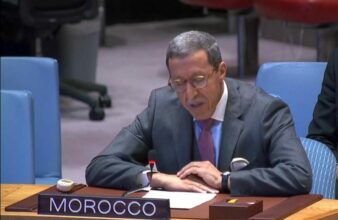
Article : Le Maroc dénonce à l’ONU l“ "instrumentalisation” des détroits et met en garde contre les menaces sur la navigation
Réuni le 27 avril 2026 en séance de haut niveau sur la sécurité maritime, le Conseil de sécurité a entendu l’ambassadeur marocain Omar Hilale condamner les attaques visant des navires en mer Rouge, dans le golfe d’Aden et en mer d’Arabie, tout en rappelant que plus de 90 % des échanges commerciaux mondiaux transitent par les routes maritimes.

Article : Coupe du monde 2026. La peur de la blessure, grande plaie de la fin de saison
À moins de deux mois du coup d’envoi du Mondial 2026, l’hécatombe de blessures qui touche plusieurs internationaux inquiète autant les joueurs que les clubs. Une situation qui interroge sur l’implication de certains, dont l’intensité et la gestion de l’effort peuvent crisper. À l’opposé de ceux qui jouent leur place à fond, au risque de se blesser.

Article : Santé : le Coréen Synopex lance ses premières exportations de filtres de dialyse vers le Maroc
Synopex a effectué une première expédition de 12.000 unités de filtres sanguins destinés aux appareils de dialyse, dans le cadre d’un contrat d’approvisionnement de cinq ans conclu avec la société marocaine spécialisée Primedic.

Article : Inclusion financière : Al Barid Bank et Chari lancent un partenariat structurant
L’accord prévoit notamment la distribution de solutions d’acceptation de paiement (TPE, SoftPOS, e-commerce) auprès des commerçants, l’interconnexion des plateformes pour les transactions en ligne, ainsi que l’accès au réseau Barid Cash pour les opérations d’encaissement et de décaissement.

Article : Tourisme. Lecture de la trajectoire d’un secteur devenu clé (2008-2025)
Porté par la reprise post-Covid, le tourisme marocain a retrouvé puis dépassé ses niveaux d’avant-crise. Mais une lecture de long terme montre une trajectoire plus contrastée, marquée par le choc de 2008 suivi d’une phase d’expansion modérée, puis un changement d’échelle à partir de 2022.