
Hospitals Rehabilitation, New University Hospitals, and GST Rollout: Key Health Ministry Projects for 2026
The Minister of Health presented his department's 2026 budget proposal on November 3. Up 30% compared to 2025, the budget allocates a substantial share to investment, while operating expenses also rise. Over 600 million dirhams will be earmarked for the creation of 1,500 new budgeted positions, bringing the total to 8,000.
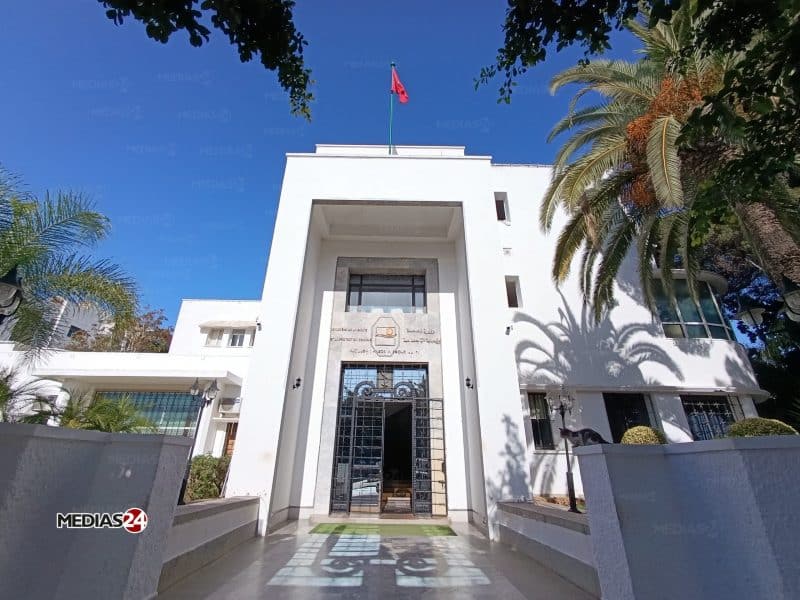
In 2026, the Ministry of Health will receive an additional 10 billion dirhams (MMDH), raising its annual budget to a record 42.3 MMDH.
This budget is allocated as follows:
- 27.85 MMDH for operational expenses, including 16.4 MMDH for personnel and 11.43 MMDH for equipment and other current expenditures;
- 14.5 MMDH for investment.
Allocation of the Additional 10 Billion Dirhams in 2026
On November 3, the Minister of Health presented his department's 2026 proposal to the Committee on Social Sectors. According to Médias24, the budget reflects a 30% increase, compared to 2025.
The additional 10 MMDH allocated to the ministry will be distributed as follows:
- 617 million DH (MDH) to fund 1,500 new budgeted positions, raising the total to 8,000 positions, up from 6,500 in 2025.
- 2.05 MMDH to support of the Territorial Health Group (GST) in the Tanger-Tétouan-Al Hoceima region (TTAH), including 1.7 MMDH for healthcare personnel expenses and 305 MDH for operating costs.
- 350 MDH for the Moroccan Blood Agency and its affiliates.
- 150 MDH for the Moroccan Agency for Medicines and Health Products (AMMPS).
- 80 MDH for the University Hospital Center (CHU) in Laâyoune.
- 206 MDH for the CHU in Agadir, whose opening was ordered on November 3 by King Mohammed VI.
- 5.5 MMDH for the rehabilitation of 91 hospitals and the upgrading of 1,600 primary healthcare facilities.

Key Highlights of the 2026 Health Budget
According to the Minister of Health, 2026 will be a pivotal year for consolidating and accelerating ongoing reform efforts. The main measures planned include:
- Continuing the construction of University Hospital Centers (CHUs), notably by equipping the new Ibn Sina hospital in Rabat -scheduled for completion in 2026- and advancing the construction and outfitting of new CHUs in Béni Mellal, Guelmim, and Errachidia.
- Launching the second phase of the regional rehabilitation program for 1,600 health centers, with a projected budget of 1.47 billion dirhams (MMDH) in payment credits and 1.26 MMDH in commitment credits.
- Expending healthcare services through the continued and new construction of regional hospitals (CHRs), provincial hospitals (CHPs), psychiatric facilities, specialized hospitals, and local care centers.
- Rolling out a regional program to build 12 blood transfusion centers, with a budget of 200 MDH in payment and commitment credits for 2026.
- Initiating the renovation of 90 hospitals, requiring multi-level rehabilitation to improve patient comfort, service efficiency, and overall health care performance. The projected budget for 2026 is 1.32 MMDH in payment credits and 2 MMDH in commitment credits.
- Advancing the phased implementation of GSTs and continuing the program to upgrade healthcare infrastructure and equipment, with a budget of 550 MDH for 2026.
- Accelerating the digitization of the national healthcare system.
2,440 Beds Planned Across four New CHUs...
The construction and outfitting of CHUs is among the Ministry of Health's falgship projects for 2026, with a combined additional capacity of 2,440 beds planned across the following four facilities:
- Ibn Sina Hospital in Rabat, scheduled for completion in 2026 (1,044 beds);
- CHU of Guelmim (376 beds);
- CHU of Errachidia (500 beds);
- CHU of Béni Mellal (520 beds).

... and Approximately 6,800 Additional beds Across 65 Hospital Facilities
The Ministry also plans to construct, reconstruct, and expand 65 hospital facilities, adding a total capacity of 6,800 beds. This includes the CHR of Dakhla (80 beds), Oujda (380 beds), and Béni Mellal (450 beds), as well as the CHP of Khémisset (270 beds), Mohammédia (250 beds), Nador (250 beds), and Azilal (120 beds).
The new construction/reconstruction and equipment projects are distributed as follows:
- Construction of the CHP in El Hajeb;
- Reconstruction of the CHPs in Bouarfa, Settat, Moulay Rachid, Essaouira, El Kelâa des Sraghna, Taroudant, and Midelt;
- Rehabilitation, renovation, and modernization of 91 hospitals;
- Construction and equipping of local hospitals in Ghafsai, Mechra Bel Ksiri, Dar Kdari, and Al Watiya in Tan-Tan (45 beds each).
Towards the Generalization of GSTs in 2026
The nationwide rollout of Territorial Health Groups (GSTs) is also among the Ministry of Health’s flagship initiatives for 2026. To support this transition, the ministry must develop an operational roadmap encompassing organizational, technical, and financial measures, including:
- The gradual transfer of human, material, and financial resources from regional directorates and delegations to GSTs;
- The development of integrated regional budgets for GSTs;
- The standardization of regional health information system and the interconnection of healthcare facilities at the regional level;
- The creation of regional communication strategies.
The overarching goal is to improve coordination across all levels of care—local, regional, and national—and enhance the performance and efficiency of healthcare services.
The ministry also plans to implement a shared medical record and roll out the electronic healthcare record system nationwide, in partnership with the National Social Security Fund (CNSS).
A pilot phase is scheduled in Kénitra ahead of gradual deployment. Meetings have been held with pharmacists and certain private physician syndicates, who are already opposing it.
Enhancing Human Resources
In terms of human resources, the ministry intends to develop and revise several draft decrees implementing Law 09-22 on essential guarantees for healthcare personnel.
This includes a decree defining the variable component of salaries and hardship bonuses for professionals working in underserved areas (Article 7), as well as the decree project defining the conditions and modalities for performing certain missions in private establishments by public sector healthcare professionals (Article 9).
Initial and continuing education will also be strengthened by expanding the capacity of professional health training institutes to 1,300 spots for 2025-2026. The ministry will continue upgrading programs at the Higher Institutes of Nursing and Health Techniques (ISPITS) and other professional health training institutes, while also establishing new institutes in regions that currently lack them.
Medicine and Blood Agencies
Regarding the Moroccan Blood Agency and its derivatives, in 2026, the ministry plans to establish and rehabilitate regional reference centers.
The Casablanca-Settat region will host a national center of excellence dedicated to blood transport, while the Rabat-Salé-Kénitra region will house a coordination training, and quality reference center, which will also include a plasma collection point unit fractionation.
Other regional centers and functional units will be developed in line with the national healthcare map, particularly in the Béni Mellal-Khénifra region and in other provinces.
As for the Moroccan Agency for Medicines and Health Products (AMMPS), the ministry will focus on strengthening pharmaceutical sovereignty and boosting local manufacturing. The first projects related to the national pharmaceutical policy planned for 2026 include support for local production of raw materials, generic drugs, and vaccines, as well as encouraging investment in pharmaceutical biotechnology industries.
The ministry also plans to strengthen its partnerships with industrial players to achieve self-sufficiency in essential medicines.
Simultaneously, the AMMPS will continue its international accreditation efforts, particularly to reach the third phase of international evaluation (3ML) according to the global GBT tool.
Explore the minister of Health's 2026 budget presentation to Parliament:
READ ALSO
Voici la répartition des 5,4 millions de doses de vaccins que Marbio produira d’ici fin 2026
Voici la situation de l'exécution du budget d'investissement de la Santé entre 2021 et 2025

à lire aussi

Article : FZ Mansouri veut poursuivre Barlamane en justice
Mise en cause par barlamane.com pour une affaire foncière, la maire de Marrakech annonce qu'elle va poursuivre ce journal en ligne ainsi que tout journaliste qui relaierait ces "allégations non fondées".
Article : Météo: les prévisions du dimanche 25 avril 2026
Voici les prévisions météorologiques pour le dimanche 26 avril 2026, établies par la Direction générale de la météorologie : - Formations brumeuses matinales et nocturnes […]
Article : Sahara: De Mistura évoque un “véritable élan” qui relance l’espoir d’une issue au conflit
Comme prévu par la résolution 2797 adoptée le 31 octobre 2025, le conseil de sécurité de l'ONY s'est réuni à huis clos pour faire le point avec l'envoyé personnel et l'envoyé spécial de l'ONU pour le Sahara, au sujet de l'avancement des efforts de paix.

Article : Immobilier. Les nouveaux choix d'investissement en 2026 à Casablanca
À Casablanca, le marché immobilier change de configuration. La raréfaction des petites surfaces et la hausse des prix pèsent sur le résidentiel, tandis que des segments comme la logistique et l'industriel offrent aujourd'hui des rendements plus élevés. Dans ce contexte, les arbitrages des investisseurs évoluent selon les budgets et les opportunités. Décryptage avec Asaad Sadqi, président de l'Association régionale des agences immobilières Casablanca-Settat.
Article : Un milliard sans garantie de l'État : comment la région Casablanca-Settat a réussi son pari obligataire
La région Casablanca-Settat vient de clôturer sa première levée obligataire, une opération inédite pour une région. La levée est d'un montant d'un milliard de dirhams sur le marché des capitaux, dont 400 millions apportés par la Banque européenne (BERD). Le président de la région, Abdellatif Maazouz, revient sur les coulisses de cette opération, ses fondements financiers et les projets qu'elle est appelée à financer.

Article : Carreaux céramiques : ouverture d'une enquête antidumping sur les importations indiennes
Le Maroc ouvre une enquête antidumping sur les importations de carreaux céramiques en provenance d’Inde. À l’origine de cette procédure, les industriels marocains du secteur dénoncent des pratiques de dumping et une hausse soutenue des importations indiennes, jugées menaçantes pour la production nationale.