
Budget 2026: Why the National Defense Budget Is Being Increased
The draft budget law for 2026 marks a turning point for national defense, with a substantial increase in annual allocations and multi-year commitment authorizations.
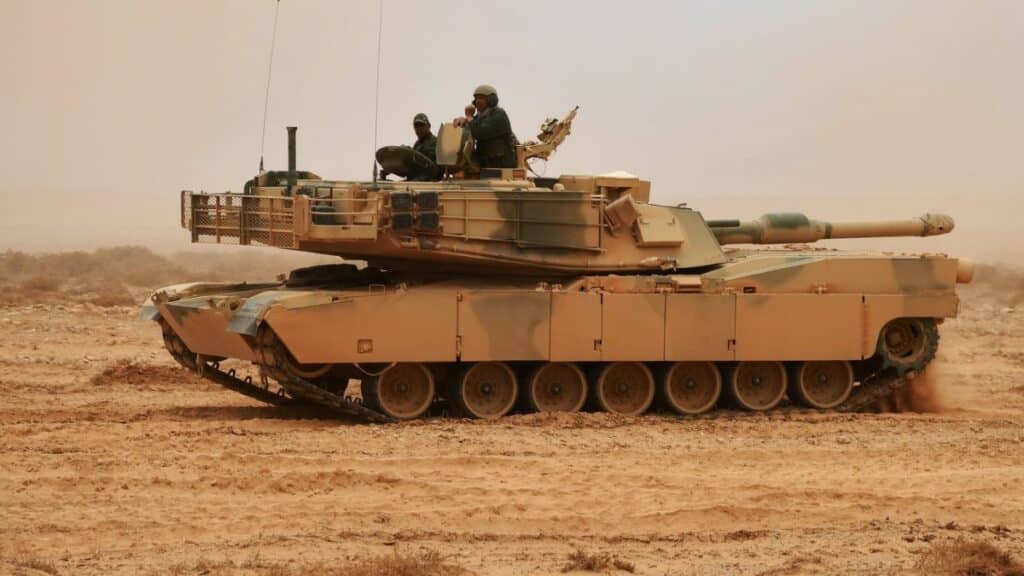
The draft budget law for 2026, submitted to Parliament, underscores two key shifts in national defense: higher annual allocations and expanded commitment authorizations, paving the way for multi-year contracts of significant scale.
The actual annual defense budget is precisely calculated at 79 billion MAD
Our military consultant Abdelhamid Harifi stresses the importance of distinguishing the annual budget from multi‑year commitments. “Claiming that the defense budget amounts to 157 billion MAD is inaccurate and reflects a careless reading of the text,” he cautions. In his analysis, the actual 2026 budget is approximately 79 billion MAD, broken down as follows:
- 47 billion MAD for personnel expenses, up from the previous 45 billion MAD, to cover salary increases granted by King Mohammed VI to all members of the Royal Armed Forces (FAR).
- 11.5 billion MAD for acquisition, maintenance, and development of the defense industry, an increase of 700 million MAD, the first in more than a decade.
- Nearly 13 billion MAD for equipment investment, compared to 11 billion MAD in 2025.
- Smaller management budgets, such as participation in UN missions, not exceeding 250 million MAD.
157 billion MAD in commitment authorizations to advance defense modernization
The most striking figure, 157 billion MAD, represents commitment authorizations, an increase of 23 billion MAD (or 17%). "This is not a budget, but a long-term planning envelope," the expert explains. It enables Defense to enter contracts for programs spanning several fiscal years, such as those covering 2026-2027, while securing adequate and staggered financing.
This windfall is justified by the launch or acceleration of several strategic projects. Abdelhamid Harifi highlights the acquisition of new C-390 transport planes, H-225M Caracal transport helicopters, the renewal of royal Navy patrol boats, and the development of the domestic defense industry, including drone projects such as investment in BlueBird Aero Systems. Modernization also continues with the procurement of fighter jets, armored vehicles, air-defense systems, and ground-to-ground artillery.
A context of massive recruitment driven by the 2030 World Cup and social priorities
This military buildup is not coming at the expense of social priorities, our consultant notes. The draft budget law provides for large-scale recruitment in the public sector. The Ministry of the Interior will benefit from 13,000 new positions to honor commitments made to FIFA for securing the 2030 World Cup. The Ministry of Health is allocated 8,000 positions - a record number - to support the opening of new university and regional hospitals.
The Royal Armed Forces will recruit 5,500 personnel. As Harifi highlights, most will be assigned to the Royal Gendarmerie to reinforce the security apparatus for the World Cup, while also replacing retirees and equipping new border units.
In conclusion, Abdelhamid Harifi stresses that "we are facing major projects that justify this increase." The budget rise responds to multiple factors: the need to modernize equipment to meet new regional security requirements, adaptation to rising prices, and obligations linked to organizing the World Cup, all while maintaining focus on key "social state" priorities such as health, education, and social justice.

à lire aussi

Article : Prévisions météorologiques pour le lundi 20 avril 2026
Voici les prévisions météorologiques pour le lundi 20 avril 2026, établies par la Direction générale de la météorologie (DGM): - Températures en hausse avec temps […]
Article : Dette hybride. Au-delà de la levée, le modèle et les contraintes d’OCP
Derrière le succès de son émission obligataire hybride d’avril 2026, le groupe OCP révèle une équation financière complexe. Entre montée de la fiscalité, politique de dividendes, investissements massifs dans la transition verte et dans des activités hors cœur de métier, le champion des phosphates doit désormais arbitrer dans un environnement compliqué.

Article : Un nouveau “dictionnaire critique” pour relire le Maroc colonial
Un ouvrage collectif dirigé par l’anthropologue marocain Hassan Rachik propose une relecture de la période coloniale à travers un format original de dictionnaire, réunissant une vingtaine de chercheurs marocains, français et espagnols.
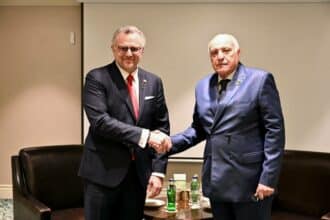
Article : Sahara: despite Algiers’ efforts, Washington’s position remains unchanged
On the sidelines of the Antalya Diplomacy Forum in Turkey, Algeria’s foreign minister and the U.S. president’s senior advisor for Arab and African affairs discussed several regional issues, including the Sahara. Yet behind the carefully worded Algerian statement, Washington’s support for Morocco’s territorial integrity remains clear and unchanged. Since December 2020, that position has taken on the weight of state continuity, suggesting it will endure regardless of political turnover in Washington or diplomatic initiatives from Algiers.
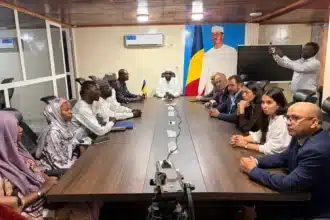
Article : Santé animale : Biopharma et le Tchad passent à la phase opérationnelle de leur partenariat
La société pharmaceutique marocaine Biopharma a signé à N’Djamena une feuille de route de coopération avec l’Institut tchadien de recherche en élevage pour le développement (IRED), dans le cadre du renforcement de la coopération maroco-tchadienne dans le domaine de la santé animale.
Article : Casablanca : la commune dément auprès de Médias24 une rumeur sur une fermeture des commerces à 23 heures à Anfa
La commune de Casablanca a démenti, auprès de Médias24, l’existence d’une décision imposant la fermeture des commerces, cafés et restaurants à 23 heures dans le ressort de la préfecture d’arrondissements de Casablanca-Anfa, après la circulation d’informations en ce sens sur certains sites et réseaux sociaux.