
Natural hydrogen and helium: Sound Energy opts for an advanced position in Morocco
In a recent interview with VSA Capital, John Argent, Sound Energy’s Vice President for Geosciences, discussed progress on the company’s projects in Morocco, particularly a natural hydrogen venture with Getech under an ongoing joint‑venture consolidation.
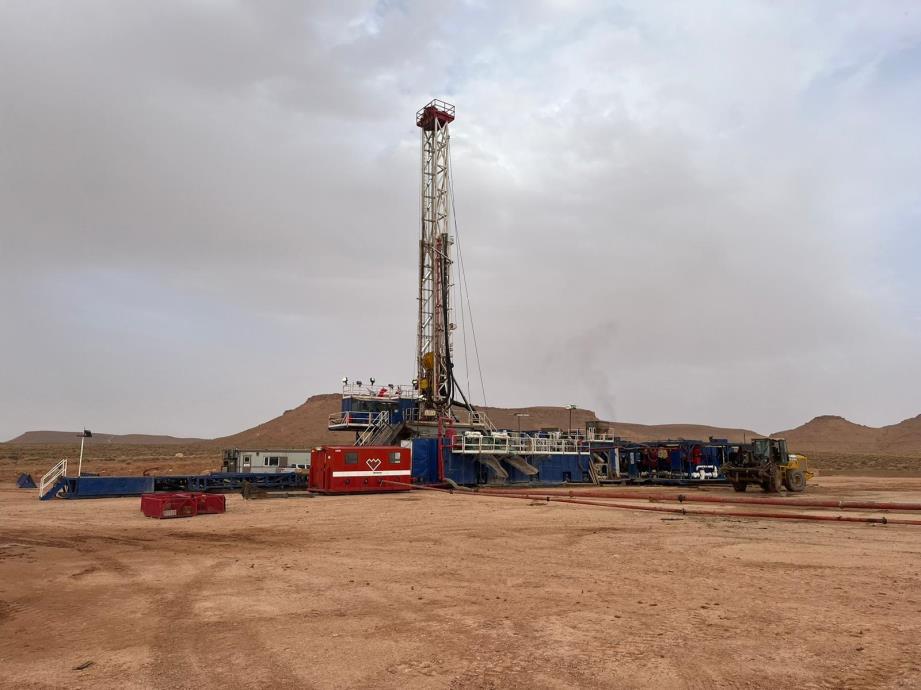
After several years of development in Morocco, Sound Energy and its partner Mana Energy are preparing to reap the rewards of their efforts, with the first flow of liquefied natural gas from the Tendrara field expected before year‑end.
Sound Energy said it has completed installation of well equipment and the gas-gathering system and is connecting processing units across the plant. The company described this as the final step before commissioning, with first flows expected before year‑end or early next year as the field ramps up.
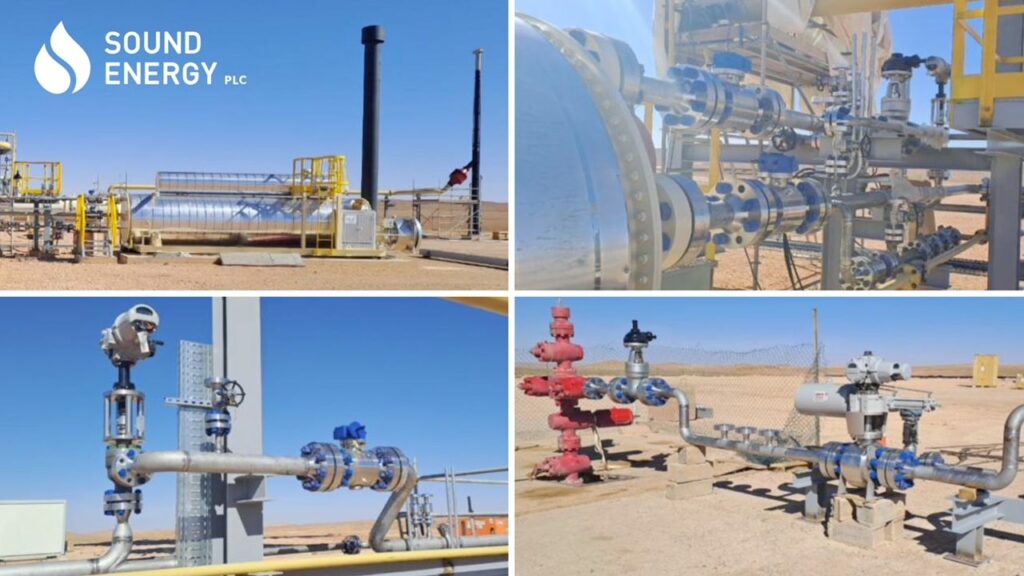
Building on its expertise in exploring Morocco's subsurface, Sound Energy aims to position itself in the promising natural hydrogen sector with partner Getech, through their joint venture HyMaroc, paving the way for formal talks on a hydrogen exploration licence in Morocco.
Speaking in an episode dedicated to the gas and oil sector on the VSA Capital platform, John Argent, Vice President in charge of geosciences at Sound Energy and Director of the joint venture HyMaroc, discussed the progress of this new direction for Sound Energy and Getech in Morocco.
Morocco’s potential in natural hydrogen and helium
Before creating HyMaroc, Sound Energy, drawing on its experience in Morocco, and Getech, which holds the world's largest database of gravimetric and magnetic data, identified several potential exploration areas.
According to the assessment, Moroccan rocks can generate hydrogen through two processes:
- Serpentinization: iron-rich rocks react with water, releasing hydrogen.
- Radiolysis: water molecules are split by the natural radioactive decay of uranium, thorium and potassium in granitic rocks.
Morocco has a crystalline basement conducive to the radiolysis mechanism, along with several formations of iron-rich ultramafic rocks overlain by sedimentary layers.
Like hydrocarbons, produced hydrogen must migrate before being trapped by impermeable sedimentary layers such as salt, one of the most efficient seals in the subsurface.
“We now have several high-potential targets, allowing us to focus on the next phase — refining our exploration program, reviewing permits, acquiring licenses, advancing on-the- ground geophysical work, and eventually drilling,” specified John Argent, Sound Energy’s Vice President.
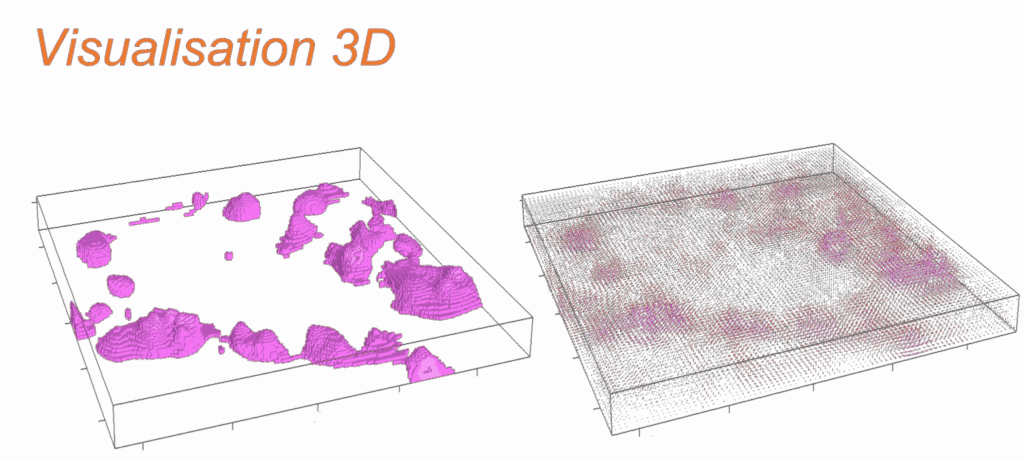
Helium is often extracted alongside natural hydrogen, but has a far higher market value, at about $400 per thousand cubic feet.
“It is rare, cannot be manufactured and is always in high demand. The market has recently tightened, creating potential for an additional revenue stream from any natural hydrogen discovery, as some helium would be expected to be associated with it,” said John Argent, Sound Energy’s Vice President.
Investment in natural hydrogen: passing trend or underlying trend?
Exploration of natural hydrogen remains limited, with only about 50 companies worldwide seeking to exploit the resource.
“The economic factors are very compelling. Suddenly, you have a clean, scalable, and low-cost resource; highly attractive for heavy industry, hard‑to‑abate sectors, chemicals, energy production — in short, any sector reliant on hydrogen feedstock,” emphasized John Argent.
Unlike green hydrogen, which requires water and energy, natural hydrogen costs about $1 per kilogram, competing with grey hydrogen from natural gas. Large-scale exploitation is not yet unlocked, but several companies have recently raised significant funding for exploration.
In the United States, Koloma recently raised $246 million from investors including Bill Gates (via Breakthrough Energy Ventures), Amazon, and United Airlines.
In the United Kingdom, Snowfox Discovery is backed by investors and world-renowned institutions such as BP, Rio Tinto, and Oxford Capital.
Next steps for HyMaroc
ONHYM has already formed partnerships for hydrogen exploration: with Switzerland’s HyNat near Dakhla and France’s Storengy in the coastal Meseta zone.
HyMaroc holds no exploration licences for drilling or sampling. Its preliminary prospecting is remote, based on available geoscientific data and satellite spectra analysis.
Although areas are already reserved for Moroccan and foreign parties, John Argent sees other high-potential zones worth exploring. Once secured, HyMaroc will be able to make further investments.
“We have conducted our screening study across Morocco and believe we have identified areas with strong potential. We are in talks with stakeholders in Morocco on how to secure permits, which would allow us to move forward with new investments in this field,” said John Argent.
The government is close to introducing legislation on natural hydrogen production and exploration. Once adopted, it will clarify the regulatory framework and facilitate investment needed to unlock the resource in Morocco.
Several companies worldwide are preparing to launch high-potential natural hydrogen drilling. Morocco has been exploring the resource since 2017, but the number of players remains limited, potentially slowing project progress.

à lire aussi

Article : La politique de l’eau, un enjeu de souveraineté nationale selon Nizar Baraka
Lors du MAP Town Hall organisé à Rabat, le ministre de l’Équipement et de l’Eau a détaillé cinq priorités : dessalement, interconnexions entre bassins, équité territoriale, préservation des ressources et valorisation de l’expertise marocaine à l’international.

Article : Tourisme : pourquoi l’objectif des 26 millions de visiteurs pourrait être atteint avec deux ans d’avance
Le tourisme marocain est en avance sur son propre calendrier. Alors que l’objectif officiel reste fixé à 26 millions de visiteurs en 2030, les performances récentes poussent déjà le secteur à préparer l’étape suivante : une nouvelle feuille de route pouvant viser 30 millions d’arrivées et près de 200 milliards de dirhams de recettes.
Article : Formation continue : le CESE pointe un système trop complexe et trop concentré à Casablanca
En 2022, seuls 1.647 employeurs sur près de 315.000 cotisants ont bénéficié des contrats spéciaux de formation, selon le Conseil, qui recommande un fonds dédié, la digitalisation des démarches et un meilleur accès pour les TPME et les indépendants.

Article : Bourse de Casablanca : le MASI termine en légère baisse le 3 juin 2026
L’indice principal s’est établi à 18.563,40 points, dans un volume d’échanges de 237,9 MDH sur le marché central, avec Managem, TGCC et Alliances parmi les valeurs les plus actives.
Article : La pyrite, vieux résidu minier devenu enjeu stratégique pour OCP
C’est l’histoire d’un minerai longtemps négligé qui revient au centre du jeu industriel. Alors que les prix du soufre atteignent des niveaux historiques, OCP prépare dès 2027 la récupération locale de pyrite et de pyrrhotite, avec Managem et d’autres acteurs miniers en toile de fond. Explications.

Article : Après 17 ans, Lamia El Ghorfi quitte La Mamounia pour se consacrer à un projet familial
Après dix-sept années passées à La Mamounia, Lamia El Ghorfi a annoncé son départ de la Direction de la communication et des projets culturels. Elle indique vouloir se consacrer à un projet familial, tandis que son successeur sera dévoilé dans les prochains jours.