
Why AFCON 2025’s success provoked tensions
Editorial. As the Africa Cup of Nations reaches its final this Sunday, January 18, the first lessons of the tournament are already taking shape.
Algeria, Egypt, South Africa, Senegal (*) — four of the tournament’s heavyweights — have, each in their own way, questioned the quality of Morocco’s organization of the 2025 Africa Cup of Nations.
In the case of the neighboring country, accusations went so far as to allege referee manipulation to eliminate Algeria.
These fallacious, often aggressive and insulting accusations are more than a passing sports controversy. It is a phenomenon — political, symbolic and magnified by the media on a broad scale.
Morocco is more than a host nation. It sets the example, takes the initiative, becomes a model, wins, sets standards and establishes the norm — in infrastructure, organization, image, strategy and in the Africa Cup of Nations itself.
Morocco is becoming a sporting power. Its World Cup semi-final run in Qatar was no coincidence. The country is U20 world champion and Arab champion, and in 2025 it added new international football titles to its record.
In African football, leadership is still uncommon. When it becomes visible after continuous work since 2008, it is sometimes seen as a threat rather than a collective driving force. Morocco’s success, after all, goes beyond the sporting realm.
In football competitions, refereeing is often the scapegoat for failures. Blaming the referee is a classic. But here, it is Morocco that is being questioned. Morocco as a political and sporting actor, both regionally and internationally.
This mechanism allows a country (Algeria) as well as the Egyptian and Senegalese coaches to avoid criticism and self-criticism. It is a form of sports populism. Elimination fosters a victim mentality. The Senegal coach rode this wave to spoil the celebration and preemptively justify a possible defeat.

Morocco's success shatters an old myth and creates cognitive dissonance.
For two generations, Algeria’s ruling system has told Algerians that their country is the leader of the Third World and of Africa. That it is an international power. That Morocco is merely a small country, resorting to Photoshop and AI to showcase fake stadiums and achievements.
Similarly, until Qatar 2022, African football was regarded as lagging behind, despite occasional sparks.
According to this narrative, it was portrayed as having average infrastructure, fragile organization, and successes driven only by individual talent.
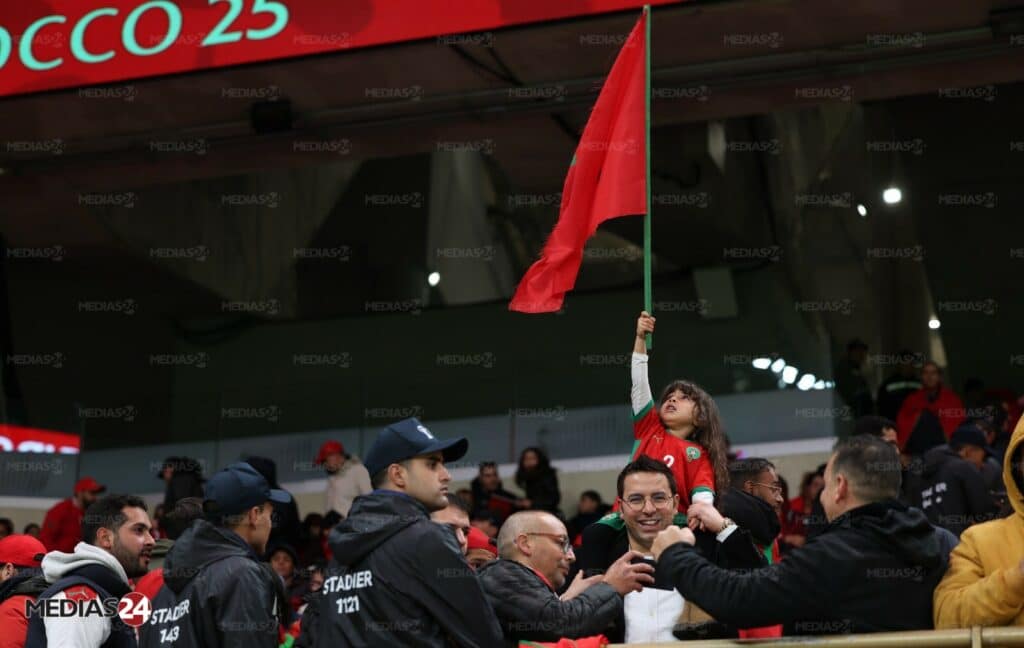
This AFCON highlights world-class stadiums, seamless logistics, premium broadcasting, economic and touristic influx, and a joyful, festive, secure atmosphere.
When reality contradicts imagination, it creates what is called cognitive dissonance. The reaction is not always rational. It becomes emotional.
The success of this historic AFCON, the prospect of a Moroccan triumph in the final, confirms Moroccan leadership in sports and soft power. Triumph and glory disturb. What is truly targeted is Morocco’s recognition.
The African hierarchy continues to reshape itself, in football and beyond. The game is transitioning towards a culture of anticipation, long-term strategies, world-class infrastructure, and a genuine culture of performance. It is happening in Morocco.
This is why the sporting and organizational success of the AFCON — and of Morocco — generates so much tension. There are those who embrace the celebration and draw lessons to improve, and those who want to spoil the party.
Football today is changing the world in a positive way. It is the epitome of soft power. Morocco's successes enhance its image, attract tourists, increase foreign investors' confidence, and boost institutional credibility.
Morocco’s organizational and operational capacity — delivered in record time without sacrificing quality — the kingdom’s strong endorsement for the 2030 World Cup; these are two undeniable conclusions of this AFCON 2025. The Moroccan brand has never shone so brightly on the global stage. As part of the 2030 World Cup, Morocco is first and foremost the leader of the entire continent and as such, is entitled to host the final at the future Hassan II Stadium.
This is why criticism should be regarded as mere noise, the collateral effect of success. Controversies will fade. The images, the stadiums, the organization, and the shared joy will remain.
-----
Note: This article was written and published before the AFCON final. The regrettable events that marred the final only serve to confirm our analysis.

à lire aussi
Article : La politique de l’eau, un enjeu de souveraineté nationale selon Nizar Baraka
Lors du MAP Town Hall organisé à Rabat, le ministre de l’Équipement et de l’Eau a détaillé cinq priorités : dessalement, interconnexions entre bassins, équité territoriale, préservation des ressources et valorisation de l’expertise marocaine à l’international.

Article : Tourisme : pourquoi l’objectif des 26 millions de visiteurs pourrait être atteint avec deux ans d’avance
Le tourisme marocain est en avance sur son propre calendrier. Alors que l’objectif officiel reste fixé à 26 millions de visiteurs en 2030, les performances récentes poussent déjà le secteur à préparer l’étape suivante : une nouvelle feuille de route pouvant viser 30 millions d’arrivées et près de 200 milliards de dirhams de recettes.
Article : Formation continue : le CESE pointe un système trop complexe et trop concentré à Casablanca
En 2022, seuls 1.647 employeurs sur près de 315.000 cotisants ont bénéficié des contrats spéciaux de formation, selon le Conseil, qui recommande un fonds dédié, la digitalisation des démarches et un meilleur accès pour les TPME et les indépendants.
Article : Bourse de Casablanca : le MASI termine en légère baisse le 3 juin 2026
L’indice principal s’est établi à 18.563,40 points, dans un volume d’échanges de 237,9 MDH sur le marché central, avec Managem, TGCC et Alliances parmi les valeurs les plus actives.

Article : La pyrite, vieux résidu minier devenu enjeu stratégique pour OCP
C’est l’histoire d’un minerai longtemps négligé qui revient au centre du jeu industriel. Alors que les prix du soufre atteignent des niveaux historiques, OCP prépare dès 2027 la récupération locale de pyrite et de pyrrhotite, avec Managem et d’autres acteurs miniers en toile de fond. Explications.

Article : Après 17 ans, Lamia El Ghorfi quitte La Mamounia pour se consacrer à un projet familial
Après dix-sept années passées à La Mamounia, Lamia El Ghorfi a annoncé son départ de la Direction de la communication et des projets culturels. Elle indique vouloir se consacrer à un projet familial, tandis que son successeur sera dévoilé dans les prochains jours.