
Final CAN 2025: Legal analysis of a questionable disciplinary decision
The sanctions following the Morocco - Senegal final reveal legal inconsistencies regarding proportionality and equal treatment. Details.
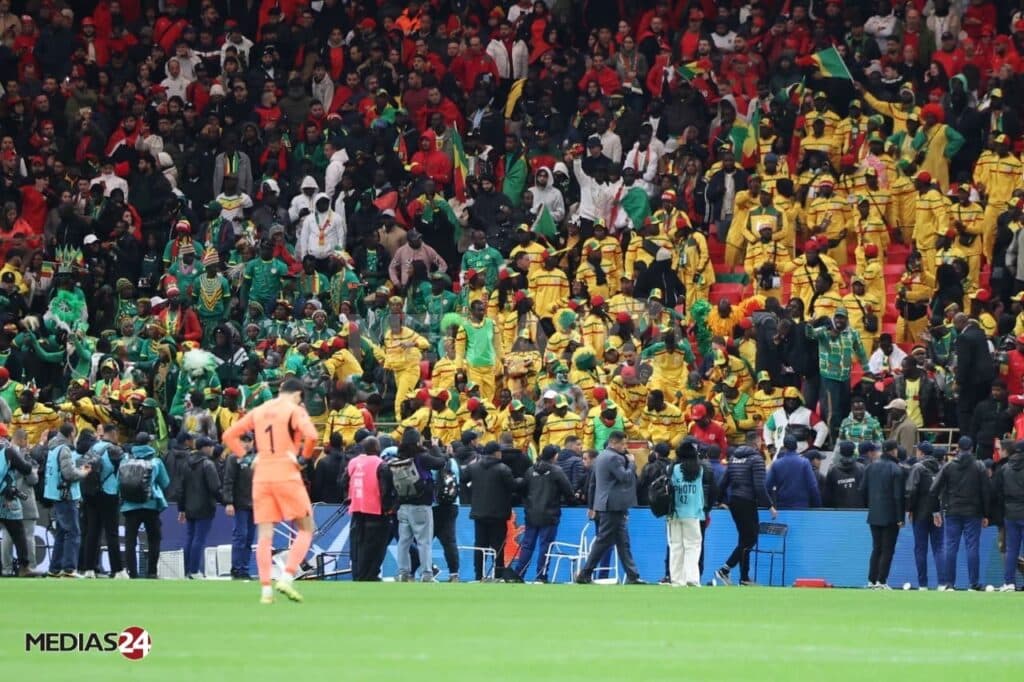
The decision rendered by the Disciplinary Committee of the Confederation of African Football (CAF), following the incidents during the CAN 2025 final between Morocco and Senegal, raises serious legal concerns.
Far from restoring balance or sanctioning the most serious breaches in light of the applicable texts, the ruling appears legally skewed. It proves unfavorable to the Royal Moroccan Football Federation (FRMF) and excessively lenient towards the Senegalese Football Federation (FSF).
This imbalance stands in stark contrast with the requirements of the CAF Disciplinary Code, the CAN Regulations, and the standards set by FIFA’s disciplinary framework.
From a principles perspective, sports disciplinary law rests, according to several experts, on three essential pillars: proportionality of sanctions, genuine individualization, and consistency between the objective severity of the facts and the disciplinary response.
Yet, the CAF’s decision highlights a clear imbalance, to Morocco’s detriment.
Lenient sanctions for serious offenses
The most serious incidents in this final primarily concern the behavior of Senegalese players and coaching staff towards the referee. Match footage clearly attests to this. Both the CAF and FIFA disciplinary codes explicitly classify aggressive challenges to refereeing decisions as serious offenses.
Despite this, the sanctions imposed on Senegalese players appear surprisingly mild. Given the number of incidents, their intensity, and their impact on the match, heavier sanctions should have been applied in line with provisions safeguarding the integrity of the game and the referee’s authority.
This leniency becomes even more questionable when compared to previous CAF disciplinary cases. In 2010, following the assault on a referee during Petro Luanda vs. Raja Club Athletic—including spitting and physical violence—CAF imposed a one‑year suspension and a $10,000 fine on the late Zakaria Zerouali. Mohssine Moutaouali received a six‑month suspension and a $5,000 fine.
Despite the greater severity of those acts, the financial penalties were significantly lower than those imposed today.
In the Morocco–Senegal case, the referee faced intense collective pressure and was publicly accused of corruption. Yet Senegalese player Iliman Cheikh Baroy Ndiaye, one of the accusers, received only a two‑match suspension—a sanction strikingly lenient given the attack on the referee’s moral integrity and the competition’s credibility.
The famous WAC–EST precedent
A similar comparative logic applies to the Wydad - ES Tunis case in 2019. At the time, CAF declared Wydad losers by default for abandoning the match and fined the club. That decision reflected a strict application of the regulations when the normal course of play and institutional authority were challenged.
By contrast, the absence of a formal qualification of abandonment or a heavier sanction in the Morocco–Senegal final reinforces the perception of mitigated disciplinary treatment, despite the gravity of the facts.
The instigator spared
The sanction imposed on Pape Thiaw also calls for scrutiny.
He encouraged his players to leave the field during a continental final, inciting unsporting behavior contrary to fair play, loyalty, and respect for the rules.
This was not a mere verbal excess but a direct incitement to disrupt the regular flow of the game — one of the gravest breaches of sports ethics.
The inadequacy of this sanction is evident when compared to other CAF decisions.
In January 2024, Tanzania’s coach Adel Amrouche was suspended for eight matches for public statements made outside competition, accusing the FRMF of influencing CAF. No match was disrupted in that case.
Similarly, during AFCON 2023 in Ivory Coast, Moroccan coach Walid Regragui received a four‑match suspension (two suspended) for an altercation after the final whistle of Morocco–Congo.
Against this backdrop, the five‑match suspension imposed on Pape Thiaw appears insufficient and poorly calibrated. It concerns a coach who actively provoked a disruption during a final, undermining his personal responsibility, that of his team and federation, and the very image of the competition.
VAR area vs. violent field invasion: double standards
The sanction related to Moroccan players and staff entering the VAR area also raises questions.
Their protests were perceived in a negative light. They did not reflect any intent to materially obstruct the VAR process. Treating any protest—even a vehement one—as a serious hindrance amounts to denying teams the right to express disagreement within the boundaries of the game, while applying the rules in an excessively rigid manner. Moreover, the Senegalese team engaged in similar behavior during the same match.
The individual sanctions imposed on Moroccan players further deepen this imbalance. The three‑match suspension handed to Ismaël Saibari, coupled with a $100,000 fine (identical to that imposed on Pape Thiaw), appears particularly harsh when compared with the sanctions given to Senegalese players for objectively more serious offenses—sanctions that carried no financial penalty.
This differential treatment raises a fundamental issue in disciplinary law: proportionality. Both the CAF Disciplinary Code and FIFA’s framework require consistency in the scale of sanctions. In this case, that consistency is clearly absent.
The rules are clear
CAF has issued a decision that conveys an impression of asymmetrical treatment. The sanctions imposed on Morocco appear excessive in light of the alleged facts, while those pronounced against Senegal seem inadequate given the seriousness of the behaviors observed. Legally fragile on several points, this ruling opens the door to a serious challenge before the Court of Arbitration for Sport, both on grounds of proportionality and of equal treatment, as well as respect for the fundamental principles of sports disciplinary law.
This analysis falls within a well‑established jurisprudential line. Known as the Rojas precedent, the case involving Chilean goalkeeper Roberto Rojas during the Chile-Brazil match in 1989 established a major disciplinary principle: the voluntary withdrawal of a team from the field, without valid justification, constitutes a forfeit.
Chile was declared losers by default and excluded from the 1994 World Cup qualifiers. This case remains a landmark precedent in football disciplinary law and illustrates the firmness of international bodies in dealing with attempts to contest matches by voluntarily disrupting the game.
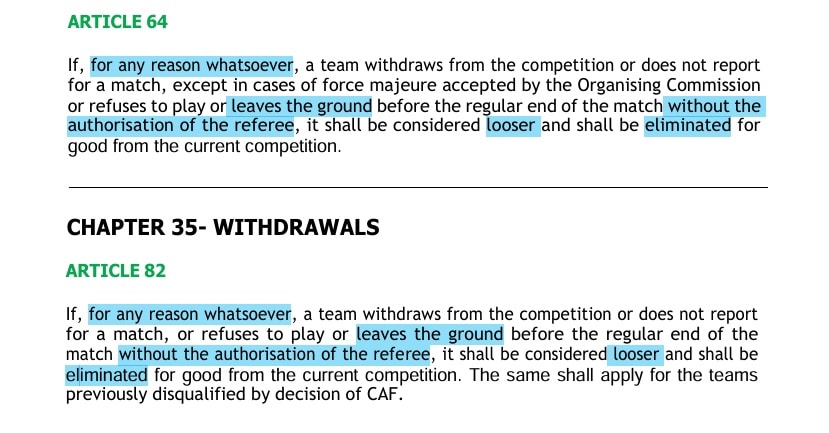
The CAF regulatory framework strictly governs any voluntary interruption of a match. Article 64, read together with Article 82 of the competition regulations, stipulates that a team which withdraws, refuses to continue, or leaves the field before the end without the referee’s authorization is automatically declared the loser and excluded from the competition, except in cases of force majeure recognized by the competent authorities.
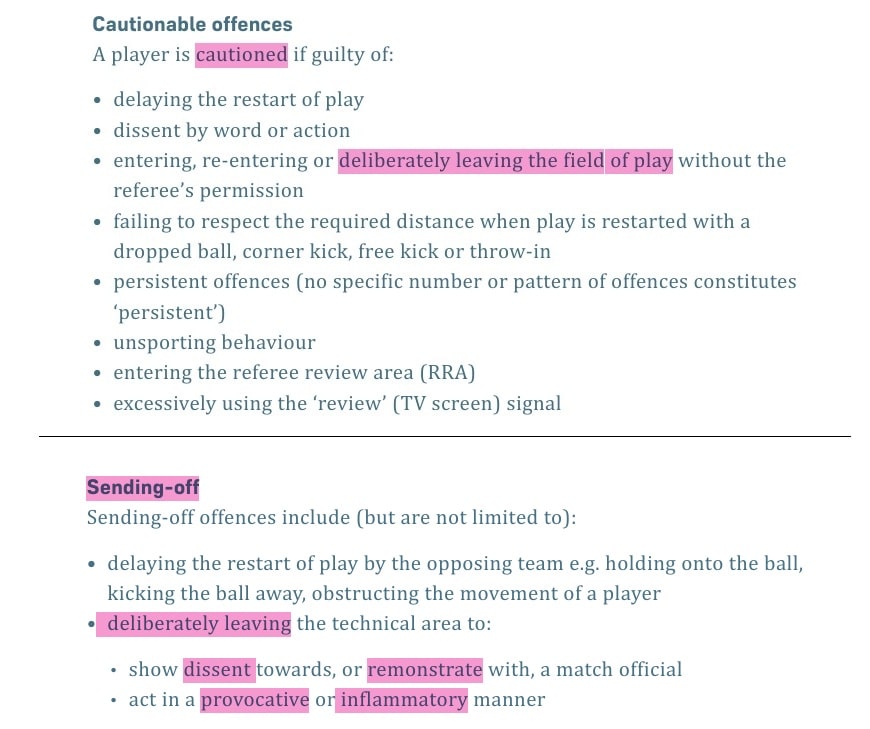
The IFAB Laws of the Game adopt a similar approach. Law 12, which addresses offenses and misconduct, penalizes the deliberate act of leaving the field without the referee’s permission with a caution. This offense is judged more severely when it occurs in reaction to a refereeing decision, and even more so when the entire team withdraws.
Recourse options
In a previous article published in our columns, lawyer Mourad El Ajouti, outlined the steps of the contestation procedure and the recourse options available in disciplinary matters. According to him, in the event of an unfavorable or insufficient decision, the first step is to appeal to the CAF Appeals Committee, generally within three days. If the dispute is not definitively resolved at the confederation level, the ultimate recourse lies with the Court of Arbitration for Sport (CAS) in Lausanne. This independent body rules on matters of law and issues final decisions that are binding on all parties.
In this case, Morocco has already received an initial unfavorable decision and has exercised the available recourse at this stage of the procedure. Attention now turns to the ruling of the CAF Appeals Committee. Should the sanction be confirmed, or the decision deemed insufficient or unjust, the route to the Court of Arbitration for Sport (CAS) will remain open.

à lire aussi
Article : La politique de l’eau, un enjeu de souveraineté nationale selon Nizar Baraka
Lors du MAP Town Hall organisé à Rabat, le ministre de l’Équipement et de l’Eau a détaillé cinq priorités : dessalement, interconnexions entre bassins, équité territoriale, préservation des ressources et valorisation de l’expertise marocaine à l’international.

Article : Tourisme : pourquoi l’objectif des 26 millions de visiteurs pourrait être atteint avec deux ans d’avance
Le tourisme marocain est en avance sur son propre calendrier. Alors que l’objectif officiel reste fixé à 26 millions de visiteurs en 2030, les performances récentes poussent déjà le secteur à préparer l’étape suivante : une nouvelle feuille de route pouvant viser 30 millions d’arrivées et près de 200 milliards de dirhams de recettes.
Article : Formation continue : le CESE pointe un système trop complexe et trop concentré à Casablanca
En 2022, seuls 1.647 employeurs sur près de 315.000 cotisants ont bénéficié des contrats spéciaux de formation, selon le Conseil, qui recommande un fonds dédié, la digitalisation des démarches et un meilleur accès pour les TPME et les indépendants.
Article : Bourse de Casablanca : le MASI termine en légère baisse le 3 juin 2026
L’indice principal s’est établi à 18.563,40 points, dans un volume d’échanges de 237,9 MDH sur le marché central, avec Managem, TGCC et Alliances parmi les valeurs les plus actives.

Article : La pyrite, vieux résidu minier devenu enjeu stratégique pour OCP
C’est l’histoire d’un minerai longtemps négligé qui revient au centre du jeu industriel. Alors que les prix du soufre atteignent des niveaux historiques, OCP prépare dès 2027 la récupération locale de pyrite et de pyrrhotite, avec Managem et d’autres acteurs miniers en toile de fond. Explications.

Article : Après 17 ans, Lamia El Ghorfi quitte La Mamounia pour se consacrer à un projet familial
Après dix-sept années passées à La Mamounia, Lamia El Ghorfi a annoncé son départ de la Direction de la communication et des projets culturels. Elle indique vouloir se consacrer à un projet familial, tandis que son successeur sera dévoilé dans les prochains jours.