Morocco-Egypt: the significant trade gap that weighs down a strategic partnership
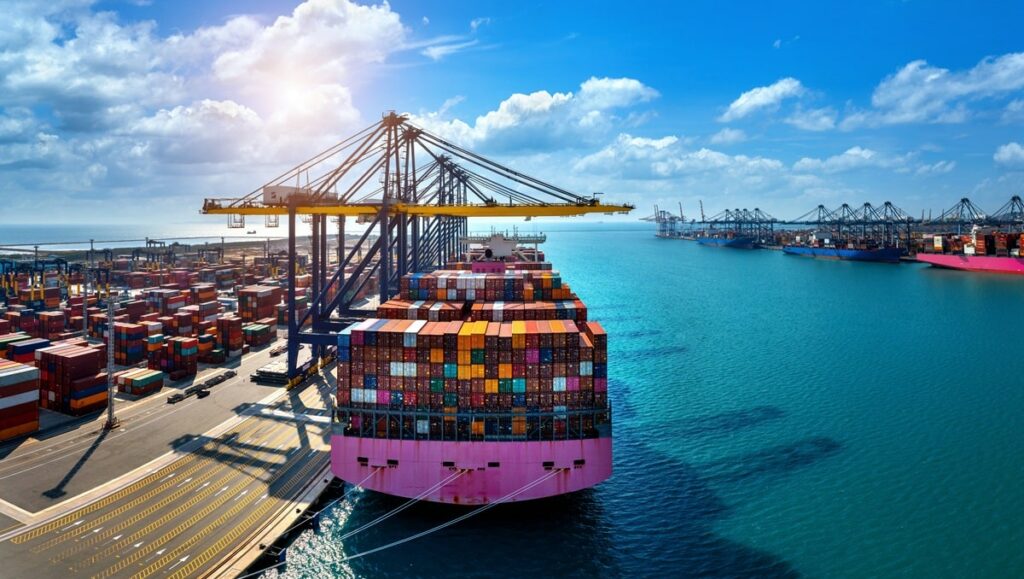
The two heads of government met in Cairo. Agreements were signed, speeches extolled friendship. Yet behind the rhetoric, one figure is striking: Morocco exports to Egypt ten times less than it imports. This glaring imbalance is no accident; it stems in part from Egypt’s entrenched protectionism, which Rabat is only now beginning to confront head-on.
On April 6, 2026, Egypt and Morocco convened the inaugural session of their Coordination and Monitoring Committee in Cairo. The two heads of government, Aziz Akhannouch and Mostafa Madbouly, oversaw a series of agreements spanning multiple sectors.
The atmosphere was positive. Yet the numbers tell a different story. The two parties pledged to ease customs procedures and facilitate the movement of goods and capital. If implemented, this commitment would mark a first, as the Egyptian market has long been one of the most difficult for Moroccan exporters to access.
A deficit of 10.7 billion MAD: the anomaly in the numbers
To gauge the scale of the anomaly: out of 11.4 billion MAD in trade in 2025, Morocco accounted for only 1.6% of exports. The trade deficit reached 10.7 billion MAD.
The GOEIC registry: Egypt’s administrative tool of protectionism
The most formidable mechanism is discreet, technocratic, and difficult to challenge directly. It is the registry system for factories and brands managed by the GOEIC, established under Egyptian Ministerial Decree 43 of 2016.
This decree stipulates that certain product categories can only clear customs if they originate from factories or brand owners registered in the system, subject to stringent documentation requirements and potential on‑site inspections.
The result is an administrative filter that, while not formally prohibiting market access, renders it complex and costly enough to discourage many foreign exporters. Behind the rhetoric of free trade, Egypt has over the years accumulated disputes related to dumping practices across various products, in addition to these administrative barriers.
A breakthrough in 2025, but still insufficient
Moroccan pressure began to yield results — and the numbers confirm it.
In an early 2025 meeting between the Industry Ministries of both countries, six points of agreement were reached, including two crucial ones:
- Committing to boost Moroccan exports, particularly automobiles;
- Establishing an Egyptian Fast Track to expedite access for Moroccan products.
The results are evident. Total exports to Egypt surged from 754.9 million MAD to 1.6 billion MAD, a 106.7% increase.
Automobile exports, a focal point of discussions, rose by 253.3% to reach 492.8 million MAD. However, it would be premature to claim victory. These 492.8 million MAD of automobiles exported to Egypt represent only 0.4% of Morocco’s total automotive exports.
Egypt, with its 118 million consumers, remains one of Africa's largest markets - with Morocco still being a marginal supplier. At the Egyptian-Moroccan Investment Forum in Cairo on May 4, 2025, Egyptian Minister Hassan El Khatib himself indicated that the current figures did not reflect the potential of Moroccan exports to Egypt. A diplomatically worded admission that speaks volumes.
A structural imbalance that one summit cannot fix
The Cairo session on April 6 laid the groundwork. However, no one should expect miracles overnight.
Part of the trade imbalance is structural: Egypt maintains a real cost advantage in several labor-intensive sectors, due to low wages, a significant devaluation of the pound, and substantial public support for exports.
Egypt's macroeconomic constraints also play a role. The IMF highlights that interest payments, partly in foreign currency, absorb about 73% of public revenues, severely limiting fiscal flexibility.
In this context, any increase in imports adds pressure on foreign exchange reserves closely monitored by Cairo - giving Egyptian protectionism a survival rationale, not just commercial opportunism.
The real test for this partnership will not be the number of agreements signed but Morocco's ability to establish, over time, symmetrical access to a market that has long played the game of one-way free trade.
REFERENCE: WHAT IS THE GOEIC?
The General Organization for Export and Import Control is the Egyptian body managing the registry of foreign factories and brands eligible to export to Egypt. Its official role is quality control; its practical effect is to act as a gatekeeper for imported products.

à lire aussi
Article : La politique de l’eau, un enjeu de souveraineté nationale selon Nizar Baraka
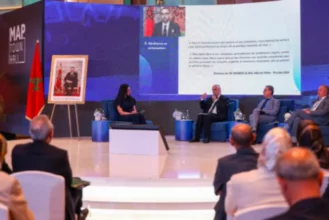
Lors du MAP Town Hall organisé à Rabat, le ministre de l’Équipement et de l’Eau a détaillé cinq priorités : dessalement, interconnexions entre bassins, équité territoriale, préservation des ressources et valorisation de l’expertise marocaine à l’international.

Article : Tourisme : pourquoi l’objectif des 26 millions de visiteurs pourrait être atteint avec deux ans d’avance
Le tourisme marocain est en avance sur son propre calendrier. Alors que l’objectif officiel reste fixé à 26 millions de visiteurs en 2030, les performances récentes poussent déjà le secteur à préparer l’étape suivante : une nouvelle feuille de route pouvant viser 30 millions d’arrivées et près de 200 milliards de dirhams de recettes.
Article : Formation continue : le CESE pointe un système trop complexe et trop concentré à Casablanca
En 2022, seuls 1.647 employeurs sur près de 315.000 cotisants ont bénéficié des contrats spéciaux de formation, selon le Conseil, qui recommande un fonds dédié, la digitalisation des démarches et un meilleur accès pour les TPME et les indépendants.
Article : Bourse de Casablanca : le MASI termine en légère baisse le 3 juin 2026
L’indice principal s’est établi à 18.563,40 points, dans un volume d’échanges de 237,9 MDH sur le marché central, avec Managem, TGCC et Alliances parmi les valeurs les plus actives.

Article : La pyrite, vieux résidu minier devenu enjeu stratégique pour OCP
C’est l’histoire d’un minerai longtemps négligé qui revient au centre du jeu industriel. Alors que les prix du soufre atteignent des niveaux historiques, OCP prépare dès 2027 la récupération locale de pyrite et de pyrrhotite, avec Managem et d’autres acteurs miniers en toile de fond. Explications.

Article : Après 17 ans, Lamia El Ghorfi quitte La Mamounia pour se consacrer à un projet familial
Après dix-sept années passées à La Mamounia, Lamia El Ghorfi a annoncé son départ de la Direction de la communication et des projets culturels. Elle indique vouloir se consacrer à un projet familial, tandis que son successeur sera dévoilé dans les prochains jours.