Report. In Gharb-Loukkos, the strawberry is losing ground
It is an investor’s logic — rather than a farmer’s — that has shaped the red‑fruit sector in the Gharb‑Loukkos plain since the 1990s. National and foreign capital, packaging stations meeting European standards, contracts with major global retailers, a skilled workforce, and strict quality discipline: strawberries, the founding crop, were the first to impose this model across the region. Today, that same logic is replacing them with other crops, as the equation changes — rising labor costs, a declining water table, and international price competition. Blueberries, raspberries, blackberries, and avocados now offer the solutions that strawberries can no longer provide. The floods of 2026 merely hastened what arithmetic had already decided. On‑site observation.
The Essentials
- The 2026 strawberry season in Gharb-Loukkos is one of the most challenging: floods, cold, and humidity have caused a drop in production and discouraged reinvestments.
- The area planted with strawberries has decreased from 4,000 hectares in 2019 to 2,300 and is expected to decline further.
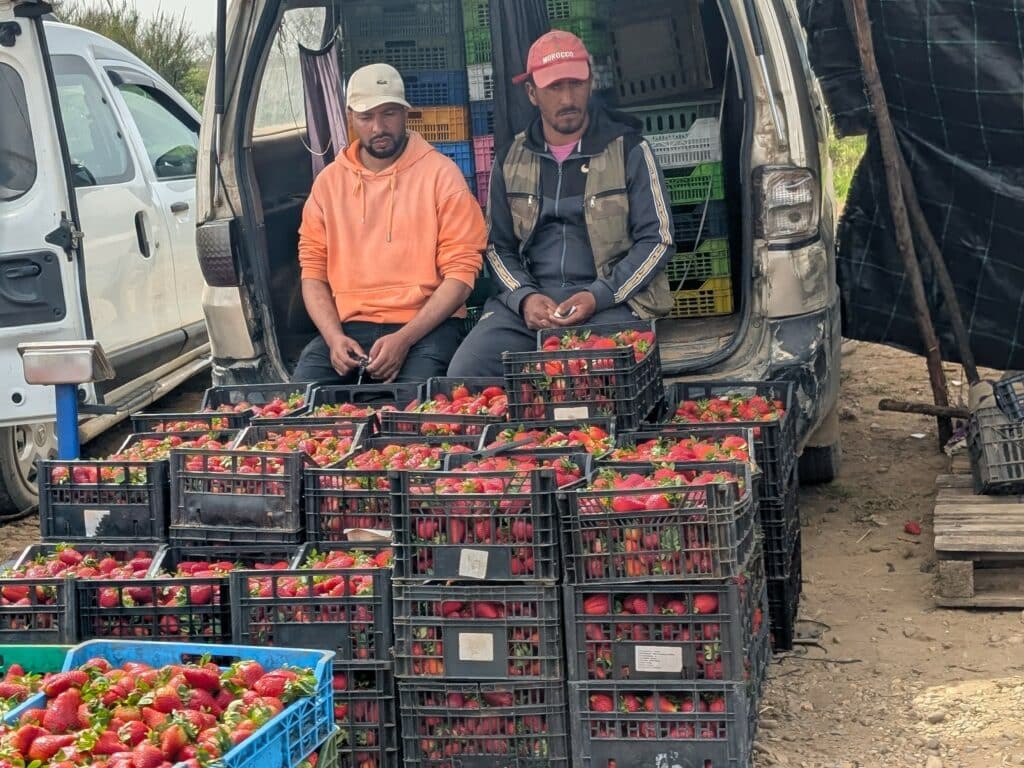
- A shift is underway: raspberries (60 DH/kg), blueberries (80 DH/kg), and avocados are gradually replacing strawberries (10 DH/kg on average), whose profitability has eroded.
- Labor is becoming scarce: workers prefer upright crops (raspberries, blueberries) or go to Spain - more than 17,000 this year - to pick strawberries in Huelva for 35 euros a day.
- The water table has collapsed in certain areas, going from 5 to 50 meters deep in ten years, increasing production costs and accelerating the shift towards higher value-added crops.
- Strawberries are not seen as a failure: they have built the infrastructure, commercial networks, and workforce on which new crops thrive today.
-oOo-
The Report
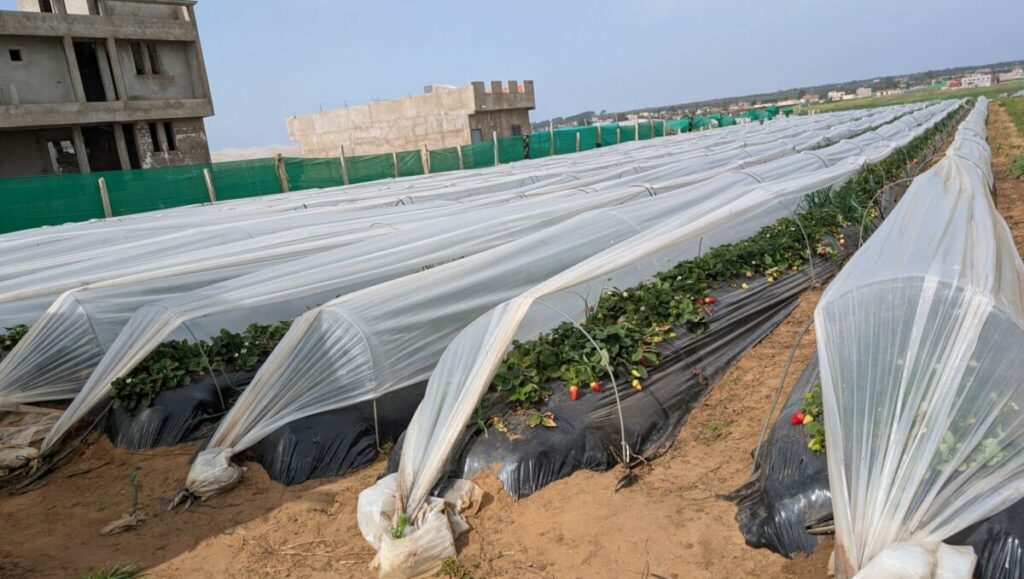
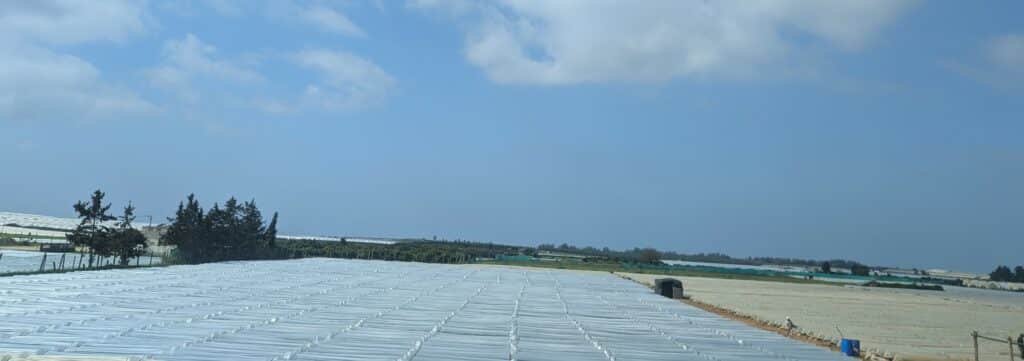
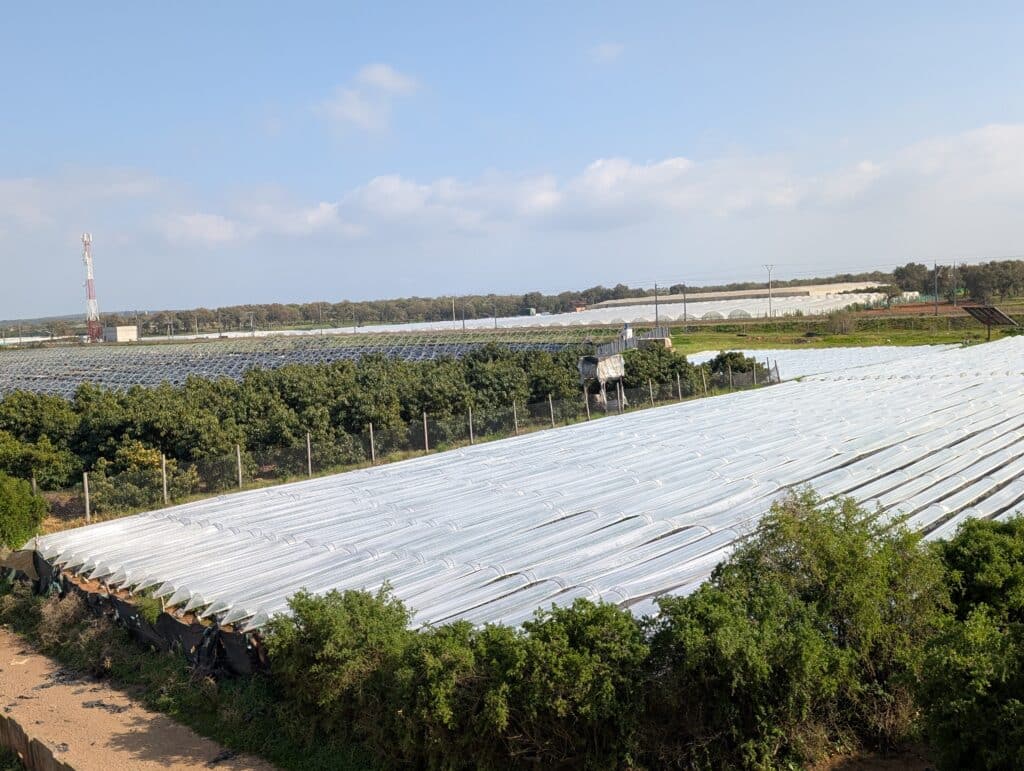
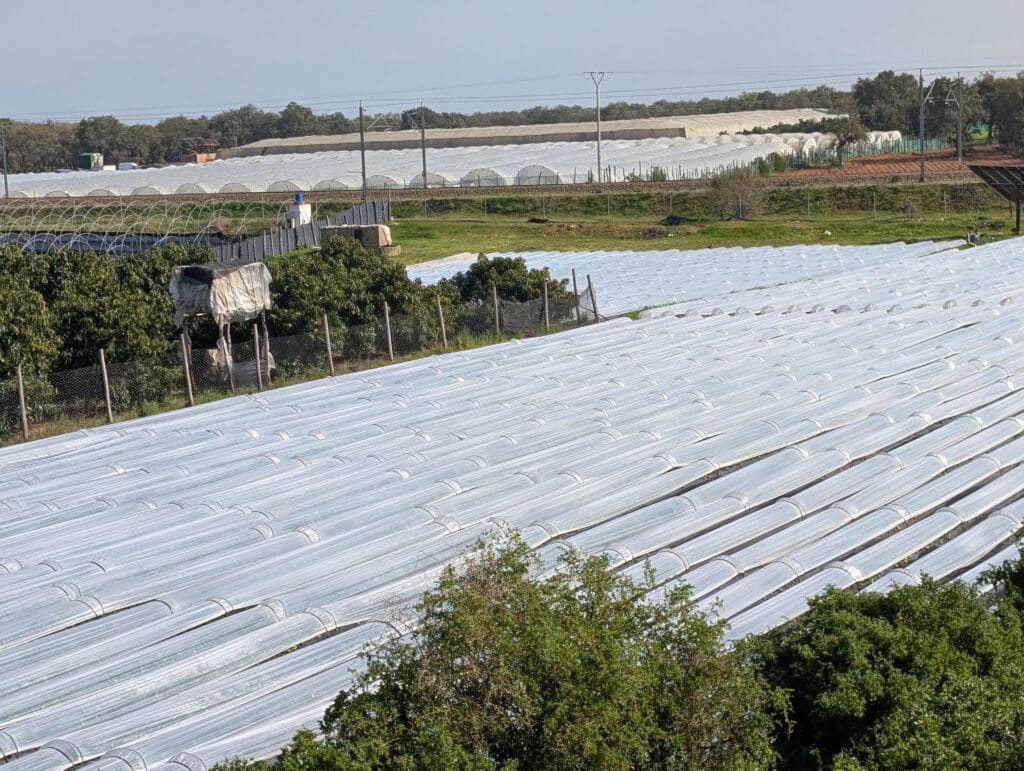
The traces are still visible. Along the sides of greenhouses stretching as far as the eye can see between Moulay Bousselham and Larache, a line of dry mud runs halfway up the white plastic, marking the level to which the water rose during the floods earlier this year.
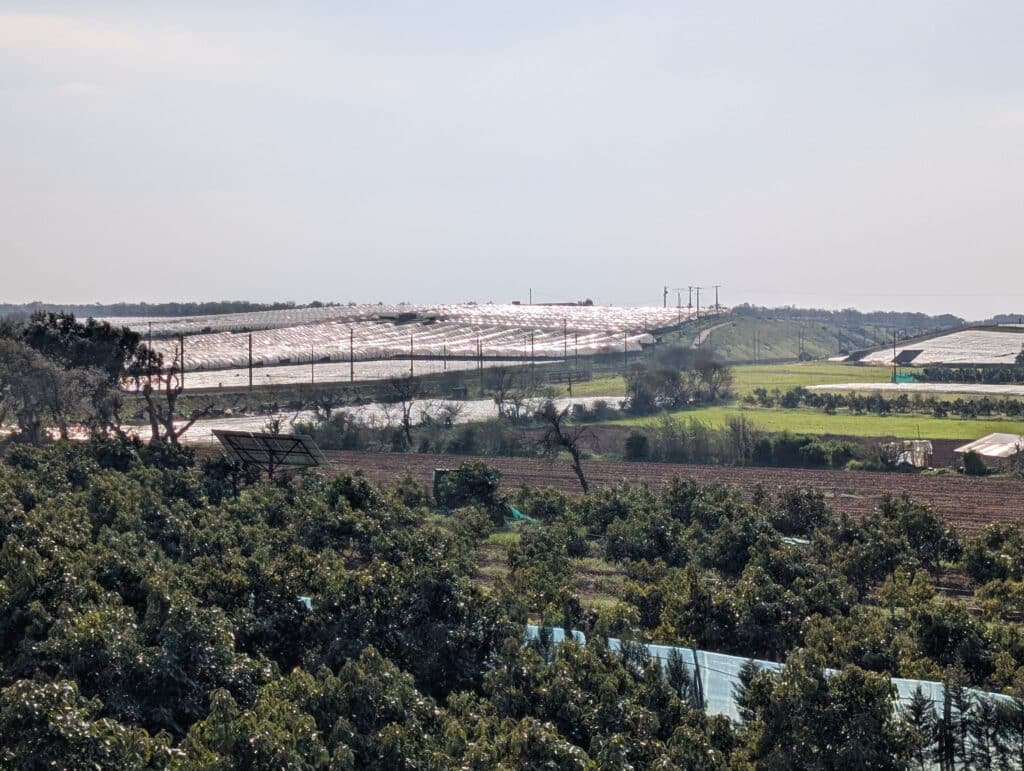
Several tunnels still bear the scars of bad weather — torn canvases, twisted hoops, others held together by makeshift strings. The plain has yet to regain its usual color. From a distance, the lowest fields look like sheets of oil, reflecting the still‑cloudy sky. The land remains saturated with water. It is in this landscape of a season poorly digested that the end of an unprecedented strawberry harvest has begun in recent weeks.
In the late afternoon, workers return from the fields in small groups. Their hands, still stained from a day of picking, rest on their knees as they wait for the minibus in front of a farm enclosed by yellow natural stone. The light softens; the day’s fatigue settles in.
A disgruntled workforce
Amina exchanges a brief moment with us before boarding. She has been working since six a.m., bent over the low rows beneath tunnels barely forty centimeters high.
Her voice is calm, without complaint. For someone who has spent more than fifteen years in this profession, she notes simply: "There are fewer people than before." In the past, she says, many more women worked in these fields. Then, almost to herself, she adds: "Working with strawberries is very hard on the legs and back. Many now prefer raspberries, blueberries, or avocados — you work standing up."
The farm spans about two hectares. Fewer than twenty women worked there that day — an abnormally low number. According to operators in the area, a strawberry farm typically employs around forty workers per hectare during peak season. The gap between the norm and reality is striking, and Hamid, the owner, does not try to downplay it.
From the edge of the field, he watches the minibus and the day’s production depart, arms crossed, eyes scanning the rows still partially laden with fruit.
"This year is unlike any other. We’ve faced extremely difficult conditions — cold, humidity, floods. Production is down, and at the same time, it’s become very hard to find workers, even when offering higher pay," he said.
He has been a producer in the region for several years, and the 2026 season is shaping up to be one of the toughest, hit hard by bad weather. "People have lost a lot of money on strawberries this year. And these floods will only accelerate what was already underway — a gradual shift toward new crops."
The floods are merely an aggravating factor in a process already in motion: the slow abandonment of strawberry cultivation, according to testimonies gathered on site.
A slow conversion
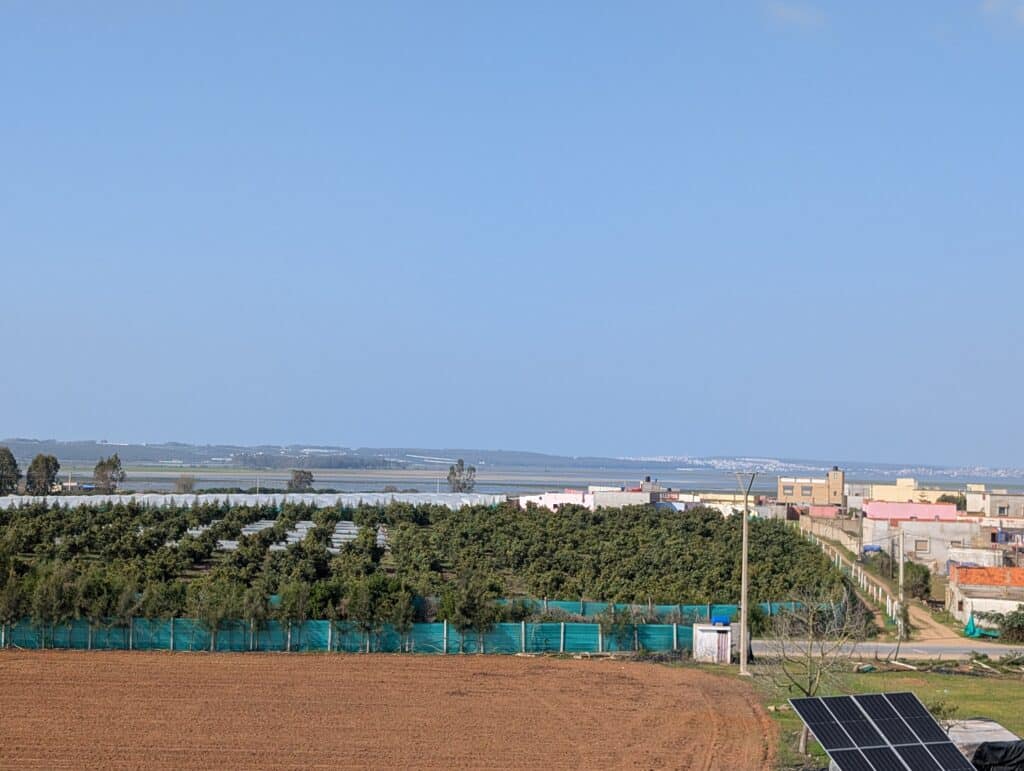
A fundamental trend that can even be observed from the rooftops of Moulay Bousselham, Morocco’s strawberry capital. The low tunnels, lined up in tight rows, still cover large portions of the visible landscape. But they are now interspersed with other structures — taller greenhouses, rows of young trees, presumably avocados, and bare plots undergoing conversion.
The transformation is unmistakable. What began as isolated experiments has become an irreversible process.
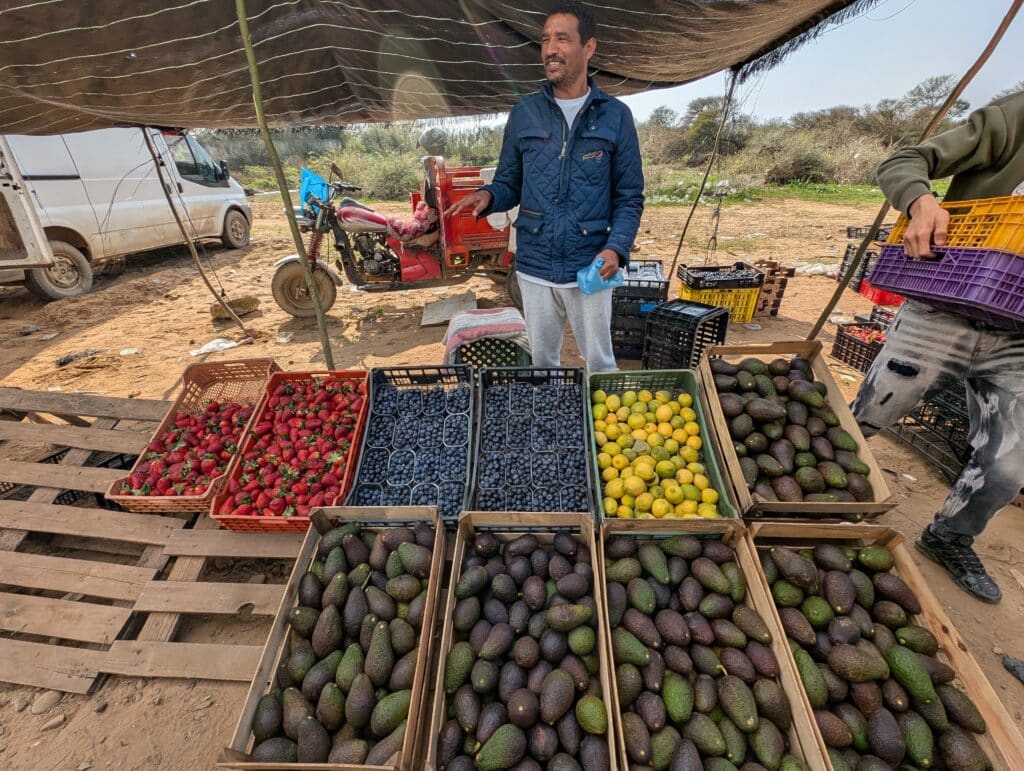
Beyond this year’s temporary losses, a decisive economic factor has emerged — the relative decline in strawberry profitability compared with other crops. For Youssef, an agronomist working across several farms in the area, strawberries are simply no longer as profitable as they once were. The explanation is straightforward. "A kilo of strawberries sells for around 4 to 5 dirhams," he explains. "A kilo of blueberries can reach 200 dirhams."
Mohamed El Ammouri, president of the Moroccan Interprofessional Federation of Red Berries (Interproberries Maroc, IPBM), is more explicit about the logic behind the conversion underway in the Gharb‑Loukkos basin, the country’s main production area.
For him, small‑fruit crops no longer offer the same balance between costs, yields, and prices. Strawberries, he explains, with "a greenhouse costing between 300,000 and 400,000 dirhams per hectare, for a yield of 50 tons per hectare and an average price of 10 dirhams per kilogram," can no longer compete with other crops. He adds that the 10 dirhams represent an aggregated average price, combining fresh strawberries for export, frozen ones, those sold on the domestic market, and waste.
In contrast, raspberries show "an investment of 800,000 DH per hectare, for 20 tons per hectare and 60 DH per kilogram." Blueberries are even higher, with "an investment of one million DH per hectare, for a yield of 20 tons per hectare and 80 DH per kilogram."
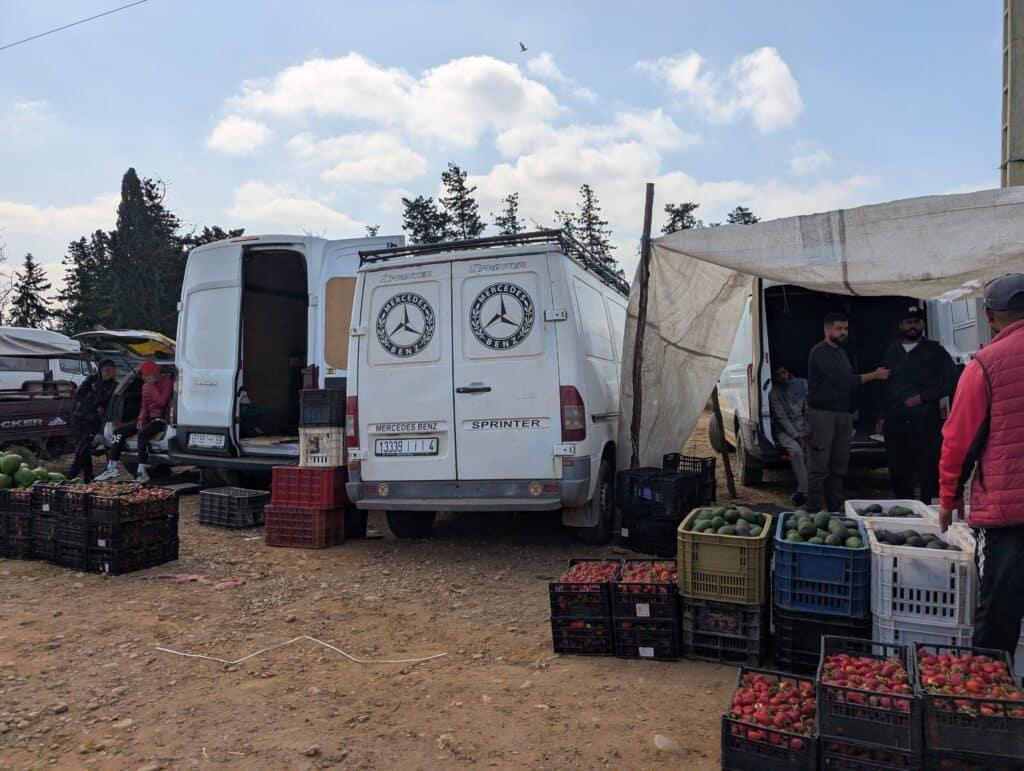
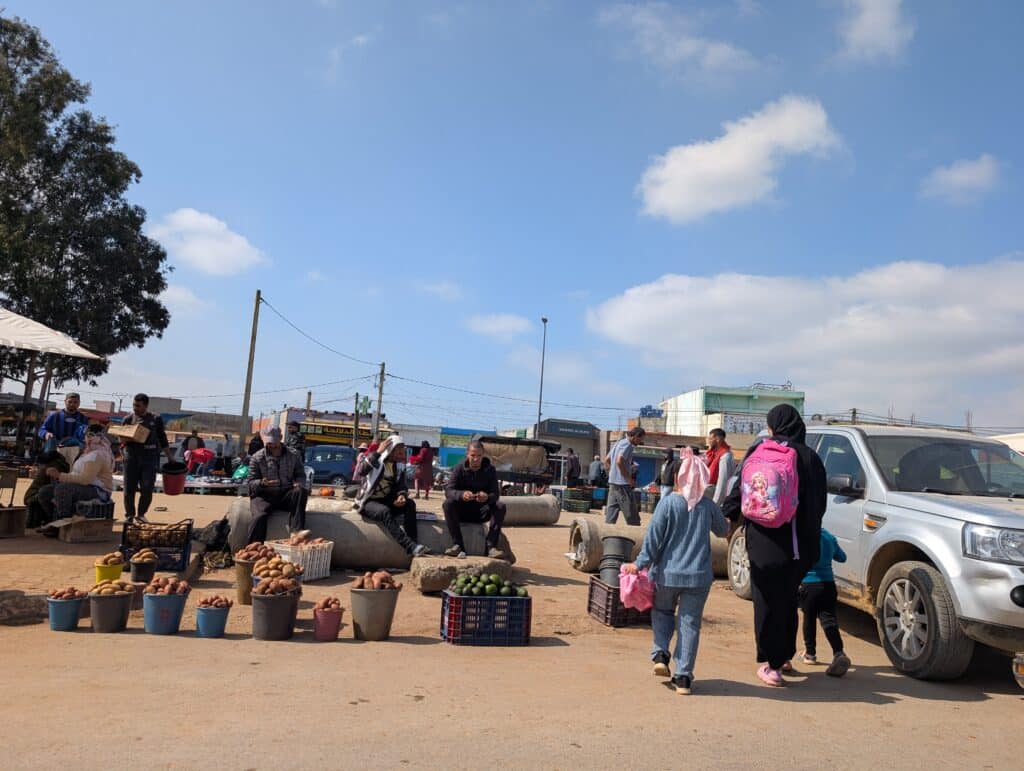

An evolving economic model
El Ammouri does not deny the reality of the shift toward other red fruits in the region. A veteran who readily presents himself as one of the pioneers of strawberry cultivation in Loukkos since 1976 — through an OCE experimental station and Californian varieties — he speaks of the current movement with a certain serenity.
"It is normal for strawberry production to evolve,” he says. He acknowledges that cultivation has indeed declined: “We went from 4,000 hectares a few years ago [until 2019, editor’s note] to 2,300 this season." And the next one, with the aftermath of the floods, should further accentuate this contraction. "The area will shrink again. People have lost a lot of money. The losses are huge and discourage reinvestment in strawberries this year."
In his view, this conversion is not a failure of the sector — quite the opposite. Since the 1990s, strawberry cultivation has played a crucial economic role in the Gharb‑Loukkos basin. According to him, it has "created a significant economic base in the Gharb-Loukkos basin, established commercial networks with French, British, American, and German markets, trained a skilled workforce, instilled a discipline of quality and reliability among producers, and attracted investors from Europe, the United States, Peru, and Chile."
It is on this foundation that raspberries, blackberries, and blueberries have been able to flourish, with logistical infrastructure, packaging stations, and already established contractual relationships. "Strawberries opened the doors; other crops are now entering through those same doors, with better negotiating conditions," says El Ammouri. In his words, one senses both the satisfaction of a mission accomplished and the implicit acknowledgment that strawberry competitiveness has waned, overtaken by crops with higher added value.
National strawberries losing competitiveness
The international pressure is real. El Ammouri describes a European market where Morocco competes with Egypt (around €0.40 per kilo), Turkey, Spain, and the Netherlands. In this context, even though Morocco’s position relies on qualitative advantages — traceability, certifications, consistent volumes, and trust built over decades with European clients — competing on price remains difficult.
The widening gap between revenues from strawberries and those generated by newer, higher‑value crops is increasingly attractive to investors.
Women working in the fields earn an average of 150 to 200 dirhams per day — more than double the minimum wage — and some can reach 500 dirhams in high season thanks to productivity bonuses. Yet applications are becoming scarce. Unlike Souss‑Massa, the region lacks a pool of available sub‑Saharan workers to absorb peak demand.
Another factor aggravates the shortage: the strawberry season in Andalusia’s Huelva region coincides precisely with that of Gharb‑Loukkos, creating direct competition for the same profile of Moroccan female labor.
With "salaries of 35 euros per day," many women are tempted by the adventure, "even if working conditions are not very healthy," says El Ammouri. This year, more than 17,000 Moroccan women are picking strawberries in Spain — most of them from the Gharb‑Loukkos basin.
A struggling water reserve
An additional variable has entered investors’ calculations, compounding the rising cost and scarcity of labor: water. According to Youssef, our agricultural engineer, "in some areas, the water table has dropped from about five meters to fifty meters deep in less than ten years" — a decline with immediate consequences for cost structures.
Pumping at fifty meters does not cost the same as at five, and the lowering of the level has created, in sectors near the Atlantic coast, conditions conducive to saltwater infiltration. To counter this, some producers have begun installing small desalination units directly at the well. The investment cost, according to our source, is around 500,000 dirhams, in addition to electricity and operating expenses. "This increases both water and electricity costs," he notes.
El Ammouri also acknowledges that the water table has indeed fallen over the past decade, but disputes that desalination is widespread in the region as it is in Agadir or Souss. He insists that recent rains have replenished the resource: “This will allow us to work serenely for ten years,” he estimates.
A fundamental trend
The rise in water costs is real and has already been factored into investors’ decision‑making. It weighs even more heavily on strawberries — a crop demanding in irrigation yet offering limited commercial margins. By contrast, higher‑value crops, able to absorb a greater water cost per kilogram produced, become all the more attractive.
For those who have taken the plunge, desalinated water also offers greater control over quality than water drawn directly from wells or dams, allowing finer adaptation to new crops.
Thus, the path is set. Strawberry cultivation — which enriched the Moulay Bousselham region and beyond — is gradually giving way to others. A reality evidenced by the steady erosion of planted areas. And, according to all those we met, this fundamental trend is expected to accelerate further.

à lire aussi

Article : Hommage. Abdelwahab Doukkali, le messager s’est tu
Le plus grand chanteur que le Maroc ait jamais donné au monde arabe est mort ce vendredi 8 mai 2026 à Casablanca. Il avait 85 ans, une voix d'éternité et une vie qui ressemblait à un roman.

Article : Automobile : JAC Motors débarque officiellement au Maroc
Le marché automobile marocain accueille un nouvel acteur chinois. Le constructeur JAC Motors officialise son arrivée au Maroc à travers un partenariat avec M-AUTOMOTIV, distributeur déjà actif dans plusieurs marques asiatiques.

Article : Les FAR réceptionnent sept nouveaux Apache, portant leur flotte livrée à treize appareils
La cérémonie s’est tenue vendredi 8 mai 2026 au champ de manœuvre de Cap Draa, dans la région de Tan-Tan, en présence de hauts responsables militaires marocains et américains, dans le cadre d’un programme d’acquisition de 24 hélicoptères AH-64E.
Article : Viande de mouton : une inflation organisée qui défie l’État et prend l’Aïd en otage
À quelques semaines de Aïd al-Adha, le marché du mouton semble défier toutes les tentatives de stabilisation. Les prix ne reculent pas. Ils s’installent au contraire à des niveaux jamais observés, brouillant les repères habituels des consommateurs comme des professionnels.
Article : Un ancien inspecteur des finances, des universitaires, une chercheuse en France… qui sont les nouveaux membres du Conseil de Bank Al-Maghrib ?
Publiée au Bulletin officiel, la liste des nouveaux membres fait entrer au sein de l’instance monétaire six profils issus de la finance publique, de l’université, de la recherche économique et des institutions internationales.
Article : JK Hôtels : Saham Bank obtient à son tour un paiement anticipé sur une créance de 160 millions de DH
Après la BCP, la BMCI et la Banque Populaire Marrakech-Béni Mellal, l’ex-SGMB vient à son tour d’obtenir le feu vert du tribunal de commerce de Marrakech pour récupérer une partie de sa créance dans le dossier JK Hôtels.