
African Lion 2026: How Morocco tested the army of the future in the South
Concluded on May 8, 2026, the exercise co-organized by the FAR and SETAF-AF brought together more than 40 nations, including 28 from Africa. AI-enabled command systems, FPV drones, loitering munitions, Apache helicopters, WanderB drones and modernized armored vehicles: this edition marked a major tactical and technological leap. Analysis.
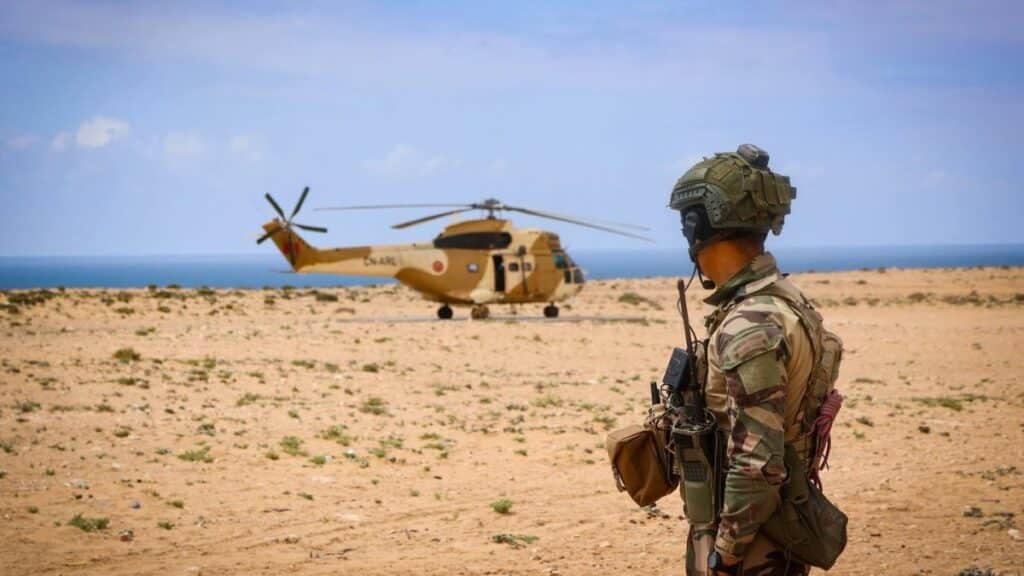
Officially concluded on May 8, 2026, this edition of African Lion marks a profound structural shift. Under the leadership of Morocco’s Royal Armed Forces (FAR) and the U.S. Army Southern European Task Force, Africa (SETAF-AF), the exercise mobilized a coalition of more than 40 nations, including 28 African countries.
While the volume of ground troops may have appeared more limited than in previous editions, this was a deliberate choice. As military consultant Abdelhamid Harifi points out, this edition stood out as the most advanced ever held in Morocco from a tactical and technological standpoint. The challenge was no longer merely to maneuver units, but to synchronize complex operations across the land, air, maritime, cyber and space domains.
To achieve this objective, the exercise served as an unprecedented bridge between operational forces and the private sector. More than 30 partners from the U.S. defense industry were directly integrated into field operations. This collaboration aimed to test emerging capabilities in high-pressure scenarios, accelerating the transition from technological concepts to immediately deployable capabilities.
One of the pillars of this modernization was the testing of artificial intelligence applied to command and control, as well as the introduction of robotics into combat logistics. “The aim is to translate innovation into a combat-ready capability,” the SETAF-AF command summarized. By testing these autonomous systems alongside seasoned soldiers, African Lion 2026 helped reduce the decision-making cycle and shorten the kill chain, while lowering risks for personnel.
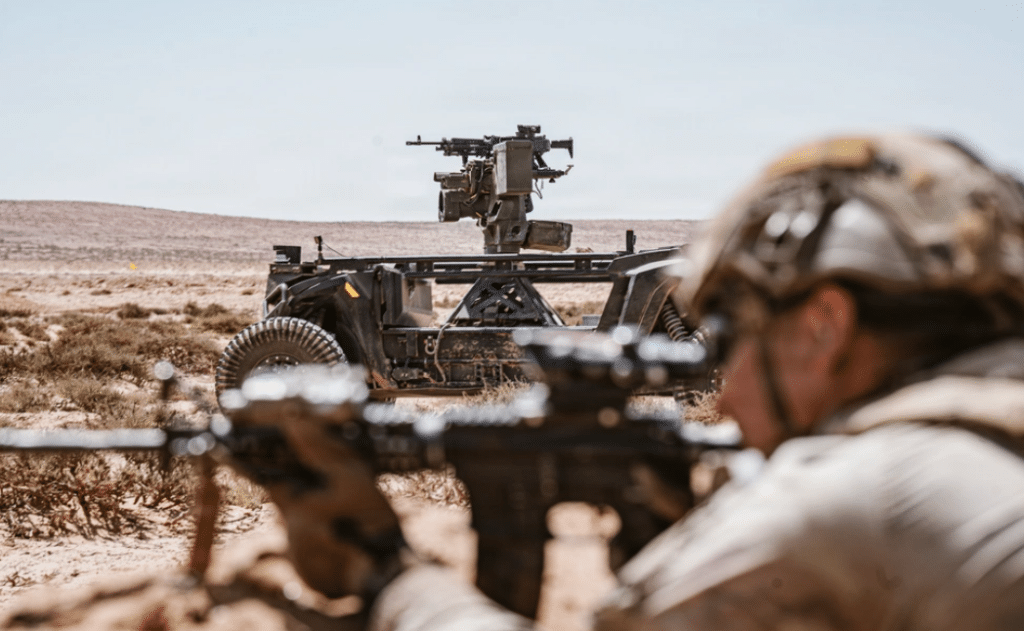
The battlefield of the future: drones, AI and loitering munitions
While African Lion 2026 featured fewer ground troops, this more compact format was offset by an unprecedented level of technological sophistication. This edition established itself as a genuine testing ground for the realities of the modern battlefield, drawing direct lessons from recent conflicts in Ukraine and the Middle East.
For the first time in the history of the exercise, command and control were orchestrated by artificial intelligence-assisted systems, making it possible to drastically shorten the kill chain. This shift turned southern Morocco into a field of innovation. On the ground, it was reflected in the extensive use of FPV drones (First Person View), loitering munitions and next-generation drone interception systems.
The defensive phase was particularly revealing: multilayered sensor networks, combined with drone interceptors, created a technological shield capable of paralyzing enemy maneuvers. In the offensive phase of “deep combat”, special forces synchronized surveillance tools (ISR) with aerial effectors to dismantle enemy command centers and air defense systems.
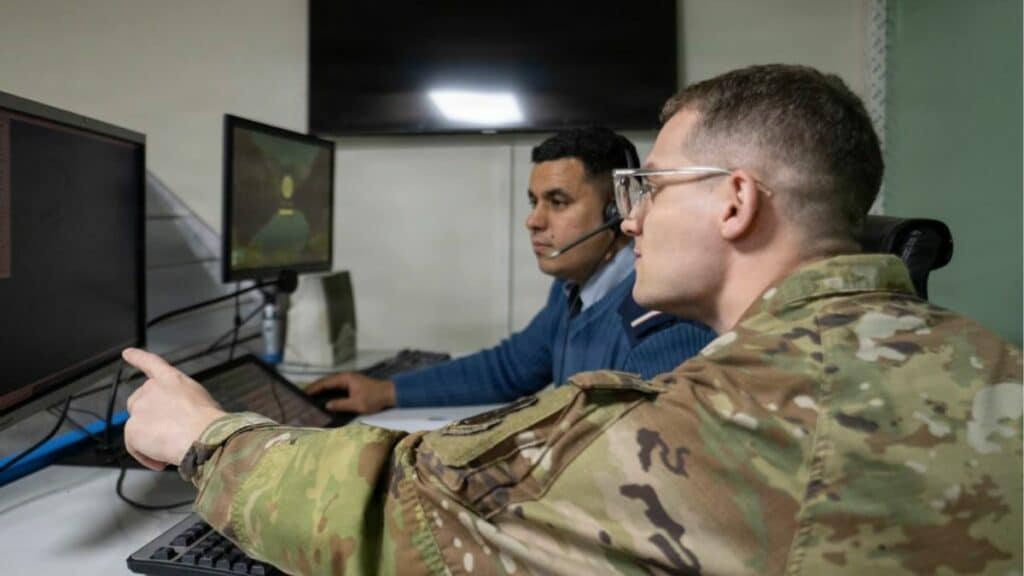
Innovation did not stop at firing systems. Abdelhamid Harifi also notes the introduction, for the first time, of robots in combat logistics and the use of moving robotic targets at Cap Drâa. According to the expert, testing these technologies “under real-world conditions” by the soldiers themselves is crucial, as it provides immediate operator feedback and helps adapt the tools to real conditions of stress and terrain.
The Apache and the WanderB: the “missing piece” of Morocco’s tactical puzzle
One of the major turning points of the 2026 edition was the operational validation of AH-64E Apache attack helicopters within the FAR. The entry into service of these aircraft is not simply an addition of equipment, but the culmination of a long-term modernization plan that began with the upgrading of artillery, was followed by the acquisition of Abrams tanks, and now continues with the integration of heavy aerial fire support.
At Cap Drâa, the display of force was comprehensive. The Apaches maneuvered in close coordination with armored units and infantry, illustrating a rapid-response capability in counterattack scenarios. Although the overall order covers 24 aircraft, Morocco used the exercise to demonstrate its mastery of the current fleet: of the 13 helicopters already in service, seven were received during the event. Moroccan pilots distinguished themselves through complex tactical maneuvers, proving that, even as deliveries continue, the force is already ready for high-intensity operations.
This build-up in aerial power goes hand in hand with the growing digitization of the battlefield. The exercise highlighted the extensive use of drones by the FAR, coordinated through the new Drone Training Academy.
The WanderB models played a pivotal role in target designation for the Royal Artillery. While this equipment is not new to the FAR, its deployment in a multinational setting of this scale confirms the maturity of Morocco’s strike chain. Real-time airborne intelligence and precision fire from artillery and armored units now form a single, seamless ecosystem, capable of drastically shortening the time between the detection and neutralization of a threat.
Sovereignty and local engineering: the modernization of the armored fleet
African Lion 2026 was not only a showcase for American technology; it also confirmed the emergence of a Moroccan defense industrial and technological base. At the heart of this demonstration, the local modernization of M113 A3 armored personnel carriers made a strong impression. These vehicles, pillars of the infantry, are now equipped with the Guardian 1.5 system, a remote weapon station (RWS) that illustrates a distinctive strategy of technological hybridization.
Abdelhamid Harifi explains that this system is the result of intelligent integration: it combines a 14.5 mm machine gun, a weapon inherited from the Soviet era and widely proven during the Sahara War, with advanced guidance and optronic sighting systems imported from Spain. This modernization was led by national centers of excellence, notably the Benslimane optronics facility and the material support facility in Nouaceur.
This approach meets a dual strategic need. On the one hand, it makes it possible to avoid the exorbitant costs of acquiring new equipment while extending the operational lifespan of the armored fleet from fifteen to twenty-five years. On the other, it strengthens the protection of combat personnel.
As the expert explains, Morocco long hesitated to adopt these remotely operated systems because of concerns about their fragility in extreme conditions, particularly sand and dust. However, the evolution of threats, especially the widespread use of FPV drones, now makes these turrets indispensable. They provide soldiers with a 360-degree field of vision and the ability to return fire while remaining protected by armor, thereby drastically reducing human losses.
By transforming its older assets into high-tech platforms, Morocco is showing that its industrial rise is no longer merely a project, but an operational reality. This shift from buyer to integrator and modernizer marks a key step in the construction of an autonomous defense ecosystem.
A diplomatic shield: between historical legacy and national cause
Beyond its tactical prowess, African Lion 2026 unfolded under exceptional symbolic weight. The exercise coincided with the 250th anniversary of the United States, a historic milestone that General Dagvin R.M. Anderson, commander of AFRICOM, used to recall the depth of bilateral ties: “The U.S.-Morocco relationship reflects a fundamental principle: true strength lies in enduring partnerships, a friendship that began in 1777 and continues to thrive today.”
For Washington, Morocco is not merely a host, but the “cornerstone” of a collective security architecture capable of responding to threats that, according to the general, “recognize no borders.”
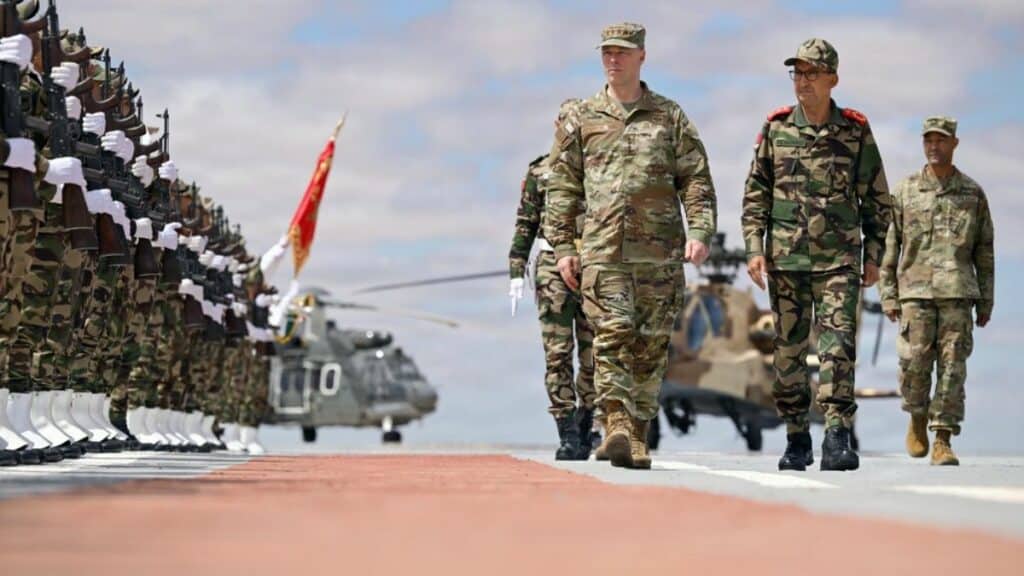
This solidarity took concrete and human form during the exercise, when multinational forces were mobilized to support real search-and-rescue efforts for the two soldiers who went missing on May 2, 2026, near a cliff at Cap Drâa, illustrating what military leaders call “the human dimension of partnership.”
From a geopolitical standpoint, the demonstration of technological power, particularly the seamless synchronization between Apache helicopters and Abrams armored vehicles, carries a meaning that goes beyond training. According to Abdelhamid Harifi, a subtle but firm message is being sent to regional actors and the Kingdom’s adversaries: the military and security partnership with Washington is now more strategic than ever.
For the expert, this deployment of force is also a lever in the ongoing diplomatic negotiations over the Moroccan Sahara, signaling that Morocco has first-rate allies ready to stand by its side on the basis of shared interests and a collective will to act.
Despite the noticeable absence of U.S. special forces this year, held back by tensions in the Middle East, the exercise was able to rely on the presence of elite U.S. airborne troops and contingents from 40 partner nations. This massive coalition confirms that transnational instability and terrorism require a unified multinational response.
As the guns fall silent at Cap Drâa, African Lion 2026 leaves behind a transformed Moroccan army and a strengthened U.S.-Moroccan alliance. Attention now turns to the 2027 edition, which is already shaping up as a further step up in scale and complexity. As General Anderson concluded, the exercise has become a “laboratory for innovation”, where allies are inventing, in real time, the way they will prepare for the challenges of an increasingly complex world.

à lire aussi
Article : CIRDI : Face à Emmerson, Rabat demande une bifurcation de la procédure
Face à une réclamation de 1,215 milliard de dollars portée par les investisseurs liés au projet de potasse de Khémisset, le Maroc demande au CIRDI d’examiner en priorité ses objections de compétence.

Article : Les nappes phréatiques ont moins bénéficié des pluies que les barrages
Alors que les barrages marocains affichent un taux de remplissage de 76,2 %, le niveau des eaux souterraines raconte une autre histoire. L'analyse des données satellitaires sur dix ans révèle un rebond disparate et timide.
Article : Transport militaire : le Maroc renforce sa flotte de transport aérien avec l’Airbus C295
L’Airbus C295 acquis par les Forces armées royales dans le cadre de la modernisation des Forces royales air a été dévoilé par Forum Far-Maroc. Selon l’expert militaire Abdelhamid Harifi, cette acquisition vise à renforcer les capacités de transport aérien militaire du Maroc, tout en s’inscrivant dans le contexte du rapprochement maroco-espagnol.

Article : EXCLUSIF. Cartes à l’appui, les grands changements urbanistiques envisagés à Hay Mohammadi
CASABLANCA. Le projet de nouveau plan d’aménagement de Hay Mohammadi arrive à une étape décisive. Prévu pour examen le 14 mai par le conseil de la ville de Casablanca, ce document suscite une vive contestation locale, notamment autour du devenir de quartiers historiques comme Derb Moulay Cherif. Voici, en détail, ce que prévoit ce plan.
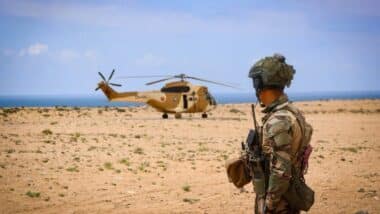
Article : African Lion 2026 : comment le Maroc a testé l’armée du futur dans le Sud
Clôturé le 8 mai 2026, l’exercice coorganisé par les FAR et la SETAF-AF a réuni plus de 40 nations, dont 28 africaines. IA de commandement, drones FPV, munitions rôdeuses, Apache, WanderB et blindés modernisés... Cette édition a marqué un saut tactique et technologique majeur. Décryptage.

Article : Hôtels. Les visites mystère vont-elles vraiment améliorer le service ?
Lancée par la SMIT, l’opération suscite déjà des réserves chez certains professionnels, qui plaident pour des audits suivis de plans d’action, de contre-visites et d’investissements dans la formation, plutôt que pour une logique strictement punitive.