
The Case for an Arabian Universal Basic Income
LONDON – The notion of a government-provided universal basic income (UBI) has been gaining traction throughout the developed world. Although UBI policies face significant political and fiscal obstacles in the West, the idea is catching on in a region where conditions for introducing a universal cash-grant system are more favorable: the wealthy, oil-exporting Arabian Peninsula.
The Gulf oil monarchies, though largely authoritarian, already provide their citizens with very generous benefits, including free education and health care, cheap energy, and, most important, an implicit public-employment guarantee. Some two-thirds of employed citizens in Gulf Cooperation Council (GCC) countries hold a public-sector job.
This system has created both a sizable middle class and extreme economic distortions. Energy subsidies are environmentally damaging and disproportionately favor richer households, while excess public employment is unproductive and takes nationals out of the private-sector economy. Although today’s new entrants to the labor market often do not have access to public employment, it nonetheless distorts their expectations about wages and working hours.
As oil prices have fallen and the number of working-age nationals continues to grow, Gulf States’ established welfare systems have become fiscally unsustainable. But public employment in particular has proved difficult to reform. Mass government layoffs are politically unrealistic. The challenge is to find a new wealth-sharing model that is fairer, more transparent, less economically distortive, and fiscally sustainable.
As I argued in a recent paper, the most intuitive and tamper-proof mechanism for such wealth sharing would be a UBI. In the GCC countries, exceptionally, such a scheme could be financed without tax hikes, by reforming existing wealth-sharing policies. The key idea is to separate domestic energy policy and public employment from the wealth-distribution process, thereby enabling badly needed rationalization in both domains.
A UBI would be financed out of savings from reductions in domestic energy subsidies, a halt to public-sector hiring, and the gradual trimming of the public-sector workforce. Those leaving government would receive the new cash grant as a quid pro quo; additional “golden handshake” incentives could help accelerate the process. The UBI would give all adult citizens basic income security, but also sufficient incentive to earn supplementary income in the private sector.
An Arabian UBI would face none of the problems that bedevil such proposals in OECD countries. Besides not requiring any new taxes, such a measure would not create work disincentives compared to the status quo, because the economic distortions arising from idle public employment are much worse.
In a recent project supported by the Kuwait Programme at the London School of Economics and the Kuwait Public Policy Center, I showed how an Arabian UBI could work in practice. Simply redirecting Kuwait’s current energy subsidies toward a UBI could finance sizable monthly grants for citizens. To reduce the current wealth-sharing model’s distortions, payments should be differentiated. Because Kuwaiti citizens in public employment already receive large implicit transfers, they could get a minimal grant of about $200 per month that compensated them for the higher energy expenses resulting from the subsidy cuts.
This would leave sufficient savings to pay every adult citizen outside of the public sector a monthly grant of $700 and every child a grant of $230. These payments would not afford recipients a comfortable life, but they would help to narrow the wage gap between the public and private sectors, which currently amounts to about $1,400 per month for Kuwaiti citizens. Citizens with modest private-sector salaries could supplement them with the UBI to reach socially acceptable levels of total income. From a political perspective, the introduction of a UBI would be a powerful quid pro quo for drastically reduced public-sector hiring.
My estimates show that while all major income categories of Kuwaiti households would be net beneficiaries from the reform, poorer households would benefit significantly more, making the reform strongly progressive. Foreign households in Kuwait would not be directly compensated for the increase in energy prices and would thus suffer a small negative financial impact.
Although such households’ energy consumption is typically very low, Kuwait should strictly enforce its minimum-wage rules to ensure that no low-income foreign workers face energy poverty. My estimates also indicate that the impact of higher energy costs on inflation and local firms’ competitiveness would be minimal.
Moreover, the UBI figures used here are lower-boundary estimates. Cash grants could be significantly higher if they were financed out of savings from the gradual attrition of Kuwaiti public employment. A 10% reduction of the public payroll could finance an increase of $650 per month in UBI payments to adults. In a virtuous circle, Kuwaitis deciding to leave government to receive the UBI would generate further resources for the system.
Decoupling government employment from wealth sharing would give citizens stronger incentives to seek skills that are relevant in the private sector. Because the UBI would be unconditional, it would not be “taxed away” as private incomes rise, thus minimizing the work disincentives associated with conventional means-tested welfare programs. The security of a basic income would give citizens autonomy to take entrepreneurial risks and make the most of their talents.
Kuwait is not alone. Other oil-producing countries in the Middle East and North Africa (MENA) region operate similar patronage systems with essentially the same distortions and fiscal challenges. The same rationale for UBI reforms applies in other GCC countries and even in struggling oil-rich states like Libya and Iraq, although cash grants there would be smaller.
For the time being, a generous UBI remains unaffordable in Western countries. In MENA oil states, by contrast, some form of direct wealth sharing might be the only politically feasible way to reform existing welfare structures and avoid a long-term fiscal crisis.
à lire aussi
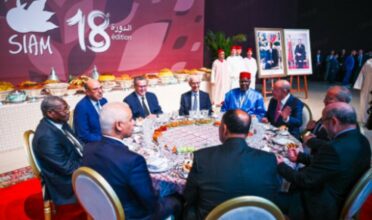
Article : SIAM 2026 : dîner royal à Meknès en l’honneur des invités et participants
À Meknès, le Roi Mohammed VI a offert un dîner aux invités du SIAM 2026, marqué par la présence de hautes personnalités et par la remise de trophées récompensant l’excellence agricole.

Article : Les prévisions météo pour vendredi 24 avril 2026
Voici les prévisions météorologiques pour le vendredi 24 avril 2026, établies par la Direction générale de la météorologie : - Averses orageuses sur le Rif, […]

Article : Liquidation de JK Hôtels : BCP et BMCI seront les premiers servis
Neuf ans après l'ouverture de la procédure de difficulté et six mois après la cession du complexe hôtelier situé à Marrakech, le tribunal de commerce donne son feu vert à des paiements anticipés au profit de plusieurs établissements bancaires créanciers.
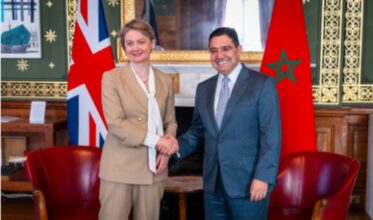
Article : Le Royaume-Uni réaffirme son appui au plan d’autonomie marocain comme “la base la plus crédible, viable et pragmatique pour la paix au Sahara”
En visite à Londres, Nasser Bourita a reçu la confirmation du soutien britannique au plan d’autonomie marocain pour le Sahara, que la ministre des Affaires étrangères Yvette Cooper a qualifié de solution "la plus crédible, viable et pragmatique". Londres a également réaffirmé son engagement en faveur du processus onusien et salué l’excellence du partenariat stratégique avec Rabat, notamment dans la perspective de la Coupe du monde de football 2030.

Article : Vendredi 24 avril 2026 : le dirham se déprécie face au dollar
Ce vendredi 24 avril 2026, vers 8 h 30, la première cotation centrale USD/MAD de la journée, telle que publiée par Bank Al-Maghrib (BAM), fait […]

Article : Au-delà du bilan Akhannouch, lecture des indicateurs du marché du travail
Sous le gouvernement Akhannouch, le marché de l’emploi reste le principal point de fragilité de l’économie. Ce problème est ancien mais s’aggrave au fil du temps. Médias24 confronte les engagements du gouvernement à ses réalisations et analyse, au-delà du mandat, plusieurs indicateurs du marché du travail sur une longue période.