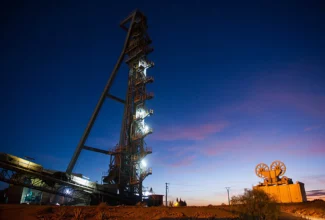

I also will remember my visit to Niger in July. I witnessed the tangible results of EU-Niger cooperation with the inauguration of the Gorou Banda solar power plant near Niamey. In Agadez, I also saw hundreds of social housing units built with EU support. Nigerien President Mohamed Bazoum’s ambitious vision and actions offered real hope in a region that had fallen prey to authoritarian drift. That is why, shortly after my visit, the military coup on July 26 was a shock for me.
After a discussion with my European counterparts, in the presence of the Nigerien minister of foreign affairs and the president of the Commission of the Economic Community of West African States (ECOWAS), I would like to share a few thoughts on the situation in Niger and the Sahel.
We must maintain unwavering support for Bazoum, the democratically elected president, for “as long as it takes,” demanding a return to constitutional order in Niger. The future of democracy across the region is at stake. The democracy that the people of Niger want, the one that ECOWAS is promoting, and the one that the EU is defending around the world.
Our support for ECOWAS also must not waver. There is no room for secondary arrangements or parallel mediation channels. As Europeans, we have long supported the search for “African solutions to African problems.” At a time when ECOWAS is taking an unprecedently firm and consequential stand, we must follow up our words with action.
In addition to defending its democratic values, the EU also has a major interest in seeing Niger return to the path of constitutional order. Another Sahelian country falling into the hands of a military junta would have far-reaching negative consequences for Europe in terms of security, migration flows, and the geopolitical balance of power. It is a mistake to believe that military juntas can effectively combat terrorist movements or human trafficking. The best bulwarks against such threats are democratic states with the ambition, will, and means to create new opportunities for their people.
Certainly, EU policy toward the Sahel has not been as successful as we had hoped in recent years. We have sometimes been too focused on the security dimension alone, and our efforts to help strengthen the rule of law and provide basic services have not been sufficient or visible enough. The “strategic patience” we have shown toward the military juntas in the region has also not had any concrete results other than encouraging new vocations.
Despite this necessary self-criticism, we must not forget that Europe’s roadmap in the Sahel in recent years has been a Sahelian one. We have committed our soldiers, our money, and our political capital to the region because Sahelian countries asked us to do so.
What can we do now? We can suspend our budgetary support for, and security cooperation with, Niger; work toward the adoption of sanctions; and show solidarity in response to the unjustified expulsion of the ambassador of one of our member states. However, we also must go further. Since it would not be reasonable to keep doing the same thing and expect a different result, we must adopt a different approach.
Security cooperation, the issuing of visas, and economic development programs must be reconsidered, and we must move quickly in deciding what needs to change – both with respect to Niger and other countries across the Sahel. We will need to hold this showdown with the military juntas without falling into the traps set by regimes that rely principally on manipulation and disinformation. With little results to show for their anti-terrorism or economic-development efforts, the region’s juntas have found these to be their most effective tools.
The Sahel is a test for the entire EU. No one should be pleased by the difficulties that France is encountering in the region. It has become a convenient scapegoat for juntas looking to manufacture national cohesion while concealing their own failures and abuses. But France is not the problem in the Sahel; the military juntas are, because they lack both the means to fight terrorism effectively, and the ambition to improve their people’s daily lives and future prospects.
Those who rejoice, in Europe or elsewhere, at the difficulties encountered by Europeans in the Sahel do not fully appreciate what is at stake. We will all pay a high price if we fail to remain coherent and united. Only a united Europe can influence the course of events. The coming weeks will tell whether we are up to the task of responding to expectations in this strategic region.