
Death by Dirty Cooking
FREETOWN, SIERRA LEONE – Each year, exposure to household air pollution (HAP) kills 4.3 million people – more than HIV/AIDS, malaria, and tuberculosis combined. HAP is produced when households use antiquated fuels – such as firewood, coal, crop waste, and kerosene – for cooking and heating, so ending HAP-related deaths is as straightforward as delivering clean-cooking solutions.
Yet the world hasn’t done it. Across Africa, for example, over 80% of people still rely on biomass as their primary source of energy. In my home country, Sierra Leone (one of the five most vulnerable countries to climate change), less than 20% of the population has electricity, while over 90% rely on charcoal and firewood for cooking. If current trends hold, Africans will still be using such fuels to cook in 2050.
It would cost an estimated $4.4 billion annually to meet the world’s residential clean-cooking needs – far more than what is currently available. While that figure is not small, it is dwarfed by the costs of inaction. Beyond its devastating effects on human health – HAP is the second-largest risk factor for death and disability in Sub-Saharan Africa – reliance on non-renewable wood fuels for cooking contributes up to one gigaton of CO2emissions annually, or about 2% of total emissions.
Moreover, such cooking methods are a major source of black carbon, the second-biggest driver of climate change after CO2: solid-fuel cooking in Sub-Saharan Africa alone accounts for some 6% of global black carbon emissions. Compounding the effect on climate, up to 34% of wood fuel in Sub-Saharan Africa is harvested unsustainably, contributing to deforestation.
The persistence of outmoded cooking and heating methods amounts to a major drain on economies. In Sub-Saharan Africa, about 3% of GDP is lost annually as a result of increased mortality and morbidity from HAP, avoidable spending on solid fuels, time wasted collecting firewood, and environmental damage. Women and children suffer the most.
Failure to address the problem does not reflect inadequate technology or even insufficient resources, but a lack of political will. While governments and international actors have worked to expand access to electricity, they have often left clean-cooking solutions – using, say, electricity derived from renewable energy – on the back burner. Efforts to promote clean cooking have been largely uncoordinated, narrow, and piecemeal, with limited consumer buy-in.
A new initiative aims to change this. The World Bank’s Clean Cooking Fund, launched at September’s United Nations climate action summit in New York, will mobilize $500 million to help ensure universal access to clean cooking by 2030. This includes scaling up the production of clean-cooking fuels, developing well-functioning supply chains to deliver them to billions of people, and encouraging innovation and diffusion of relevant technologies.
To this end, the CCF will leverage World Bank and other development-bank resources to attract private investment, including by creating new revenue streams and incentives across value chains. It will also develop an impact bond market for the clean-cooking sector.
Moreover, the CCF will support a global platform for knowledge and innovation, including the Health and Energy Platform of Action, convened by the World Health Organization, the UN Development Programme, and the World Bank in collaboration with the civil-society organizations Hivos and ENERGIA. All of this should help to produce verifiable results at the outcome level (number of households with access to clean cooking) and the impact level (benefiting health, gender equality, and the environment).
But, as promising as the CCF is, achieving its goals will require coherent policy strategies, underpinned by a strong and sustained commitment at the national, regional, and global levels. India is one country that has shown such a commitment.
According to the World Bank’s Energy Progress Report 2019 – which tracks progress toward Sustainable Development Goal 7 (to ensure access to affordable, reliable, sustainable, and modern energy for all) – the country has raised its electrification rate considerably, from 50% in 1994 to 93% in 2017. Its clean-cooking access rate remains much lower – 45% in 2017 – but still represents significant progress, having more than doubled since 2000. And the share of the population using biomass for cooking fell from 64% in 2010 to 59% in 2015.
This shift has been driven partly by expanded access to liquefied petroleum gas. In 2016, India became the world’s third-largest LPG importer, behind China and Japan. That year, the government also launched the Pradhan Mantri Ujjwala Yojana program, with the goal of providing LPG access to 50 million households living in poverty by 2019. Last year, it surpassed that target, and expanded the scheme to cover 80 million families. Other countries, such as Cambodia and Indonesia, have also made significant progress in expanding access to LPG and other clean-cooking fuels.
The imperative now is to continue building on these gains, while adapting the strategies that powered them to different contexts, especially in Africa. To this end, the UN should lead the way in advancing a multi-stakeholder approach driven by strong public-private partnerships. Such an approach has worked before, mobilizing billions of dollars in investment in renewables and energy efficiency. It can work again – and save millions of lives in the process.
à lire aussi
Article : Un milliard sans garantie de l'État : comment la région Casablanca-Settat a réussi son pari obligataire
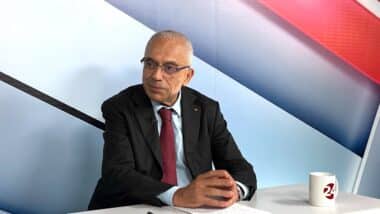
La région Casablanca-Settat vient de clôturer sa première levée obligataire, une opération inédite pour une région. La levée est d'un montant d'un milliard de dirhams sur le marché des capitaux, dont 400 millions apportés par la Banque mondiale (BERD). Le président de la région, Abdellatif Maazouz, revient sur les coulisses de cette opération, ses fondements financiers et les projets qu'elle est appelée à financer.

Article : Carreaux céramiques : ouverture d'une enquête antidumping sur les importations indiennes
Le Maroc ouvre une enquête antidumping sur les importations de carreaux céramiques en provenance d’Inde. À l’origine de cette procédure, les industriels marocains du secteur dénoncent des pratiques de dumping et une hausse soutenue des importations indiennes, jugées menaçantes pour la production nationale.

Article : African Lion 2026 : une édition placée sous le signe de l’innovation technologique et de la maturité stratégique
L’édition 2026 de l’exercice militaire African Lion, le plus grand rassemblement de forces armées sur le continent, se déroule du 20 avril au 8 mai. Entre l’utilisation de nouvelles technologies de pointe et une intégration accrue entre les forces marocaines et américaines, cette cuvée marque un tournant qualitatif, malgré une certaine discrétion médiatique dictée par le contexte international.

Article : Quartier Océan à Rabat: démolitions en chaîne et incertitudes sur l’avenir du quartier
Les opérations de démolition se poursuivent dans le quartier de l’Océan à Rabat, où le paysage urbain évolue rapidement sous l’effet d’un chantier de requalification d’ampleur. Entre annonces jugées tardives, incertitudes sur le périmètre concerné et contestation des indemnisations, les témoignages recueillis sur place reflètent une situation confuse.
Article : Le musée du continent africain devrait ouvrir à la fin de 2027 (Mehdi Qotbi)
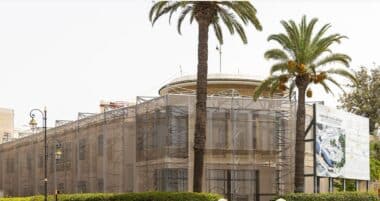
Porté par la Fondation nationale des musées, le futur musée du continent africain a franchi une étape décisive. Le président Mehdi Qotbi nous annonce que le plus grand complexe muséal d'Afrique, dont les travaux de gros œuvre ont dépassé 85%, entre dans sa phase finale avant une ouverture au public lors du dernier trimestre 2027.
Article : Le jardinier marocain de Jany Le Pen expulsé vers le Maroc pour séjour irrégulier
Selon une information révélée par Le Parisien, Hatim B., un Marocain de 32 ans qui effectuait des travaux de jardinage chez Jany Le Pen, veuve de Jean-Marie Le Pen, a été expulsé le jeudi 23 avril vers le Maroc. En situation irrégulière en France depuis 2017, il faisait l’objet d’une mesure d’éloignement décidée par le préfet des Hauts-de-Seine.