
How Cash Transfers Prevent Lockdown Tragedies
ISLAMABAD – In 2017, I was a candidate to become the next Director-General of the World Health Organization. At the 70th World Health Assembly, I stood before health ministers from around the world and warned that three things could destroy the planet: a celestial event, a third world war, or a pandemic.
The COVID-19 pandemic may not have destroyed the planet, but it is certainly putting public and private institutions to a harsh test. In addition to its dire health consequences, the pandemic has decimated livelihoods worldwide, squeezing the middle class and pushing low-income households into abject poverty.
In Pakistan – the world’s fifth-largest country by population – 24 million breadwinners rely on daily wages or are self-employed in the informal economy. For them, life came to a standstill with the implementation of a lockdown in March, causing a widespread loss of income that began fueling civil unrest and rioting.
To mitigate the pandemic’s socioeconomic damage, Pakistan’s government created the Ehsaas Emergency Cash program, the largest social-protection program in the country’s history. Rolled out ten days after the lockdown began, it is delivering one-time cash grants totaling more than $1.2 billion to more than 16.9 million households, covering around 109 million people – approximately 50% of the country’s population. Recipient families are given Rs12,000 ($75) to cover their immediate subsistence needs.
Prior to the delivery of Ehsaas cash, I saw unspeakable suffering among people from many walks of life. There were day laborers and hawkers, hotel and restaurant staff, and domestic servants, security guards, and drivers. There were also laid-off public-transport employees, fishermen and miners, beauticians and barbers, and millions of shopkeepers – all on the verge of hunger, with their savings used up. They, along with private-school teachers, electricians, welders, painters, carpenters, plumbers, car mechanics, taxi drivers, and construction workers, did not know where their next meal would come from.
These stories were repeated across industries and regions, with even those used to earning a decent living suddenly wondering if their finances would ever add up again. But the handouts brought stability and comfort to millions of families, and the whole country watched as countless tragedies were averted.
Beyond the immediate crisis, the success of Ehsaas Emergency Cash offers Pakistan and other middle- and low-income countries invaluable experience in speedily delivering a massive national program in a complex and uncertain context. In order to share this knowledge, the government recently released a report describing the knowhow we gained through the program’s design and implementation, as well as the operational challenges we encountered and how they were addressed.
The program’s end-to-end digital approach, with transparency hardwired into its design, offers lessons about how to leverage personal identification systems. By combining phones, Internet connectivity, and national IDs, a digital, demand-based social-protection system can be created to enable those in distress to seek support during crises. And it demonstrates how cash transfer programs can be deployed to counter the adverse socioeconomic consequences of external shocks, such as COVID-19.
For Pakistan, this was a watershed moment in terms of government functioning. The crisis compelled the government to be more responsive, data-driven, experimental, and ambitious. Cost-effective digital methods of working, new ways to coordinate the activities of multiple stakeholders, and a whole-of-government approach have been institutionalized. These measures will transform policymaking in a post-COVID-19 world.
Finally, the legacy of the program goes beyond short-term relief. Built into its design are long-term goals to strengthen the safety net and increase financial inclusion, both of which will bring lasting benefits to recipients and to Pakistan as a whole. Alongside this is a commitment to transparency and accountability, which is the underlying motivation for the publication of the report. In order for democracies to ensure progress, a culture of integrity and openness must be ingrained in government institutions and processes.
History shows that disasters and their tragic consequences can be a catalyst of large-scale social change. COVID-19 has presented Pakistan with an urgent and unprecedented challenge, which could be met only by a program with the scale and ambition of Ehsaas Emergency Cash.
In the wake of the pandemic, we must embrace the once-in-a-generation chance to replicate this ambition globally and build a fairer world that overcomes poverty, inequality, and the climate crisis, with social protection as a core pillar of that effort.
The world has not faced a more difficult challenge since the end of World War II. But in our darkest hour, we can find a way forward by collectively deciding to move toward a fairer, greener, and more sustainable world for all.
à lire aussi
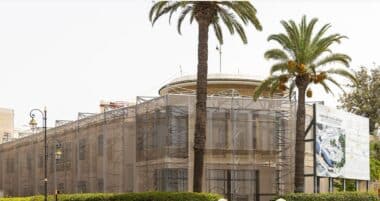
Article : Le musée du continent africain devrait ouvrir à la fin de 2027 (Mehdi Qotbi)
Porté par la Fondation nationale des musées, le futur musée du continent africain a franchi une étape décisive. Le président Mehdi Qotbi nous annonce que le plus grand complexe muséal d'Afrique, dont les travaux de gros œuvre ont dépassé 85%, entre dans sa phase finale avant une ouverture au public lors du dernier trimestre 2027.
Article : Le jardinier marocain de Jany Le Pen expulsé vers le Maroc pour séjour irrégulier
Selon une information révélée par Le Parisien, Hatim B., un Marocain de 32 ans qui effectuait des travaux de jardinage chez Jany Le Pen, veuve de Jean-Marie Le Pen, a été expulsé le jeudi 23 avril vers le Maroc. En situation irrégulière en France depuis 2017, il faisait l’objet d’une mesure d’éloignement décidée par le préfet des Hauts-de-Seine.

Article : Maghreb : une visite américaine dans un contexte de pression croissante sur l’Algérie
Annoncée par le département d’État, la tournée de Christopher Landau, du 27 avril au 1er mai, intervient dans un contexte marqué par l’implication croissante de Washington dans le suivi du dossier du Sahara et de ses prolongements onusiens.

Article : Ordre des experts-comptables : le scrutin s’annonce serré (liste)
Le scrutin du 21 mai pour le renouvellement du Conseil national de l’Ordre des experts-comptables met en concurrence 41 candidats pour 11 sièges. Parmi eux, se dégagent des profils issus de grands cabinets internationaux, comme EY, Deloitte, Mazars, BDO, KPMG ou Grant Thornton, des figures expérimentées déjà présentes dans les instances de l’Ordre et des profils plus récents, illustrant les équilibres internes de la profession.

Article : Protection des femmes victimes de violence : lancement officiel de la cellule centrale à Rabat
À Rabat, le ministère de la Solidarité a lancé la cellule centrale de prise en charge des femmes victimes de violence, chargée de renforcer la coordination institutionnelle, de superviser les structures territoriales et d'améliorer l’accompagnement juridique, psychologique et social des victimes.
Article : Bourse de Casablanca : le MASI chute de 1,69%, les volumes grimpent à 667 MDH
La Bourse de Casablanca a clôturé la séance du 24 avril 2026 en baisse, avec un MASI en recul de 1,69% à 18.815,18 points. Les échanges ont atteint 667,11 MDH, dominés par Managem, Minière Touissit et Attijariwafa bank.