
Fomenting Intellectual Revolution in the MENA Region
WASHINGTON, DC – Many countries across the Middle East and North Africa (MENA) remain stuck in the transition from an administered to a market economy. While some have made more progress than others, all continue to face a wide range of economic and political challenges.
The main economic obstacles fall into two general categories: opaque ownership structures and firms’ inability to enter or exit markets easily. Politically, the fact that most MENA countries are autocracies – the region is one of the last on Earth with absolute monarchies and military rule – is the principal barrier to economic change.
Nonetheless, social pressure has grown with the rise of a more educated generation whose aspirations often exceed the limited opportunities available in labor markets dominated by public-sector hiring. The private sector in most MENA countries is chronically anemic, and the politicization of employment has effectively disenfranchised many young people, triggering an explosion of angry street protests.
The widespread revolts that started with the “Arab Spring” in 2011 shocked the region’s political systems, but the ultimate outcomes varied widely. While some regimes fell, others became even more autocratic, and elites generally remained unpersuaded of the need for deep economic restructuring and labor-market reforms.
The situation in the MENA region resembles that of the Soviet bloc in the 1980s. For a while, those lobbying against reforms – particularly the entrenched nomenklatura – succeeded in preventing the kind of bold and inclusive measures that were needed. But, eventually, elites’ failure to adapt led to a full-scale political collapse, finally enabling a transformation of the system.
In a similar fashion, MENA governments today operate with strategic opacity. Many countries disclose only limited amounts of the most basic data needed to conduct informed public-policy debates. Generally, this information flows from government agencies to favored think tanks whose analysis is then discussed in the media.
This process of intermediation allows governments to remain aloof. Local authorities and public administrators routinely avoid accountability, while, behind the scenes, the status quo is maintained by powerful insiders who benefit from rents on, say, oil revenues, or from monopoly positions in key sectors.
One particularly egregious obstacle to reform are those who hold exclusive import licenses for consumer products. Under this arrangement, imports in many countries are effectively subsidized by an overvalued exchange rate, while the domestic financial system lends to the government to finance lucrative import activities for the benefit of a few elites. Political leaders apparently have been unable to take on these vested interests, even as they have come under increasing pressure from disenfranchised younger generations.
But, despite elites’ best efforts to repress pressure for change, a second wave of protests began sweeping the region in 2019, which suggests that most leaders’ political capital is running out. In the MENA region, protests are a relatively new way to push for accountability. And now, the dual shock of the COVID-19 pandemic and the collapse in oil prices seems to have dealt a fatal blow to a social contract that was already cracking under the weight of demographic change.
The new demand for accountability once again opens the door for change. There is an opportunity to educate the region’s entire population about the deficiencies of the current system, and to chart a course toward a much-needed transformation. This is necessary for building a dynamic but stable constituency in support of deeper, more inclusive reform whenever the opportunity opens up. With the support of a broad-based constituency, political leaders might then find the courage both to initiate change and hold a now-weakened oligarchy at bay.
But the transformation cannot happen incrementally or one project at a time. MENA countries need wholesale reform to rebalance the role of the state and its protected firms and workers with that of a largely informal market. To have even a remote chance of success, the ideas underlying a full-scale transformation must command broad popular support, especially among young people.
A top-down approach to renewing the social contract will not work. The kind of renewal that is needed will require decentralized decision-making, underpinned by a change in social attitudes about individual risk-taking. Political leaders, even when elected democratically, cannot simply instruct the population on these changes; they will need to be embraced by each individual.
With this in mind, the international community should look for ways to expand the capacity for new thinking in the region – among both government officials and individual citizens. A strategy to disseminate ideas about reform could help to create the culture that is needed to support markets and evidence-based policymaking.
Introducing new ideas and models is the kind of soft engagement the region needs before it can undertake the difficult task of transforming itself. Most important, MENA countries need a domain for independent economic-policy debate. The international community thus should focus on cultivating independent think tanks, of which there are few in the region, owing to government policies to discourage or ban them.
A new ecosystem for the creation and diffusion of ideas would in turn provide journalists and others with the information they need to hold governments accountable. What the MENA region needs most is even more sunlight.
à lire aussi
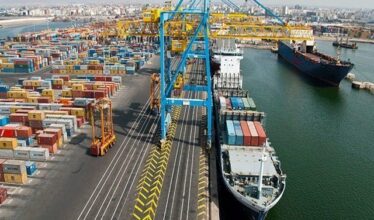
Article : Le Maroc face au risque d’une inflation alimentaire diffuse et composite
Alors que les instances internationales s'inquiètent d'un nouveau choc systémique mondial lié aux tensions géopolitiques, le Maroc navigue entre une campagne agricole prometteuse et des goulots d'étranglement logistiques nationaux. Si le blé tendre reste sous protection, les filières animale, sucrière et oléagineuse demeurent exposées à une inflation de second rang et à une saturation portuaire qui grignote les marges de manœuvre. Analyse.
Article : Pourquoi le taux d’inflation ne reflète pas toujours le vécu des ménages
Au Maroc, l’inflation ralentit, mais les ménages continuent de ressentir la hausse des prix et la pression sur leur pouvoir d’achat. Cet écart vient surtout d’une lecture incomplète du taux d’inflation, ainsi que de la nature même du panier représentatif utilisé pour mesurer l’évolution des prix.

Article : Intelcia : Karim Bernoussi et ses partenaires reprennent 100% du capital, sortie d’Altice
Le 28 avril, les deux cofondateurs du groupe, Karim Bernoussi et Youssef El Oufir, doivent finaliser le rachat des 65% du capital détenus par le groupe Altice, dont ils n'avaient conservé que 35% lors de l'entrée du partenaire français en 2016. Une opération qui redonne à ce fleuron de l'économie marocaine sa pleine liberté de manœuvre, au moment précis où son secteur est traversé par la déferlante de l'intelligence artificielle. Karim Bernoussi, PDG du groupe, était l'invité du 12/13 de Médias24.
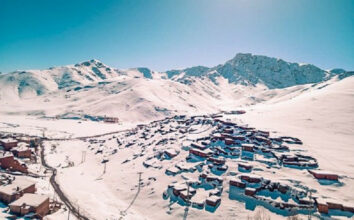
Article : L’Oukaïmeden, station d’hiver et espace culte de transhumance
Alors que l’Oukaïmeden est appelé à devenir une station touristique quatre saisons à l’horizon 2027, l’anthropologue Mohamed Mahdi rappelle que ce territoire ne peut être réduit à un site de loisirs. Agdal pastoral, espace de transhumance, réservoir de biodiversité et patrimoine culturel amazigh, l’Oukaïmeden impose une approche de développement intégrée, capable de concilier tourisme, pastoralisme et préservation des équilibres sociaux et écologiques.

Article : La météo pour le lundi 27 avril 2026
Voici les prévisions météorologiques pour le lundi 27 avril 2026, établies par la Direction générale de la météorologie.
Article : Plan d’aménagement de Marchica : un nouveau souffle socio-économique pour Nador et Beni Ensar
L'aménagement de la lagune de Marchica s’apprête à un nouveau chapitre. Au-delà des avancées de la première phase, il dessine une nouvelle transformation urbaine et touristique d'ampleur, de Nador à Beni Ensar, jusqu'au village d'Arkman. L’enquête publique s’est achevée vendredi.