
Democracy Under Siege in America
NEW YORK – Recent challenges to democratic institutions and processes in the United States have raised fundamental political and legal questions to which all liberal democracies must have convincing answers. When should military leaders refuse to follow presidential orders that they believe are unconstitutional? At what point do police take responsibility for the delegitimizing effect of racism? Why must journalists place the truth above the appearance of neutrality? And when should words or images deliberately used in defiance of demonstrable facts lose legal protections?
The challenges confronting the US provide some guidance. General Mark Milley, America’s top military official, was right to apologize for participating in President Donald Trump’s imperious walk across Lafayette Square in Washington, DC. Not only had tear gas and rubber bullets been used to clear the area of peaceful protesters, but Trump was obviously using the military as a pawn in domestic politics.
Similarly, there is reason to agree with Detroit Police Chief James Craig’s use of the word “murder” to describe the killing by Minneapolis police of George Floyd, an unarmed black man. The offending officer and his three colleagues should have known that pressing one’s knee on someone’s neck for over eight minutes is long enough to cause asphyxiation. Insofar as it is reasonable to infer intent from such an act, murder is a reasonable charge (assuming one accepts the premise that black lives matter).
Soon thereafter, the New York Times published an op-ed by US Senator Tom Cotton, a staunch Trump ally, who urged the federal government to invoke the 1807 Insurrection Act and deploy armed forces to suppress public protests. The paper’s editorial board subsequently repudiated the commentary, blaming its decision to publish it on inadequate fact-checking of Cotton’s spurious characterization of the protesters as anarchists and “nihilist criminals.”
Disseminating misinformation should not be confused with championing “diversity of opinion.” Those who contend that more speech is the best antidote to fallacious speech are probably right, provided that the matter involves the expression of actual opinions or ideas. More speech exposed Cotton’s effort to mislead readers, and called into question the Times’ decision to publish it. But more speech is a futile response to words or images intended merely to foment violence or otherwise disable good-faith efforts at communication.
Disguised and unlabeled political disinformation, visual “deep fakes,” and injurious hoaxes run rampant across Facebook, Twitter, and other social-media platforms every day. Democracies must be able to defend themselves against the use of words or images that deliberately sow confusion and mistrust in order to disable meaningful public discourse. The US Supreme Court has ruled that the Constitution’s First Amendment protections do not extend to speech acts that threaten imminent violence. This limit ought to apply whether it’s “fighting words” or signal-jamming words that destroy the essential conditions of communication itself.
All of these recent challenges to democratic governance have a common denominator: bad faith. An executive order that violates fundamental principles of self-governance is bad faith. Racist policing is bad faith. Abandoning the duty of an independent press to speak truth to power is bad faith. Sowing confusion and distrust by deliberately disseminating disinformation is bad faith. Politicizing independent agencies is bad faith.
Bad faith on this scale threatens to disable the constitutional mechanisms that exist to check undue concentrations of power within any single branch of government. It also threatens to unravel the broader social compact by subverting the shared democratic values from which the state derives its legitimacy.
When a president calls upon the armed forces to quash dissent, the people – the principal source of the state’s authority – become the state’s enemy. Likewise, when a president maligns and threatens journalists, the free press – the best guardian “of our every right,” as James Madison described it – becomes, in Trump’s words, “the enemy of the people.”
Finally, when the executive branch uses the Department of Justice to reward political allies (like former Trump advisers Michael T. Flynn and Roger Stone) and to purge perceived foes (like former FBI Director James Comey and US Attorney Geoffrey S. Berman), equal justice and the rule of law become the enemy. And when the political process for appointing federal judges elevates loyalty to the chief executive above fealty to law and a commitment to impartial decision-making, the entire judicial branch loses credibility.
The further this friend/enemy polarization is allowed to go, the deeper the crisis of legitimacy will be. It is essential, therefore, to draw a line against state power exercised in bad faith. But simply identifying abuses of power is not enough. Defenders of democracy also must ensure that significant collective action will follow if and when the line is crossed.
Mass protest is the last resort of democratic resistance. America’s founders understood this. That is why “the right of the people peaceably to assemble, and to petition the Government for a redress of grievances” appears among the first guarantees in the US Bill of Rights.
If a republic cannot or simply will not defend itself against brazen acts of bad faith, its days are numbered. Eternal vigilance may be the price of liberty, but tyranny fails only when a sufficient number of citizens are willing to resist it. As many have done over the past month, Americans must continue to summon the courage to defend and strengthen the democratic institutions upon which their freedom depends.
à lire aussi
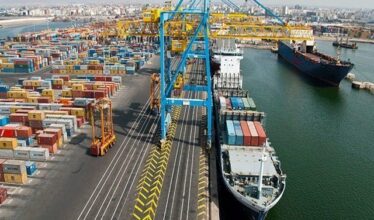
Article : Le Maroc face au risque d’une inflation alimentaire diffuse et composite
Alors que les instances internationales s'inquiètent d'un nouveau choc systémique mondial lié aux tensions géopolitiques, le Maroc navigue entre une campagne agricole prometteuse et des goulots d'étranglement logistiques nationaux. Si le blé tendre reste sous protection, les filières animale, sucrière et oléagineuse demeurent exposées à une inflation de second rang et à une saturation portuaire qui grignote les marges de manœuvre. Analyse.

Article : Pourquoi le taux d’inflation ne reflète pas toujours le vécu des ménages
Au Maroc, l’inflation ralentit, mais les ménages continuent de ressentir la hausse des prix et la pression sur leur pouvoir d’achat. Cet écart vient surtout d’une lecture incomplète du taux d’inflation, ainsi que de la nature même du panier représentatif utilisé pour mesurer l’évolution des prix.

Article : Intelcia : Karim Bernoussi et ses partenaires reprennent 100% du capital, sortie d’Altice
Le 28 avril, les deux cofondateurs du groupe, Karim Bernoussi et Youssef El Oufir, doivent finaliser le rachat des 65% du capital détenus par le groupe Altice, dont ils n'avaient conservé que 35% lors de l'entrée du partenaire français en 2016. Une opération qui redonne à ce fleuron de l'économie marocaine sa pleine liberté de manœuvre, au moment précis où son secteur est traversé par la déferlante de l'intelligence artificielle. Karim Bernoussi, PDG du groupe, était l'invité du 12/13 de Médias24.
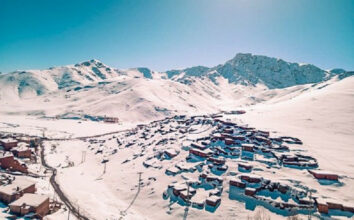
Article : L’Oukaïmeden, station d’hiver et espace culte de transhumance
Alors que l’Oukaïmeden est appelé à devenir une station touristique quatre saisons à l’horizon 2027, l’anthropologue Mohamed Mahdi rappelle que ce territoire ne peut être réduit à un site de loisirs. Agdal pastoral, espace de transhumance, réservoir de biodiversité et patrimoine culturel amazigh, l’Oukaïmeden impose une approche de développement intégrée, capable de concilier tourisme, pastoralisme et préservation des équilibres sociaux et écologiques.

Article : La météo pour le lundi 27 avril 2026
Voici les prévisions météorologiques pour le lundi 27 avril 2026, établies par la Direction générale de la météorologie.

Article : Plan d’aménagement de Marchica : un nouveau souffle socio-économique pour Nador et Beni Ensar
L'aménagement de la lagune de Marchica s’apprête à un nouveau chapitre. Au-delà des avancées de la première phase, il dessine une nouvelle transformation urbaine et touristique d'ampleur, de Nador à Beni Ensar, jusqu'au village d'Arkman. L’enquête publique s’est achevée vendredi.