
The Energy Revolution Must Be Nuclear
OXFORD – Demonstrators around the world are demanding that carbon-based energy supplies be curtailed for the sake of the environment. Yet, in Germany, the Energiewende (energy transformation) policy that was supposed to meet those demands is failing to reduce carbon dioxide emissions. A big part of the problem is that, in response to long-standing anti-nuclear sentiment, policymakers aim to phase out nuclear energy, while investing in renewables like wind and solar.
By learning to harness the power of wind, water, and fire (burning leaves and wood) – basically, what we call “renewables” today – our early ancestors gained mastery over nature. But their energy sources were weak, available only when the weather permitted. As a result, their living standards were low, their lives were short, and their number remained small.
That all changed with the arrival of the Industrial Revolution. Humans learned to power engines by burning coal and, later, oil and gas. A measure of the utility of a fuel is its energy density – that is, the number of electricity units (kWh) in a kilogram (2.2 pounds). Fossil fuels have an energy density of 1-7 kWh per kg – a thousand times more than renewables – which can be harnessed anywhere at any time, regardless of the weather.
Access to these powerful energy sources has shaped most economic and political developments over the last 250 years. In that time, the world population has increased eightfold, life expectancy has doubled, and people’s standards of living have improved dramatically.
Today, however, we stand at the threshold of a new energy revolution. The benefits of fossil fuels no longer outweigh the costs, and standard renewables remain as weak and unreliable as before the Industrial Revolution.
To harness sufficient energy, pre-industrial fuels need huge, nature-despoiling – hardly “green” or “environmentally friendly” – power stations: massive arrays of solar panels, forests of gigantic windmills, and vast flooded river valleys. Their size attests to the weakness of the energy that they collect, while intermittency implies a typical working availability of only 30%. And, as Germany’s Energiewende policy has demonstrated, these fuels are not enough.
The world will not get the energy revolution it needs without realistic, scientifically sound energy policies. The natural science of energy has been well understood for a century, so surprises are rare. And the only other widely available fuel known to science is nuclear, which provides plentiful energy on demand, while doing the least harm to nature.
To function as an energy source, a fuel has to be “charged up” by a more powerful source – whether recent sunshine for solar or, in the case of fossil fuels, millions of years of photosynthesis. And the same physics that explains why the energy density of fossil fuels is 1,000 times that of pre-industrials also explains why the energy density of nuclear is five million times greater.
The uranium and thorium fuel that we find on Earth today was energized when it was created in a gravitational collapse event before the planet was formed. Astronomers observe such explosions happening elsewhere in the universe today.
One kilogram of the nuclear fuel that this phenomenon produces is enough to provide all the energy a person needs for a full life – and it requires neither the emission of 1,800 tons of CO2 nor the release of ten million tons of water by a dam. The waste from this minute quantity of nuclear fuel is equally small and, contrary to popular belief, causes no accidents.
Apart from the solitary decay of radioactive atoms, nuclear energy is firmly locked inside individual nuclei, which never meet one another except at the center of the sun. Nuclei do not release their energy prematurely, because only a free neutron can override the lock, and such keys decay quickly: their half-life is ten minutes. As a result, nuclear energy can be released only inside a working reactor. Such is the exceptional physical safety of nuclear energy.
Moreover, biology protects life from nuclear radiation. Over three billion years, life has evolved to survive the natural radiation from rocks and space, developing ways to recover from the damage caused. But that is a longer story. The point is that moderate exposures to radiation are effectively harmless. Even higher doses are used routinely to diagnose and cure cancers, thanks to the work of Marie Curie.
The public accepts the use of nuclear technology for human health; it should do the same for the health of the planet. Yet, although fears of nuclear power have no scientific basis – indeed, nuclear power is far safer than any other energy source – they pervade public policy, with the risks often being fictionalized for the sake of entertainment.
Our future, and the health of our environment, requires us to change course and embrace nuclear power. To support this shift, more comprehensive and accurate education should be provided, both for the general public and for today’s young people who one day will be building and operating nuclear power stations throughout the world. At the same time, much of the precautionary bureaucracy put in place during the Cold War needs to be reconsidered.
In terms of safety, reliability, efficiency, and environmental friendliness, nuclear energy is the best candidate to replace fossil fuels. Without it, the energy revolution the world urgently needs will never happen.
à lire aussi

Article : Tourisme. Lecture de la trajectoire d’un secteur devenu clé (2008-2025)
Porté par la reprise post-Covid, le tourisme marocain a retrouvé puis dépassé ses niveaux d’avant-crise. Mais une lecture de long terme montre une trajectoire plus contrastée, marquée par le choc de 2008 suivi d’une phase d’expansion modérée, puis un changement d’échelle à partir de 2022.

Article : Usines, ports, hôpitaux… comment la 5G privée va transformer le Maroc
Robots pilotés à distance, usines capables de remonter leurs données en temps réel, ports plus fluides, mines plus sûres, stades connectés pour des dizaines de milliers de spectateurs… Au Maroc, la 5G privée n’est plus un concept théorique. Dans une interview à Médias24, Ouassim El Arroussi, directeur des études et du développement chez Inwi, raconte les coulisses du premier déploiement industriel de cette technologie et explique pourquoi il pourrait ouvrir un nouveau marché stratégique pour le Royaume. Plongée.

Article : Sécurité numérique : la NARSA dénonce un site usurpant ses services en ligne
L’Agence nationale de la sécurité routière (NARSA) a mis en garde, le lundi 27 avril 2026, contre un site internet frauduleux usurpant son identité et visant à tromper les usagers.
Article : Cap Holding-Forafric. Ce que rachète Chakib Alj et ce qui reste dans le groupe
Le deal entre Cap Holding et Forafric Global porte sur un périmètre industriel marocain incluant moulins, marques et transformation, sans concerner la holding cotée. Cette dernière conserve un périmètre large et annonce une orientation stratégique vers la défense, la sécurité alimentaire et l'énergie.
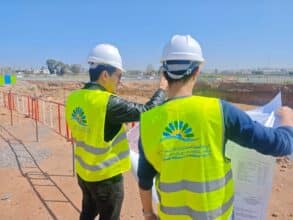
Article : Sbata : lancement d’un bassin souterrain de 37.000 m³ pour lutter contre les inondations
La société régionale multiservices Casablanca-Settat a lancé, le lundi 27 avril 2026, un projet d’infrastructure visant à renforcer le réseau d’assainissement des eaux pluviales dans le quartier de Sbata, afin de limiter les risques d’inondation lors d’épisodes de fortes pluies.
Article : Syrie : les autorités démentent l’imposition d’un “kafil” aux ressortissants du Maghreb
L’administration syrienne de l’immigration et des passeports a démenti, le lundi 27 avril 2026, les informations faisant état de l’instauration d’un système de “kafil” pour les ressortissants des pays du Maghreb souhaitant entrer en Syrie.