
Internationalizing the Crisis
NEW YORK – As it spread from one country to another, the novel coronavirus paid no attention to national frontiers or “big, beautiful” border walls. Nor were the ensuing economic effects contained. As has been obvious since the outset, the COVID-19 pandemic is a global problem that demands a global solution.
In the world’s advanced economies, compassion should be sufficient motivation to support a multilateral response. But global action is also a matter of self-interest. As long as the pandemic is still raging anywhere, it will pose a threat – both epidemiological and economic – everywhere.
The impact of COVID-19 on developing and emerging economies has only begun to reveal itself. There are good reasons to believe that these countries will ravaged far more by the pandemic than the advanced economies have been. After all, people in lower-income countries tend to live in closer proximity to one another. A higher share of the population suffers from pre-existing health problems that render them more vulnerable to the disease. And these countries’ health systems are even less prepared to manage an epidemic than those of the advanced economies (which have hardly functioned smoothly).
A March 30 report from the United Nations Conference on Trade and Development offers an early glimpse of what lies in store for emerging and developing economies. The most successful of them rely on export-led growth, which will now collapse as the global economy contracts. Not surprisingly, global investment flows are also plummeting, as are commodity prices, indicating a tough road ahead for natural-resource exporters.
These developments are already being reflected in the yield spreads on developing countries’ sovereign debt. Many governments will find it exceedingly difficult to roll over the debts coming due this year on reasonable terms, if at all.
Moreover, developing countries have fewer and harder choices about how to confront the pandemic. When people are living hand to mouth in the absence of adequate social protections, a loss of income could mean starvation. Yet these countries cannot replicate the US response, which features (so far) a $2 trillion economic package that will blow up the fiscal deficit by some 10% of GDP (on top of a pre-pandemic deficit of 5%).
Following a virtual emergency summit on March 26, G20 leaders issued a communiqué committing “to do whatever it takes and to use all available policy tools to minimize the economic and social damage from the pandemic, restore global growth, maintain market stability, and strengthen resilience.” To that end, at least two things can be done about the dire state of affairs in emerging and developing economies.
First, full use must be made of the International Monetary Fund’s Special Drawing Rights, a form of “global money” that the institution was authorized to create at its founding. The SDR is an essential ingredient in the international monetary order that John Maynard Keynes advocated during the Bretton Woods Conference of 1944. The idea is that, because all countries will obviously want to protect their own citizens and economies during crises, the international community should have a tool for assisting the neediest countries without requiring national budgets to take a hit.
A standard SDR issuance – with some 40% of the SDRs going to developing and emerging economies – would make an enormous difference. But it would be even better if advanced economies like the United States donated or lent (on concessionary terms) their SDRs to a trust fund dedicated to helping poorer countries. One might expect that the countries providing this assistance will attach conditions, in particular, that the money not go to bailing out creditors.
It’s also crucial that creditor countries help by announcing a stay on developing and emerging economies’ debt service. To understand why this is so important, consider the US economy. Last month, the US Department of Housing and Urban Development announced that there would be no foreclosures on federally insured mortgages for 60 days. In essence, this policy is part of a broader “stay” on the entire US economy as a response to the COVID-19 crisis. Workers are staying home, restaurants are staying closed, and airlines are all but shut down. Why should creditors be allowed to continue racking up returns, especially when the interest rates they charge should have already created a sufficient risk cushion? Unless creditors grant such a stay, many debtors will emerge from the crisis owing more than they can possibly repay.
Such stays are just as important internationally as they are domestically. Under current conditions, many countries simply cannot service their debts, which, in the absence of a global stay on repayment, could lead to massive, rolling defaults. In many developing and emerging economies, the government’s only choice is either to funnel more income to foreign creditors or allow more of its citizens to die. Obviously, the latter will be unacceptable to most countries, so the real choice for the international community, then, is between an orderly or a disorderly stay, with the latter scenario inevitably resulting in severe turbulence and far-reaching costs to the global economy.
Of course, it would be even better if we had an institutionalized mechanism for restructuring sovereign debt. The international community tried to achieve that in 2015, when the United Nations General Assembly adopted a set of shared principles with overwhelming support. Unfortunately, that framework lacked the necessary buy-in from key creditor countries. It is probably too late to establish such a system now for use in the current crisis. But there will inevitably be more crises down the line, which means that sovereign-debt restructuring should be high on the agenda for the post-pandemic reckoning.
In John Donne’s immortal words, “No man is an island …” Nor is any country – as the COVID-19 crisis has made abundantly clear. If only the international community would get its head out of the sand.
© Project Syndicate 1995–2020
à lire aussi

Article : Tourisme. Lecture de la trajectoire d’un secteur devenu clé (2008-2025)
Porté par la reprise post-Covid, le tourisme marocain a retrouvé puis dépassé ses niveaux d’avant-crise. Mais une lecture de long terme montre une trajectoire plus contrastée, marquée par le choc de 2008 suivi d’une phase d’expansion modérée, puis un changement d’échelle à partir de 2022.
Article : Usines, ports, hôpitaux… comment la 5G privée va transformer le Maroc
Robots pilotés à distance, usines capables de remonter leurs données en temps réel, ports plus fluides, mines plus sûres, stades connectés pour des dizaines de milliers de spectateurs… Au Maroc, la 5G privée n’est plus un concept théorique. Dans une interview à Médias24, Ouassim El Arroussi, directeur des études et du développement chez Inwi, raconte les coulisses du premier déploiement industriel de cette technologie et explique pourquoi il pourrait ouvrir un nouveau marché stratégique pour le Royaume. Plongée.

Article : Sécurité numérique : la NARSA dénonce un site usurpant ses services en ligne
L’Agence nationale de la sécurité routière (NARSA) a mis en garde, le lundi 27 avril 2026, contre un site internet frauduleux usurpant son identité et visant à tromper les usagers.

Article : Cap Holding-Forafric. Ce que rachète Chakib Alj et ce qui reste dans le groupe
Le deal entre Cap Holding et Forafric Global porte sur un périmètre industriel marocain incluant moulins, marques et transformation, sans concerner la holding cotée. Cette dernière conserve un périmètre large et annonce une orientation stratégique vers la défense, la sécurité alimentaire et l'énergie.
Article : Sbata : lancement d’un bassin souterrain de 37.000 m³ pour lutter contre les inondations
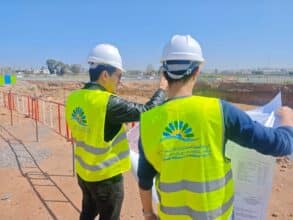
La société régionale multiservices Casablanca-Settat a lancé, le lundi 27 avril 2026, un projet d’infrastructure visant à renforcer le réseau d’assainissement des eaux pluviales dans le quartier de Sbata, afin de limiter les risques d’inondation lors d’épisodes de fortes pluies.
Article : Syrie : les autorités démentent l’imposition d’un “kafil” aux ressortissants du Maghreb
L’administration syrienne de l’immigration et des passeports a démenti, le lundi 27 avril 2026, les informations faisant état de l’instauration d’un système de “kafil” pour les ressortissants des pays du Maghreb souhaitant entrer en Syrie.