img_pub
Rubriques

Fifty Years of Immunization Success Call for 50 More

GENEVA– There is a good chance that you know one of the 154 million people who over the past 50 years have been saved from a preventable death by routine immunization. You might even be one. In fact, surveying the past half-century, it is hard to identify a public-health tool that has had a more positive impact than vaccination, or one that has done more to promote global health equity.

Le 17 mai 2024 à 10h00

Routine immunization programs, once the purview of the wealthy world, now exist in every country, owing to the landmark commitment that the World Health Organization’s member states made in 1974 to establish what is now known as the Essential Programme on Immunization. Initially, the EPI focused on ensuring universal access to vaccines against tuberculosis, diphtheria, pertussis, tetanus, polio, and measles – all preventable child killers. Today, 84% of children globally are immunized against these six diseases, compared to only 5% in 1974.

But progress has been hard won. After rapid gains in immunization coverage throughout the 1980s, momentum was lost in the 1990s. The main issue was that lower-income countries lacked the resources and infrastructure needed to sustain immunization programs. Moreover, vaccine markets were fragmented and dysfunctional: countries depended on a few manufacturers, and uncertain demand deterred new entrants.

That is where Gavi, the Vaccine Alliance, came in. The organization was established in 2000 to harness the strengths of the public and private sectors. By forging new partnerships, the thinking went, Gavi could improve access to vaccines against a wider range of infectious diseases in lower-income countries and marginalized communities.

In the decades since, Gavi has helped protect more than one billion children and halve childhood mortality in 78 countries, while delivering significant economic benefits. Meanwhile, most of the countries that Gavi supports have continued to increase funding for vaccination efforts, putting such programs on a more sustainable footing and creating an entry point for other health services.

The 50th anniversary of EPI is a fitting moment to celebrate the millions of lives saved through routine immunization, and the health workers who have devoted considerable effort, often in the most demanding environments, to realize the EPI’s goals. But it is also an opportunity to reflect on what still needs to be done. According to our estimates, around one in ten children in lower-income countries have not received any routine vaccines. These “zero-dose” children are often in poor communities affected by conflict and displacement, in countries with extremely fragile health systems that provide no access to primary care.

Continued progress will depend on our ability to reach these marginalized communities. That is why, since taking over as CEO in March, my main priority has been ensuring that Gavi’s work is informed by and grounded in the needs and experiences of the communities and countries that we serve.

At a time when violent conflict, geopolitical tensions, and climate change are dominating the headlines, the EPI’s anniversary should also serve as a reminder that we can still achieve world-changing results when we work together. Every vaccination offers hope for a better, healthier future. And as we stand on the cusp of a new era for immunization, there is reason for optimism.

Since 2022, for example, a record number of people are protected by the human papillomavirus (HPV) vaccine, which protects against the main cause of cervical cancer. Moreover, we have the ambitious goal of immunizing 86 million girls against HPV in Gavi-supported countries by the end of 2025. And this week, three more African countries will join Burkina Faso and Cameroon in rolling out the world’s first-ever malaria vaccine – a development that would have seemed impossible just a few decades ago.

The future of vaccines appears to be even brighter. It is possible that, before the end of the decade, there will be a new vaccine against tuberculosis – one of humanity’s oldest scourges. Looking further ahead, we could even see vaccines delivered through dissolvable microarray patches instead of syringes.

In the half-century since the WHO instituted the EPI, the world has shown a remarkable capacity to come together on the crucial issue of vaccination. At this moment of deepening political polarization and global fragmentation, we must commit to another 50 years of changing the world for the better.

© Project Syndicate 1995–2024

Par
Le 17 mai 2024 à 10h00

à lire aussi

Météo: les prévisions du dimanche 25 avril 2026
Les prévisions quotidiennes

Article : Météo: les prévisions du dimanche 25 avril 2026

Voici les prévisions météorologiques pour le dimanche 26 avril 2026, établies par la Direction générale de la météorologie : - Formations brumeuses matinales et nocturnes […]

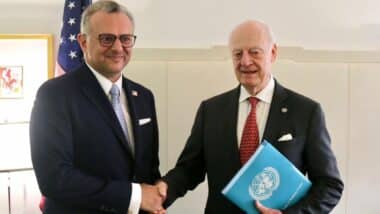
Sahara: De Mistura évoque un “véritable élan” qui relance l’espoir d’une issue au conflit
NATION

Article : Sahara: De Mistura évoque un “véritable élan” qui relance l’espoir d’une issue au conflit

Comme prévu par la résolution 2797 adoptée le 31 octobre 2025, le conseil de sécurité de l'ONY s'est réuni à huis clos pour faire le point avec l'envoyé personnel et l'envoyé spécial de l'ONU pour le Sahara, au sujet de l'avancement des efforts de paix.

Immobilier. Les nouveaux choix d'investissement en 2026 à Casablanca
Actu immobilier

Article : Immobilier. Les nouveaux choix d'investissement en 2026 à Casablanca

À Casablanca, le marché immobilier change de configuration. La raréfaction des petites surfaces et la hausse des prix pèsent sur le résidentiel, tandis que des segments comme la logistique et l'industriel offrent aujourd'hui des rendements plus élevés. Dans ce contexte, les arbitrages des investisseurs évoluent selon les budgets et les opportunités. Décryptage avec Asaad Sadqi, président de l'Association régionale des agences immobilières Casablanca-Settat.

Un milliard sans garantie de l'État : comment la région Casablanca-Settat a réussi son pari obligataire
ECONOMIE

Article : Un milliard sans garantie de l'État : comment la région Casablanca-Settat a réussi son pari obligataire

La région Casablanca-Settat vient de clôturer sa première levée obligataire, une opération inédite pour une région. La levée est d'un montant d'un milliard de dirhams sur le marché des capitaux, dont 400 millions apportés par la Banque mondiale (BERD). Le président de la région, Abdellatif Maazouz, revient sur les coulisses de cette opération, ses fondements financiers et les projets qu'elle est appelée à financer.

Carreaux céramiques : ouverture d'une enquête antidumping sur les importations indiennes
Quoi de neuf

Article : Carreaux céramiques : ouverture d'une enquête antidumping sur les importations indiennes

Le Maroc ouvre une enquête antidumping sur les importations de carreaux céramiques en provenance d’Inde. À l’origine de cette procédure, les industriels marocains du secteur dénoncent des pratiques de dumping et une hausse soutenue des importations indiennes, jugées menaçantes pour la production nationale.

African Lion 2026 : une édition placée sous le signe de l’innovation technologique et de la maturité stratégique
Defense

Article : African Lion 2026 : une édition placée sous le signe de l’innovation technologique et de la maturité stratégique

L’édition 2026 de l’exercice militaire African Lion, le plus grand rassemblement de forces armées sur le continent, se déroule du 20 avril au 8 mai. Entre l’utilisation de nouvelles technologies de pointe et une intégration accrue entre les forces marocaines et américaines, cette cuvée marque un tournant qualitatif, malgré une certaine discrétion médiatique dictée par le contexte international.

Médias24 est un journal économique marocain en ligne qui fournit des informations orientées business, marchés, data et analyses économiques. Retrouvez en direct et en temps réel, en photos et en vidéos, toute l’actualité économique, politique, sociale, et culturelle au Maroc avec Médias24

Notre journal s’engage à vous livrer une information précise, originale et sans parti-pris vis à vis des opérateurs.

Toute l'actualité