
Africa’s Gathering Debt Storm
CAPE TOWN – The COVID-19 crisis is pushing Africa to the financial brink. African governments are under pressure to continue servicing their external loans, leaving them with few resources to confront a historic pandemic and its economic fallout. Without external support – specifically, a comprehensive repayment freeze – some African economies will buckle under their debt burden. The resulting domino effect could imperil the entire continent’s development and harm richer countries, too.
The international community’s response so far has been mixed. The most notable step so far – the G20’s Debt Service Suspension Initiative (DSSI) for the world’s poorest countries – covers only official bilateral debt. But 61% of African DSSI countries’ debt-service payments this year will go to private creditors, bondholders, and multilateral lenders like the World Bank. And, despite the G20’s assurances, some countries joining the DSSI were subsequently downgraded by global ratings agencies.
The World Bank has played an unhelpful role here. Although its president, David Malpass, recently called for expanded debt relief and even raised the possibility of a write-off, he has also resisted calls for the Bank itself (a major lender to Africa) to freeze debt repayments. Instead, the US-dominated institution seems more interested in scoring political points by urging the China Development Bank to join the G20 initiative, even though doing so would really affect only one African country.
Geopolitics are also derailing the promising option of a new allocation of the International Monetary Fund’s Special Drawing Rights (its global reserve asset) in order to unlock extra liquidity. This initiative faces resistance from US President Donald Trump’s administration, which worries that some of the funds would flow to countries like Iran.
A major problem for Africa is that it now has significant private-sector debt. In May, a group of 25 of the continent’s largest private creditors was created, in consultation with the United Nations Economic Commission for Africa (UNECA). The organization’s executive secretary, Vera Songwe, has been pushing for Africa’s debt to be bundled into an instrument resembling a collateralized debt obligation, backed by an AAA-rated multilateral finance institution or a central bank. This would save countries time by quickly giving them a two-year repayment freeze in order to deal with the pandemic, without preventing them from tapping credit markets in the future to fund economic recovery.
But the private creditors quickly rejected such blanket approaches, insisting that African countries’ debt needs to be dealt with on a case-by-case basis. This risks wasting so much time that many countries could slide into default while they’re waiting, which would be especially galling in view of the large profits these creditors have made by chasing Africa’s sky-high yields.
Although none of these proposals is a magic bullet, Africa’s debt problem is not intractable. The continent’s debt-service payments in 2020 amount to $44 billion. That is a lot of money, but it’s small change compared to the trillions of dollars that rich-country governments are pumping into their own economies.
Pious laments about how the “poorest countries will suffer the most” accompany the infighting among Africa’s creditors. This response assumes that while Africa’s distress is regrettable, it’s also far away, and the continent will quietly suffer in its corner. Today, such thinking is woefully naive.
Until early this year, many African economies had been growing robustly. Now, without external help to weather the COVID-19 storm, these countries could face economic collapse. This will directly affect the rich world in ways for which it is not prepared.
For China, the current debt crisis represents its biggest political setback to date in Africa. The continent’s economic value to China may have declined somewhat, but its political value as a dependable bloc of votes in multilateral institutions is increasing. If Democratic challenger Joe Biden wins November’s US presidential election, China will face concerted pressure in those organizations. And although China has joined the G20’s DSSI in principle, its application remains piecemeal and opaque.
The political costs are mounting. China currently faces a chorus of debt-related disapproval in Nigeria, both on social media and in the country’s House of Representatives. Nigerian politicians are calling for an audit of every Chinese loan to the country – an unprecedented move in China-Africa relations. If the economic and debt crisis worsens, this hostility will spread across the continent.
During previous hard times, African opposition parties campaigned against the Chinese presence in their countries. Increased economic chaos may lead not only to an erosion of high-level African support for China in forums like the UN, but also to populist targeting of Chinese firms and citizens.
America’s engagement in Africa has a strong military and anti-terrorist component. US policymakers should thus be concerned that the Islamic State (ISIS) has recently taken control of a port in Mozambique. Africa has a population of 1.2 billion, with an average age of 19. A continent of teenagers with no economic prospects will not be difficult to radicalize.
Europe is already dealing with the scandal of Greek authorities abandoning African migrants, leaving them to die on the high seas. If African economies collapse, Europe will face an unprecedented migration crisis that dwarfs that of 2015, which almost triggered right-wing populist takeovers in several EU countries.
The cost of helping Africa to ride out this debt storm is minuscule, while the costs of not doing so are unimaginably huge. Many European Union member states have joined the DSSI, and they might support its extension when the G20 and the Paris Club of sovereign creditors reconvene later this year. But avoiding nightmare scenarios will require innovation. All of Africa’s financial partners, including multilateral institutions, private creditors, and rich-country governments, must get together with UNECA and other African stakeholders to work out a broad solution, and fast.
à lire aussi
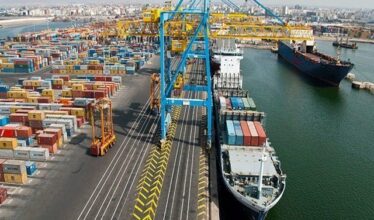
Article : Le Maroc face au risque d’une inflation alimentaire diffuse et composite
Alors que les instances internationales s'inquiètent d'un nouveau choc systémique mondial lié aux tensions géopolitiques, le Maroc navigue entre une campagne agricole prometteuse et des goulots d'étranglement logistiques nationaux. Si le blé tendre reste sous protection, les filières animale, sucrière et oléagineuse demeurent exposées à une inflation de second rang et à une saturation portuaire qui grignote les marges de manœuvre. Analyse.
Article : Pourquoi le taux d’inflation ne reflète pas toujours le vécu des ménages
Au Maroc, l’inflation ralentit, mais les ménages continuent de ressentir la hausse des prix et la pression sur leur pouvoir d’achat. Cet écart vient surtout d’une lecture incomplète du taux d’inflation, ainsi que de la nature même du panier représentatif utilisé pour mesurer l’évolution des prix.

Article : Intelcia : Karim Bernoussi et ses partenaires reprennent 100% du capital, sortie d’Altice
Le 28 avril, les deux cofondateurs du groupe, Karim Bernoussi et Youssef El Oufir, doivent finaliser le rachat des 65% du capital détenus par le groupe Altice, dont ils n'avaient conservé que 35% lors de l'entrée du partenaire français en 2016. Une opération qui redonne à ce fleuron de l'économie marocaine sa pleine liberté de manœuvre, au moment précis où son secteur est traversé par la déferlante de l'intelligence artificielle. Karim Bernoussi, PDG du groupe, était l'invité du 12/13 de Médias24.
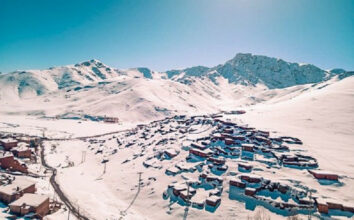
Article : L’Oukaïmeden, station d’hiver et espace culte de transhumance
Alors que l’Oukaïmeden est appelé à devenir une station touristique quatre saisons à l’horizon 2027, l’anthropologue Mohamed Mahdi rappelle que ce territoire ne peut être réduit à un site de loisirs. Agdal pastoral, espace de transhumance, réservoir de biodiversité et patrimoine culturel amazigh, l’Oukaïmeden impose une approche de développement intégrée, capable de concilier tourisme, pastoralisme et préservation des équilibres sociaux et écologiques.

Article : La météo pour le lundi 27 avril 2026
Voici les prévisions météorologiques pour le lundi 27 avril 2026, établies par la Direction générale de la météorologie.

Article : Plan d’aménagement de Marchica : un nouveau souffle socio-économique pour Nador et Beni Ensar
L'aménagement de la lagune de Marchica s’apprête à un nouveau chapitre. Au-delà des avancées de la première phase, il dessine une nouvelle transformation urbaine et touristique d'ampleur, de Nador à Beni Ensar, jusqu'au village d'Arkman. L’enquête publique s’est achevée vendredi.