Failure to defend the core principles of sovereignty and independence anywhere risks opening the door to autocratic and aggressive regimes everywhere. To live in a world where disputes between states are resolved through negotiations rather than force, we must recognize that the war’s challenge to the post-1945 international order affects every country, regardless of political system or alliance. In fact, it is smaller, less powerful countries that will suffer most if the world divides into competing blocs, as it did during the Cold War.
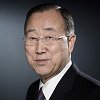
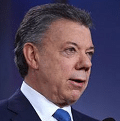
As a former secretary-general of the United Nations and a former president of Colombia, we do not view the war in Ukraine with a European or Western perspective. When we visited Kyiv in August 2022 at Ukrainian President Volodymyr Zelensky’s invitation, we did so as members of The Elders, the group of independent leaders that Nelson Mandela founded to advocate for peace, justice, human rights, and a sustainable future on this planet. As Elders, we are interested in ending wars, not winning them, and we believe it is never too soon to start preparing for future dialogue to achieve a just and sustainable peace in line with the UN Charter.
We look at this terrible war and its consequences through a global lens. We understand that for countries experiencing inflation and poverty because of the collapse of grain supplies and soaring energy prices, defending international norms and holding Russia accountable are less urgent issues than a food-security crisis that is threatening millions of vulnerable people.
Similarly, we understand why, at a time when geopolitical power dynamics have become less predictable, some countries are seeking to balance their political and economic interests in ways they believe will help preserve their future security and prosperity. For many countries in Africa, Asia, and Latin America, Western talk about upholding the values of the “international community” rings hollow, given rich countries’ failure to distribute vaccines equitably during the COVID-19 pandemic, or to deliver long-promised funding to tackle the climate crisis.
Still, the response from Asia, Latin America, and other parts of the world beyond Europe and North America must not be to retreat from international law and universal rights, or to remain neutral toward what is happening in Ukraine. Contrary to what some suggest, neutrality does not advance the prospects for peace; it simply emboldens Russian President Vladimir Putin to persist in his goal of destroying Ukraine, and may encourage similar acts of aggression and territorial expansion elsewhere.
It has been 80 years since the Moscow Declaration, when the wartime Allies committed to “a general international organization, based on the principle of the sovereign equality of all peace-loving states.” Today, we need a renewed commitment by all UN member states to play their part in reinvigorating an equitable rules-based order that protects and works for everyone, including the least powerful.
Achieving and sustaining a revitalized international order requires fairer systems of global governance and greater consistency in applying the rules. Rising regional powers have a vital role to play – and important choices to make – in this regard. Last year’s G20 summit in Bali demonstrated how regional powers like Indonesia can help bridge divisions. Political leaders reaffirmed the centrality of the UN Charter and ensured that the Global South’s interests were reflected in the debates and final commitments, such as on food and energy security.
Now, the G20 presidencies of India, Brazil, and South Africa offer an opportunity to build on Indonesia’s achievements over the next three years. The current fault lines must not be allowed to obscure the fundamental goal we all share: a world in which disputes are settled peacefully and in accordance with international law and human-rights obligations.
Restoring the credibility of the multilateral system demands more than ethical leadership and moral consistency. It also requires ambitious reforms to the global peace and security architecture – a task that must include the thorny issue of reforming the UN Security Council.
We need a system that is fairer, more representative, and capable of taking decisive action in response to grave violations of the UN Charter. As we move toward the Summit of the Future that UN Secretary-General António Guterres has planned for next year, we owe it not only to the Ukrainian people but to all humanity to reject aggression and end impunity for aggressors. That is how we can live up to the UN Charter’s promise of a world free from the scourge of war.