
The Psychology of Trump’s Debate Rudeness
LONDON – The US Commission on Presidential Debates muted the microphones of President Donald Trump and his Democratic challenger Joe Biden during portions of their second and final televised encounter on October 22, in order to prevent the candidates from interrupting each other. The panel’s decision followed the widespread negative audience reaction to Trump’s extensive interruptions in the first debate on September 29.
But there is a powerful hidden psychology behind the tactic of interjecting and interrupting. Could these two experienced campaigners – and Trump especially – have used it to their advantage in an attempt to appear more dominant and assertive?
The fact that the debate organizers had to seek a technological solution suggests that interruption might be a more potent tactic than many realize. Political and psychological strategists in both campaigns may increasingly be advocating it as a rhetorical weapon. What do they know that we don’t?
Psychological research involving scientific experiments has found that people evaluate those who interrupt more as being more capable, confident, dominant, and persuasive. But this comes at a price, because interrupters are also usually seen as less likeable and attractive.
In the midst of a pandemic, some voters may favor the more dominant candidate and may be less concerned about how likeable he or she is. So, the psychological consequences of interruption can be both positive (being seen as more assertive) and negative (coming across as rude). Interestingly, researchers have found this to be especially true for female interrupters.
Some research has found that men interrupt (especially with intrusive interruptions) more than women do. Other studies indicate that women are more interrupted than men are, and that men interrupt women significantly more than they do other men. But a lot depends on the precise nature and timing of the interruption.
Different types of interruption have different effects. Deep and “intrusive” interruptions try to change the subject and prevent the other person from speaking. “Overlapping interruptions” involve someone interrupting when another person appears to be coming to the end of making a point. There are even so-called silent interruptions where, for example, someone momentarily forgets the word they were looking for, or pauses to find the right phrase, and their adversary steps in to supply it, but then takes over the conversation.
A recent psychology experiment investigating the effects of different kinds of interruption found, surprisingly, that an audience evaluated so-called “disagreement” interruptions (perhaps the kind that were most on display in the first Trump-Biden debate) more positively than “change-subject” interruptions. This positive evaluation persisted even with high-frequency interruptions.
One possible explanation for this finding, according to the study’s authors, is that “disagreement” interruptions at least suggested a strong engagement with the issue, and did not necessarily imply the same disregard for the speaker being interrupted as “change-subject” interjections did. In other words, there appear to be ways of interrupting that seem justified.
But as a debating tactic where the aim is to defeat an opponent rhetorically, interrupting has some powerful hidden psychology behind it. For example, if you know that your opponent tends to interrupt and is constantly looking for an opportunity to take the floor from you, then you might speak faster than you normally would. The fear of providing an opportunity for a “silent” interruption may push you into unfamiliar conversational territory and cause you to stumble or misspeak, resulting in a verbal gaffe that your opponent can exploit.
Moreover, if you are aware that your opponent is interrupting you and gaining more floor time, then you may feel pressured into responding in kind. But if you are less skilled at interrupting, your timing may be poorer and your choice of opportunity may then reflect badly on you. You end up being the one coming across as rude.
There is even the tactic of interrupting by saying you agree. This may surprise the other speaker so much that they pause, giving you the opportunity to explain that what you agreed with was not what they were hoping. For them not to allow you the chance to speak when you assert that you agree now makes them look like the one seeking conflict and confrontation.
The real psychological power of interrupting perhaps isn’t even on display in presidential debates, but instead lies in the way that it disrupts the other candidate’s thought patterns. Here lies the real danger: interruptions succeed by stopping you from thinking clearly.
But there is another subtle and perhaps deeper aspect of interrupting: it also establishes a power relationship between two people in a dialogue, maybe even at an unconscious level. It is well known that superiors in a hierarchy – say, at the office – tend to interrupt underlings more than vice versa. Some people, particularly those most interested in power, may observe levels of interruption to determine whom they can dominate and whom they can’t.
Some recent research found that so-called “sub-clinical” psychopaths (perhaps people who run organizations rather than hold up banks), tended to detect who interrupted them more, and as a result, appeared to become less interested in a potentially exploitative future relationship. In other words, if you interrupt a psychopath more than they are used to while they are trying to make a point, they notice this quickly and infer that they may be less able to manipulate or use you, and move on to other targets.
So, when Trump interrupted Biden in the two debates, there was a lot more going on beneath the surface than simple rudeness.
à lire aussi

Article : Le Maroc face au risque d’une inflation alimentaire diffuse et composite
Alors que les instances internationales s'inquiètent d'un nouveau choc systémique mondial lié aux tensions géopolitiques, le Maroc navigue entre une campagne agricole prometteuse et des goulots d'étranglement logistiques nationaux. Si le blé tendre reste sous protection, les filières animale, sucrière et oléagineuse demeurent exposées à une inflation de second rang et à une saturation portuaire qui grignote les marges de manœuvre. Analyse.

Article : Pourquoi le taux d’inflation ne reflète pas toujours le vécu des ménages
Au Maroc, l’inflation ralentit, mais les ménages continuent de ressentir la hausse des prix et la pression sur leur pouvoir d’achat. Cet écart vient surtout d’une lecture incomplète du taux d’inflation, ainsi que de la nature même du panier représentatif utilisé pour mesurer l’évolution des prix.

Article : Intelcia : Karim Bernoussi et ses partenaires reprennent 100% du capital, sortie d’Altice
Le 28 avril, les deux cofondateurs du groupe, Karim Bernoussi et Youssef El Oufir, doivent finaliser le rachat des 65% du capital détenus par le groupe Altice, dont ils n'avaient conservé que 35% lors de l'entrée du partenaire français en 2016. Une opération qui redonne à ce fleuron de l'économie marocaine sa pleine liberté de manœuvre, au moment précis où son secteur est traversé par la déferlante de l'intelligence artificielle. Karim Bernoussi, PDG du groupe, était l'invité du 12/13 de Médias24.
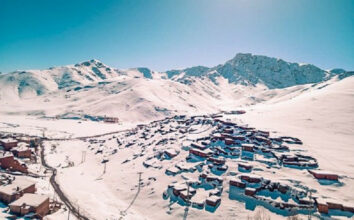
Article : L’Oukaïmeden, station d’hiver et espace culte de transhumance
Alors que l’Oukaïmeden est appelé à devenir une station touristique quatre saisons à l’horizon 2027, l’anthropologue Mohamed Mahdi rappelle que ce territoire ne peut être réduit à un site de loisirs. Agdal pastoral, espace de transhumance, réservoir de biodiversité et patrimoine culturel amazigh, l’Oukaïmeden impose une approche de développement intégrée, capable de concilier tourisme, pastoralisme et préservation des équilibres sociaux et écologiques.

Article : La météo pour le lundi 27 avril 2026
Voici les prévisions météorologiques pour le lundi 27 avril 2026, établies par la Direction générale de la météorologie.

Article : Plan d’aménagement de Marchica : un nouveau souffle socio-économique pour Nador et Beni Ensar
L'aménagement de la lagune de Marchica s’apprête à un nouveau chapitre. Au-delà des avancées de la première phase, il dessine une nouvelle transformation urbaine et touristique d'ampleur, de Nador à Beni Ensar, jusqu'au village d'Arkman. L’enquête publique s’est achevée vendredi.