
Multilateralism’s Crisis Is an Opportunity
NEW YORK – When Cyclone Idai hit Mozambique, Malawi, Zimbabwe, and Madagascar last month, it left almost one thousand people dead, and hundreds of thousands more homeless, hungry, and threatened by disease. According to one estimate, more than $1 billion worth of infrastructure could have been lost.
Such catastrophes have become depressingly familiar. Idai was the latest in a series of extreme weather events showing us that the devastating effects of climate change lie not in some distant future, but in the present. Worse, the world’s poorest and most vulnerable communities are being hit the hardest. Mozambique – the country that suffered the most damage from Idai – will have to rebuild with both hands tied behind its back, because it is currently stuck in negotiations to restructure its unsustainable debt.
To address such challenges, in 2015, the international community adopted the 2030 Agenda for Sustainable Development, which laid out a path to shared prosperity and sustainability. But the Sustainable Development Goals (SDGs) will not be achieved unless we overhaul our financial systems in accordance with the United Nations’ Addis Ababa Action Agenda. We need a global financial architecture that will enable us to fund necessary investments (including in resilient infrastructure), respond rapidly to shocks, and put struggling countries on sound financial footing.
There has been some progress. A new UN assessment of global sustainable-development financing, conducted in collaboration with the International Monetary Fund, the World Bank, and the OECD, finds that private-sector interest in sustainable finance is growing. Moreover, the SDGs are increasingly being incorporated in public budgets and development cooperation efforts.
But these changes are not happening fast enough nor on anywhere near the scale required. For example, at $43 billion in the first half of 2018, total private-sector investment in developing-country infrastructure is lower today than it was in the same period in 2012. To meet the goal of providing universal primary education by 2030, annual education spending in the world’s poorest countries will have to be more than tripled.
At the same time, underlying systemic risks need to be addressed to avert future crises. Here, the outlook is not promising. The global economy’s growth has peaked at 3%, which is far short of what is needed to eradicate poverty in many countries. In 2017, real (inflation-adjusted) wages rose by only 1.8%, the lowest rate in a decade. Most of the world’s people now live in countries with rising levels of income inequality. Although globalization has increased wealth substantially and allowed for significant progress in fighting poverty, the gains have not been shared equitably. Far too many households, communities, and countries have been excluded from rising prosperity.
Against this backdrop, it is not surprising that trust in multilateralism itself has eroded in many parts of the world. Yet while the multilateral order is suffering a crisis of legitimacy, it is also being afforded an opportunity. Rapid change – in geopolitics and technology, in addition to the Earth’s climate – have focused our collective attention on challenges to existing arrangements in global finance, trade, debt, tax cooperation, and other areas. Now that we are revisiting those arrangements, we can repurpose them for sustainable development.
For example, the urgent need for long-term investments to combat climate change has highlighted the short-term orientation of capital markets, and underscored the importance of realigning incentives that drive the behavior of financial system actors. By the same token, the fact that more than $588 billion of goods were subject to trade restrictions by mid-October 2018 – a sevenfold increase over the previous year – represents a crisis of the multilateral trading system, but also an opportunity to promote a fairer approach to globalization.
Like Mozambique, there are now at least 30 other developing and low-income countries at high risk of debt distress. But rising sovereign-debt risks, which coincide with a changing creditor landscape, have sensitized the international community to gaps in the existing architecture for sovereign debt sustainability.
Finally, digitalization has fueled the debate about the design of the international tax system and its impact on inequality. And growing market concentration, particularly in the digital economy, has shone a spotlight on the need to address new technologies’ distributional implications – both within and between countries.
National policies to raise taxes, attract investment, and align domestic financial systems with the SDGs are necessary to usher in the transformation we need. But the world’s most pressing problems cannot be solved by countries acting on their own. Rather than retreating from multilateralism, the international community must strengthen collective action. Only by working together can we achieve great things for the good of all people. If we fail to do so, we will fail to deliver sustainable development for all. With the future of the planet and our shared prosperity at stake, there is no excuse for inaction.
© Project Syndicate 1995–2019
à lire aussi
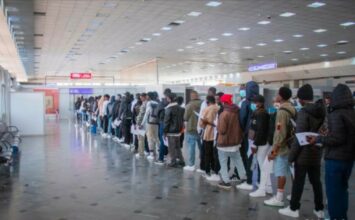
Article : Migration irrégulière : 113 ressortissants guinéens rapatriés du Maroc
Les autorités guinéennes, en partenariat avec l’Organisation internationale pour les migrations, ont organisé le retour de 113 migrants depuis le Maroc, dont 29 femmes et 14 enfants.

Article : Washington Hilton. Ce que l’on sait de l’assaut contre le gala de la presse où se trouvait Donald Trump
Dans la soirée du samedi 25 avril 2026, le prestigieux gala annuel des correspondants de la Maison-Blanche, qui se tenait dans la grande salle de bal du Washington Hilton, a basculé dans le chaos. Alors que le gratin du journalisme, de la politique et des célébrités s’apprêtait à dîner en présence du président Donald Trump, des coups de feu ont retenti, déclenchant une évacuation d'urgence et une traque immédiate au cœur de l'hôtel.

Article : ETRUR Maroc. Lourde sanction contre le dirigeant après la chute de l'industriel du liège
Jugée à Rabat le 23 avril 2026, l’affaire ETRUR Maroc met en jeu une procédure de comblement du passif aux conséquences patrimoniales majeures pour son dirigeant, à la suite de la liquidation prononcée l’été dernier.
Article : قطاع التعمير: المصادقة على تصميمين جديدين للتهيئة بأكادير
.صادقت وزارة إعداد التراب الوطني والتعمير والإسكان وسياسة المدينة مؤخراً على تصميمَي تهيئة يخصّان منطقة أكادير الشمال والقطب الحضري الصحي،الرياضي والحضري

Article : Arbitrage. Comment Casablanca tente de s’imposer comme hub africain face à Paris et Londres
À l’occasion de son dixième anniversaire, Médias24 a interrogé les dirigeants du Centre international de médiation et d’arbitrage de Casablanca sur son bilan et ses ambitions. Derrière la technicité des clauses d’arbitrage, un enjeu très concret : convaincre les entreprises et les investisseurs que leurs litiges peuvent être tranchés au Maroc, avec les mêmes garanties que dans les grandes places internationales. Interview.

Article : Alerte météo. Averses orageuses et rafales dès ce lundi 27 avril dans plusieurs provinces
Des averses orageuses localement fortes avec rafales sous orages et grêle locale sont attendues, les lundi et mardi (27-28 avril) dans plusieurs provinces.