
Trump’s Election Gift to China?
CLAREMONT, CALIFORNIA – For China, at least, US President Donald Trump is the gift that keeps on giving. His calamitous response to the COVID-19 pandemic has made China, whose government mishandled the initial outbreak in January this year, look like an exemplar of effective governance. Moreover, Trump’s “America First” foreign policy has alienated traditional US allies, making it difficult to build a broad coalition to counter China.
To be sure, Trump has delivered painful blows to Chinese President Xi Jinping. His trade and technology wars are demolishing US-China commercial relations, and his administration’s support for Taiwan has infuriated Chinese leaders. But as American voters prepare to head to the polls on November 3, Trump seemingly has one more gift to give to Xi: an election meltdown.
In the run-up to this referendum on his presidency, Trump has repeatedly refused to commit unequivocally to accepting its outcome. He has used his presidential bully pulpit to try to delegitimize voting by mail, and even hinted that the US Supreme Court, which now has a 6-3 conservative majority following the Senate’s October 26 confirmation of Trump’s recent nominee, Amy Coney Barrett, would intervene and presumably deliver him a second term.
Recent opinion polls point to a clear victory for Trump’s Democratic challenger, former Vice President Joe Biden. But the presidential race is likely to tighten, and – even if Trump trails Biden in the overall popular vote – the outcome in the battleground states that will determine the winner in the Electoral College could be too close to call on election night. That would create an opening for Trump – and the Republican Party – to use their control of many levers of power to cling to the White House.
Although the nightmarish scenarios of a drawn-out post-election battle vary, any of them would irreparably damage America’s democracy – to the delight of the Communist Party of China.
At the ideological level, a US election meltdown featuring bitter political clashes and endless litigation would be a propaganda bonanza for the CPC. Chinese leaders would point to America’s political turmoil as a symptom of its terminal decline. Trump’s incompetent management of the pandemic has already made America an object of pity around the world. If he follows through on his threats to defy the will of US voters, the appeal of American democracy to people living under dictatorships, including in China, would be eviscerated. If heavily armed far-right militia groups engage in large-scale voter intimidation and deadly clashes occur around the US on November 3, Chinese state-controlled media will gleefully beam such apocalyptic scenes into every Chinese household.
China could benefit even more if Trump emerges as the winner from a contested election – a likely prospect given the archaic and complex rules governing US presidential elections and the Supreme Court’s potentially decisive role.
Although a second-term Trump administration would further tighten the military and technological screws around China, the continuation of his presidency would nonetheless be a boon to Xi’s regime. For starters, a majority of Americans will regard Trump as an illegitimate president if he loses the popular vote – as now seems all but certain. Worse still, the country could be plunged into political civil war if he wins a second term through massive voter suppression, dubious political maneuvers by Republican-controlled legislatures in battleground states such as Pennsylvania, Wisconsin, and Florida, partisan rulings by Trump-appointed judges and justices, and outright abuse of executive authority. In the latest example of the latter, Trump has been calling on the Justice Department to investigate both Biden and his son, Hunter, after a recent New York Post report prompted unsubstantiated allegations concerning Hunter Biden’s business dealings.
Although both Democrats and Republicans regard China as America’s most serious threat, one has to wonder how the US could effectively wage a new cold war against China while engulfed in a political civil war and led by a chief executive whom more than half the electorate regards as illegitimate. At the very least, further intensification of partisan polarization would make it impossible for America to rebuild its strength at home through catch-up investments in health care, education, scientific research, clean energy, and infrastructure – all of which are urgently needed to sustain the country’s competitive advantage over China.
Internationally, a second-term Trump administration ushered in by non-democratic means would widen the gulf between the US and its traditional liberal democratic allies. The continuation of Trump’s “America First” foreign policy would make it harder for the US to forge a broad anti-China coalition. With the erosion of American democracy likely to accelerate in a second Trump term, US diplomats would find it challenging to persuade other Western leaders that they should join America’s autocratic strongman in an ideological crusade against China’s autocratic strongman.
Conventional wisdom holds that China’s leaders would prefer a Biden victory. Although China might then face a more unified West, a Biden administration would be more predictable and open to cooperation on climate change and global public health. But the prospect of an America paralyzed by a crisis of political illegitimacy at home, and estranged from its allies abroad, may be even more attractive to the CPC.
à lire aussi
Article : Le Maroc face au risque d’une inflation alimentaire diffuse et composite
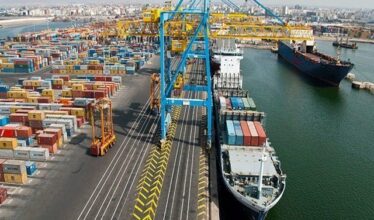
Alors que les instances internationales s'inquiètent d'un nouveau choc systémique mondial lié aux tensions géopolitiques, le Maroc navigue entre une campagne agricole prometteuse et des goulots d'étranglement logistiques nationaux. Si le blé tendre reste sous protection, les filières animale, sucrière et oléagineuse demeurent exposées à une inflation de second rang et à une saturation portuaire qui grignote les marges de manœuvre. Analyse.

Article : Pourquoi le taux d’inflation ne reflète pas toujours le vécu des ménages
Au Maroc, l’inflation ralentit, mais les ménages continuent de ressentir la hausse des prix et la pression sur leur pouvoir d’achat. Cet écart vient surtout d’une lecture incomplète du taux d’inflation, ainsi que de la nature même du panier représentatif utilisé pour mesurer l’évolution des prix.

Article : Intelcia : Karim Bernoussi et ses partenaires reprennent 100% du capital, sortie d’Altice
Le 28 avril, les deux cofondateurs du groupe, Karim Bernoussi et Youssef El Oufir, doivent finaliser le rachat des 65% du capital détenus par le groupe Altice, dont ils n'avaient conservé que 35% lors de l'entrée du partenaire français en 2016. Une opération qui redonne à ce fleuron de l'économie marocaine sa pleine liberté de manœuvre, au moment précis où son secteur est traversé par la déferlante de l'intelligence artificielle. Karim Bernoussi, PDG du groupe, était l'invité du 12/13 de Médias24.

Article : L’Oukaïmeden, station d’hiver et espace culte de transhumance
Alors que l’Oukaïmeden est appelé à devenir une station touristique quatre saisons à l’horizon 2027, l’anthropologue Mohamed Mahdi rappelle que ce territoire ne peut être réduit à un site de loisirs. Agdal pastoral, espace de transhumance, réservoir de biodiversité et patrimoine culturel amazigh, l’Oukaïmeden impose une approche de développement intégrée, capable de concilier tourisme, pastoralisme et préservation des équilibres sociaux et écologiques.

Article : La météo pour le lundi 27 avril 2026
Voici les prévisions météorologiques pour le lundi 27 avril 2026, établies par la Direction générale de la météorologie.

Article : Plan d’aménagement de Marchica : un nouveau souffle socio-économique pour Nador et Beni Ensar
L'aménagement de la lagune de Marchica s’apprête à un nouveau chapitre. Au-delà des avancées de la première phase, il dessine une nouvelle transformation urbaine et touristique d'ampleur, de Nador à Beni Ensar, jusqu'au village d'Arkman. L’enquête publique s’est achevée vendredi.