
Where Is the World for the Palestinians?
AMMAN – It should come as no surprise that the proposed US peace agreement between Israel and the Palestinians bears all the hallmarks of a real-estate transaction. This supposed “Deal of the Century” certainly embodies none of the ingredients of successful conflict resolution, including talking and listening, accommodation of core interests, and a compromise solution that the majority can support. And how could it when the most important partners in the conversation – the Palestinians – were notable only by their absence, having been forced from the room by impossible demands.
Shortly after Jared Kushner’s laudable comment in May 2018 that the pursuit of peace is “the noblest pursuit of humankind,” the journalist Robert Fisk asked the right question about Kushner’s plan: “After three Arab-Israeli wars, tens of thousands of Palestinian deaths, and millions of refugees, does Kushner really believe that the Palestinians will settle for cash?”
The cynical among us might conclude, with Chris Doyle, director of the Council for Arab-British Understanding, that “peace between Israelis and Palestinians is not a consideration. It is just cosmetics.” The US administration’s earlier actions – endorsement of Israel’s West Bank settlements, moving the US embassy to Jerusalem, and cutting funding for the United Nations Relief and Works Agency (which supports Palestinian refugees) – certainly suggest as much. As Lara Friedman, President of the Foundation for Middle East Peace, put it in 2018: “It’s very clear that the overarching goal is to eliminate the Palestinian refugees as an issue by defining them out of existence.” Kushner’s proposal does the same to the Palestinians as a whole and Palestine as a functioning entity.
The proposal abandons all considerations of international law and numerous UN Security Council resolutions, instead suggesting that Palestinians should exchange their most fertile land for desert and accept a territory resembling a wedge of Gouda cheese, linked by bridges and tunnels and almost entirely surrounded by areas under Israeli sovereignty. This is an affront to Palestinians’ dignity, not to mention their hopes and aspirations for the future. Meanwhile, fears over the fate of Jerusalem and historic rights of sovereignty over the Holy Sites, must concern all Muslims worldwide.
For much of my life, the crises of our region have been family problems. At meetings between Israel’s future first president, Chaim Weizmann, and my late great uncle, King Faisal I, in the aftermath of World War I, the discussion was about a federated Arab state in the region, where Jews, Christians, and Muslims of Arab culture would live in a context of independence and coexistence.
This was a vision that was also espoused by my grandfather, based on an irrevocable commitment to a vision of human dignity implying pluralism and equal rights for all faiths. It was an enlightened vision, underpinned by strong moral beliefs, but it was also a structuralist vision – what Abba Eban, Israel’s foreign minister in the 1970s, termed a Benelux for the region. And it is important to acknowledge that when Jordan gave nationality to the Palestinian Jordanians, it was on the basis that the Palestinians were a wadiyyah, a trust, and that their right to self-determination was not being prejudiced or denied. It is hard not to wonder how differently things might have turned out had King Abdullah I of Jordan and later Israeli Prime Minister Yitzhak Rabin, also a great peacemaker, not been assassinated for their beliefs.
I recall the heady days in the aftermath of Jordan’s 1994 peace treaty with Israel, when there was so much hope. It sounds unimaginable today, but such was the goodwill back then that, having raised some $10 million in a telethon for humanitarian assistance to Bosnia, my late brother King Hussein was contacted by Rabin, who suggested we make it a joint initiative. So, we flew in planes together. On arrival, I moderated a press conference with Bosnians, Muslims, Croats, Serbs, and the Israeli delegates, all of whom had good reason not to feel particularly warm toward one another. Still, the message was one of peace in the Balkans and peace in the Middle East.
The cause of subsequent disappointment is twofold. First, there was never a mechanism for the continuation of such visionary ideas. And, second, although my own country, Jordan, did sign a peace treaty with Israel, it has remained a cold peace, because the groundwork to change peoples’ attitudes and involve them in the process has not been laid. Thus, the cold peace has not developed into a warm one – a peace which goes beyond talking heads and engages all people.
A quarter-century later, that goal feels further away than ever, and Kushner’s proposal won’t help. “Sometimes you have to strategically risk breaking things in order to get there,” he said in 2018. That crude sentiment, with its echo of Robespierre and Lenin, betrays a terrifying lack of understanding of the situation, and risks undermining all efforts to bring stability to this troubled region.
Only last week we heard an Auschwitz survivor’s moving testimony. “Where was the world?” she wanted to know. I cannot but ask the same thing: Where will the world be for the Palestinians in the weeks and months to come?
à lire aussi
Article : En Tanzanie, le sifflet marocain à l'honneur pour le choc Simba SC-Young Africans
Reconnaissant l'expertise marocaine à l'échelle continentale, la Fédération tanzanienne de football avait sollicité l'appui de la FRMF pour assurer l’arbitrage de son choc national.
Article : Migration irrégulière : 113 ressortissants guinéens rapatriés du Maroc
Les autorités guinéennes, en partenariat avec l’Organisation internationale pour les migrations, ont organisé le retour de 113 migrants depuis le Maroc, dont 29 femmes et 14 enfants.

Article : Washington Hilton. Ce que l’on sait de l’assaut contre le gala de la presse où se trouvait Donald Trump
Dans la soirée du samedi 25 avril 2026, le prestigieux gala annuel des correspondants de la Maison-Blanche, qui se tenait dans la grande salle de bal du Washington Hilton, a basculé dans le chaos. Alors que le gratin du journalisme, de la politique et des célébrités s’apprêtait à dîner en présence du président Donald Trump, des coups de feu ont retenti, déclenchant une évacuation d'urgence et une traque immédiate au cœur de l'hôtel.
Article : ETRUR Maroc. Lourde sanction contre le dirigeant après la chute de l'industriel du liège
Jugée à Rabat le 23 avril 2026, l’affaire ETRUR Maroc met en jeu une procédure de comblement du passif aux conséquences patrimoniales majeures pour son dirigeant, à la suite de la liquidation prononcée l’été dernier.
Article : قطاع التعمير: المصادقة على تصميمين جديدين للتهيئة بأكادير
.صادقت وزارة إعداد التراب الوطني والتعمير والإسكان وسياسة المدينة مؤخراً على تصميمَي تهيئة يخصّان منطقة أكادير الشمال والقطب الحضري الصحي،الرياضي والحضري
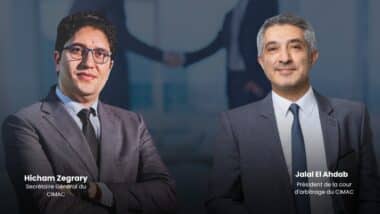
Article : Arbitrage. Comment Casablanca tente de s’imposer comme hub africain face à Paris et Londres
À l’occasion de son dixième anniversaire, Médias24 a interrogé les dirigeants du Centre international de médiation et d’arbitrage de Casablanca sur son bilan et ses ambitions. Derrière la technicité des clauses d’arbitrage, un enjeu très concret : convaincre les entreprises et les investisseurs que leurs litiges peuvent être tranchés au Maroc, avec les mêmes garanties que dans les grandes places internationales. Interview.