
From CAN 2025 to the 2030 World Cup: Morocco’s strategic challenge of narrative sovereignty
The 2025 Africa Cup of Nations was an undeniable logistical success, but a silent defeat on the soft power front. Analysis of digital dynamics reveals how Morocco weakened its own international image through a flawed management of the narrative battle.
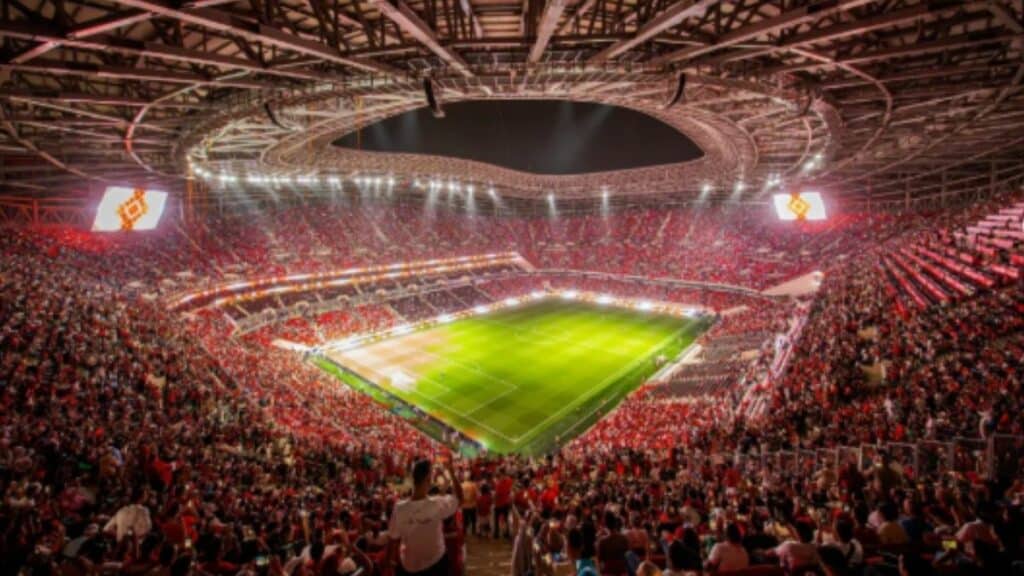
The spotlights have dimmed on the 2025 AFCON, and the assessment is mixed. Materially, Morocco has delivered a flawless performance: infrastructure and security pass the test for the 2030 World Cup. However, in terms of Soft Power, paradoxically, the country emerges weakened.
This opinion piece serves as a Data Science autopsy. My job is not to comment on refereeing decisions but to decipher the structures of information dissemination. The goal is to shed light on an uncomfortable reality: Morocco did not lose the narrative battle to an external enemy but due to the failure of its own digital defenses.
A Minefield Beneath Perfect Lawns
To understand the fire, let's analyze the fuel. Pre-competition sentiment analysis reveals a paradox. On one side, logistical excellence. On the other, a digital climate whose toxicity exceeded a critical threshold well before kick-off.
Pressure on the host country is a statistical constant. Historically, organizers are systematically targeted by accusatory "background noise" — favoritism, refereeing. However, AFCON 2025 marked an anomaly: the stadium became a projection screen for latent regional conflicts. Platform algorithms, primed for polarization, amplified this powder keg. The environment was combustible; the slightest spark could only ignite an explosion. It was no longer a tournament, but a diplomatic stress test.
In cognitive warfare, structure outweighs the message. The analysis reveals a three‑tier architecture. Layer 1 (Architects) injects the poison: geopolitical opportunists operating in symbiosis with algorithms (X, TikTok). Layer 2 (Middleware) — influencers and journalists, foreign or Moroccan — act as the system’s “useful idiots,” viralizing the signal through clickbait without grasping its strategic intent, turning an influence operation into a dominant trend. Finally, Layer 3 (Receivers): an emotional, uncritical crowd consuming the conflict as entertainment.
The Spark and the Trap
The attack crystallized during the Round of 16 between Morocco and Tanzania. The Masina incident — an uncalled penalty — was the turning point. Data reveals a stark disconnect between fact and resonance: thousands of posts overshadowing the match, entrenching a narrative of corruption. The addition of the anecdotal "towel affair" confirmed the strategy: weaponizing micro-events to destroy a macro-political reputation.
The drama unfolds here, in a Pavlovian "Action–Reaction" dynamic. First, the Action: targeted criticisms prickle national pride. Then, the Reaction: Moroccan influencers pour fuel. The local digital sphere engages in a toxic escalation — clashes and hate gamification on TikTok. It’s a devastating Streisand effect. Finally, validation: the trap closes. The breaking point was the whistles against the Egyptian anthem in the semi‑final. This gesture was not patriotic; it was diplomatic suicide, the result of conditioning by these digital "defenders."
Evidence through Data
Numbers don’t lie. An audit of a major "influence node" in the Moroccan web (over 5 million cumulative YouTube subscribers alone) reveals the mechanics of disaster. Comparing the standard period (the previous 4 months) to the AFCON period (one month), the finding is harsh. While its generalist content sometimes peaked at 75,000 views, its last 10 "reaction" videos to the AFCON consistently blew up the counter, ranging between 280,000 and 390,000 views.
I analyzed these videos (over 9 hours of content): they show an incitement to "counter‑support" and a normalization of insults. The ratio is relentless: hate is 3 to 5 times more profitable than moderation. Worse, these sequences, fragmented on TikTok, subsequently generated millions of views. The escalation is not spontaneous anger; it’s an algorithmic business model.
The diagnosis reveals a strategic fracture. Morocco prepared infrastructure worthy of the 2030 World Cup while tolerating a digital maturity akin to a playground. The state left a narrative void filled by aggressive "loose electrons."
Believing they were defending the country, these uncontrolled "digital soldiers" actually orchestrated its isolation. A psychological war cannot be countered with reinforced concrete or digital arrogance.
Disciplining the "Middleware"
The answer lies in the space between manipulators and the crowd. This middleware must cease to be an emotional amplifier and become a strategic filter.
By 2030, the challenge is narrative sovereignty. It involves equipping opinion leaders with a crisis communication culture: restraint, verification, de‑escalation. Modern soft power does not rely on digital soldiers left to their own devices but on ambassadors capable of defending an image through calm and credibility.
Take the example of Qatar. From fierce campaigns preceding the successful organization of the 2022 World Cup to the digital hysteria following the 2023 Asian Cup final, the observation is the same: hashtags fade, only the narrative remains.
This narrative failure is a disguised blessing: we have just undergone a full-scale crash test before 2030. If this Pavlovian dynamic repeats during the World Cup, Morocco's image will not just be tarnished; it will be shattered. In this new world, cognitive warfare is won through composure and strategic silence — never through buzz.

à lire aussi

Article : Au-delà du bilan Akhannouch, lecture des indicateurs du marché du travail
Sous le gouvernement Akhannouch, le marché de l’emploi reste le principal point de fragilité de l’économie. Ce problème est ancien mais s’aggrave au fil du temps. Médias24 confronte les engagements du gouvernement à ses réalisations et analyse, au-delà du mandat, plusieurs indicateurs du marché du travail sur une longue période.

Article : Secteur minier. Après une année 2025 record, 2026 s'annonce déjà comme un cru très prometteur
2025 restera comme un millésime d'exception pour les mines marocaines. Cours au plus haut, volumes en hausse, nouveaux projets en maturation... Le secteur profite pleinement d'un cycle mondial porteur. Et 2026 s'annonce tout aussi favorable, sous l'effet de plusieurs signes.

Article : Ordre des experts-comptables. Élections sur fond de réflexion sur l’ouverture du capital
Le 21 mai 2026, les experts-comptables élisent les membres du Conseil national et des conseils régionaux de leur Ordre pour les trois prochaines années. Au-delà de ce renouvellement, la profession réfléchit à faire évoluer son cadre, notamment sur la question de l’ouverture du capital des cabinets. Détails.
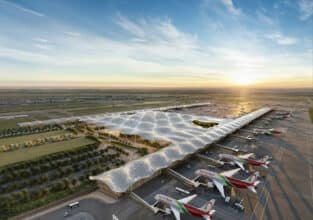
Article : Le trafic aérien en hausse de 11,15% à fin mars 2026
L'Office national des aéroports (ONDA) a annoncé que le trafic aérien commercial dans les aéroports du Royaume a enregistré 8.913.041 passagers à fin mars 2026, soit une croissance de 11,15% par rapport à la même période de l'année précédente.
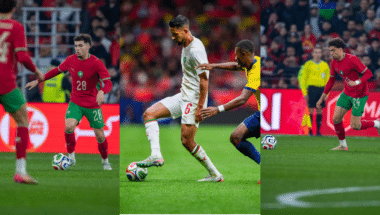
Article : Mondial 2026. Le double pivot, pierre angulaire du projet Ouahbi
Les deux milieux de terrain devant la défense constituent l’élément central du dispositif tactique du sélectionneur national. Un principe qui assure l’équilibre des Lions de l’Atlas, conditionne la récupération du ballon et la première phase de construction. Mais qui n’est pas sans risque.
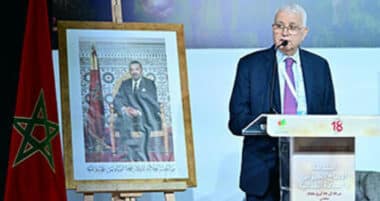
Article : SIAM 2026 : malgré un taux de couverture de 60%, 450 communes rurales restent exclues des services financiers selon Bank Al-Maghrib
À Meknès, le directeur général de Bank Al-Maghrib, Abderrahim Bouazza a indiqué que 450 communes rurales restent sans services financiers malgré une couverture de 60%. Il a aussi annoncé l’équipement de 50 coopératives en TPE et rappelé que 25% des programmes d’éducation financière ont ciblé le monde rural.