
Mining sector. After a record 2025, 2026 is already shaping up to be another highly promising year
2025 will stand out as an exceptional year for Morocco’s mining industry. Prices hit record highs, output increased and new projects moved closer to fruition. The sector is reaping the full benefits of a supportive global cycle, and early signals suggest 2026 could prove just as favourable.
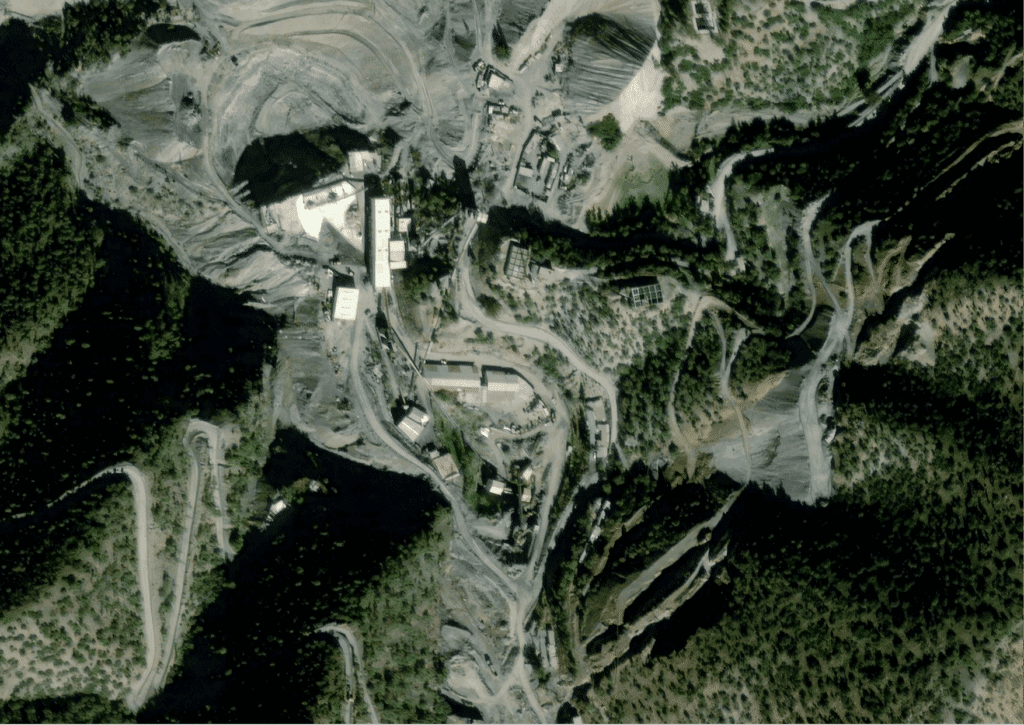
Morocco’s mining sector enjoyed a strong year in 2025 and is likely to extend that momentum into 2026, against an increasingly supportive global backdrop.
Amid rising commodity prices, Morocco’s main mining operations, excluding phosphates, broadly increased their output volumes in response to favourable market conditions.
Until recently, the gap between the phosphate industry and other mining segments appeared difficult to bridge. However, robust industrial demand—driven in particular by advanced technologies and, above all, the energy transition—is expected to narrow this gap faster than previously thought.
Silver: national output reaches 330 tonnes
Morocco, Africa’s leading silver producer, increased its annual output following the completion of the expansion of the Zgounder mine and the commissioning of the Tizert site. National production thus rose to 330 tonnes of silver.
At the top of the rankings, Managem confirmed its position as Morocco’s historic silver producer, with output reaching 151 tonnes.
Aya ranked second, reporting total production of around 5 million ounces, mainly from its Zgounder operation (4.8 million ounces), alongside the sale of legacy stockpiles from its Boumadine project. For the first time, the Zgounder mine surpassed Imiter, which had previously dominated national silver output (126 tonnes).
Other operators also contributed, albeit on a smaller scale, including the Tighza mine, which produces silver-rich concentrates. In 2025, CMT reported production of 29.4 tonnes at the site.
On the market side, silver prices posted a sharp rally in 2025, reaching a record $115 per ounce. Although prices eased following the Middle East conflict, they remain above $70 per ounce, underscoring continued favourable conditions for producers.
Driven by Tizert, Morocco’s copper output gathers pace
A strategic metal and a cornerstone of the electrical industry, copper is expected to see a significant increase in national output. The Tizert mine alone could double Morocco’s production once it reaches full capacity.
Managem’s copper concentrate output rose from 92,612 tonnes to 110,721 tonnes, marking a 19.6% increase. The ramp-up of the Tizert deposit not only boosted volumes but also offset output from the Oumejrane mine, previously sold to Purple Hedge (now the Ayrad group).
In 2026, the ongoing blockade of the Strait of Hormuz and its impact on the availability of inputs used in fertiliser production, particularly sulphur, could indirectly influence copper prices. Pressure may increase on the processing of sulphide ores, including copper, to secure sulphuric acid recovery. If sustained, this dynamic could boost copper supply on global markets and, in turn, weigh on prices.
That said, the Hormuz crisis is not the only factor at play. Global demand—fuelled by the energy transition—is expected to grow in the coming years at a pace that current supply may struggle to meet.
Another key transition metal, cobalt, is also produced in Morocco, albeit in smaller volumes, at the Bou Azzer site, the country’s only cobalt deposit. In 2025, Managem strategically cut its output by more than half, despite a recovery in prices after years of decline. This shift aligns with the upcoming launch of its cobalt sulphate plant, which will move production up the value chain and, for the first time locally, supply a certified cobalt product directly usable by the automotive industry.
Lead and zinc: diverging price trends
Morocco has long been a producer of lead and zinc. In 2026, however, price trends for the two metals are diverging. Lead is trading at around $1,900 per tonne in a relatively stable market supported by battery demand. Zinc, by contrast, continues its upward trajectory, reaching approximately $3,400 per tonne—a level not seen since the early stages of the Russia-Ukraine conflict in 2022. This trend is driven by regional supply constraints, particularly in Europe and the United States.
Managem’s zinc and lead output comes from the Drâa Sfar polymetallic complex, although production is expected to decline gradually as the mine’s remaining lifespan is estimated at fewer than five years.
At the Tighza mine, near M’rirt, CMT produced 28,305 tonnes of lead and zinc concentrates in 2025.
Meanwhile, CADETAF, which markets output from artisanal miners in the Tafilalet and Figuig regions, sold 8,240 tonnes of zinc and 8,630 tonnes of lead.
Three major mining projects taking shape
Three large-scale mining projects are currently advancing. In the Errachidia region, the Boumadine project, led by Aya Gold & Silver, is expected to enter production by 2030. It will produce silver and gold concentrates, with an estimated capacity of 5 million ounces of silver per year. A smelter project, currently under discussion, could enable local production of refined gold and silver.
The Bouskour copper mine, near Ouarzazate, is also expected to restart by 2029, after being shut down in 1977 following a collapse in copper prices.
As part of its 2025–2030 strategy, Managem is developing a graphite project, which would mark Morocco’s first production of this mineral. Target capacity ranges from 100,000 to 250,000 tonnes per year, with resource certification currently underway ahead of a planned 2030 launch.
However, two resources remain untapped: potash and tin. Tin prices continue to rise, driven by diverse industrial uses, currently hovering around $50,000 per tonne, compared with below $40,000 in 2025, $35,000 in 2024 and $30,000 in 2023. The Achmmach project is now controlled by a Chinese mining group specialising in non-ferrous metals.
Finally, a major reform of the mining law is still awaiting final approval. Once enacted, it would better align the sector with domestic industrial needs, notably by enabling value-added processing projects without requiring a mining licence—a segment that remains underdeveloped in Morocco.
In parallel, draft legislation establishing a regularly updated list of critical minerals would allow authorities to reserve part—or even all—of mining output for domestic use rather than exporting it in raw form, effectively creating strategic reserves.

à lire aussi

Article : Au-delà du bilan Akhannouch, lecture des indicateurs du marché du travail
Sous le gouvernement Akhannouch, le marché de l’emploi reste le principal point de fragilité de l’économie. Ce problème est ancien mais s’aggrave au fil du temps. Médias24 confronte les engagements du gouvernement à ses réalisations et analyse, au-delà du mandat, plusieurs indicateurs du marché du travail sur une longue période.
Article : Secteur minier. Après une année 2025 record, 2026 s'annonce déjà comme un cru très prometteur
2025 restera comme un millésime d'exception pour les mines marocaines. Cours au plus haut, volumes en hausse, nouveaux projets en maturation... Le secteur profite pleinement d'un cycle mondial porteur. Et 2026 s'annonce tout aussi favorable, sous l'effet de plusieurs signes.

Article : Ordre des experts-comptables. Élections sur fond de réflexion sur l’ouverture du capital
Le 21 mai 2026, les experts-comptables élisent les membres du Conseil national et des conseils régionaux de leur Ordre pour les trois prochaines années. Au-delà de ce renouvellement, la profession réfléchit à faire évoluer son cadre, notamment sur la question de l’ouverture du capital des cabinets. Détails.

Article : Le trafic aérien en hausse de 11,15% à fin mars 2026
L'Office national des aéroports (ONDA) a annoncé que le trafic aérien commercial dans les aéroports du Royaume a enregistré 8.913.041 passagers à fin mars 2026, soit une croissance de 11,15% par rapport à la même période de l'année précédente.

Article : Mondial 2026. Le double pivot, pierre angulaire du projet Ouahbi
Les deux milieux de terrain devant la défense constituent l’élément central du dispositif tactique du sélectionneur national. Un principe qui assure l’équilibre des Lions de l’Atlas, conditionne la récupération du ballon et la première phase de construction. Mais qui n’est pas sans risque.

Article : SIAM 2026 : malgré un taux de couverture de 60%, 450 communes rurales restent exclues des services financiers selon Bank Al-Maghrib
À Meknès, le directeur général de Bank Al-Maghrib, Abderrahim Bouazza a indiqué que 450 communes rurales restent sans services financiers malgré une couverture de 60%. Il a aussi annoncé l’équipement de 50 coopératives en TPE et rappelé que 25% des programmes d’éducation financière ont ciblé le monde rural.