
Exclusive excerpt. In the corridors of the Interior Ministry, the night the autonomy plan was born
In "Morocco, the Challenge of Power", published this week by Le Cherche Midi, Abdelmalek Alaoui retraces 70 years of Moroccan state-building. From independence to the post-Covid reordering of the world, the president of the Moroccan Institute of Strategic Intelligence deciphers what he calls “the Morocco code” — the implicit grammar that has enabled the kingdom to establish itself as a regional power. Médias24 is publishing an exclusive excerpt devoted to a pivotal moment: the spring of 2007, when, inside an Interior Ministry turned into a war room, jurists, diplomats and technicians crafted, word by word, the autonomy plan for the Sahara — the document that would redefine the terms of the conflict before the United Nations.
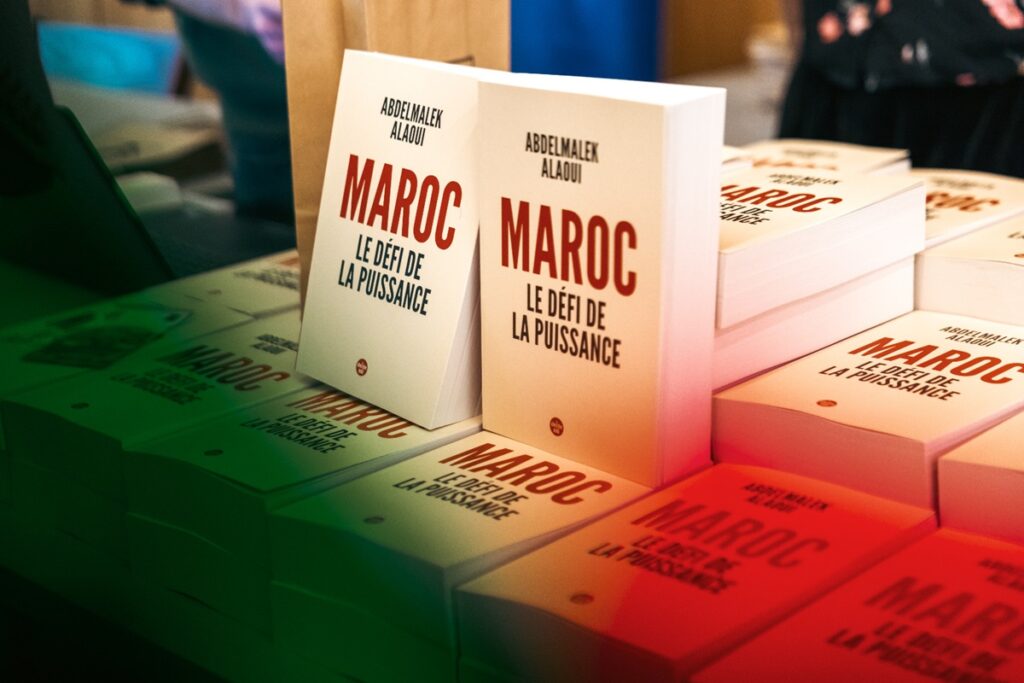
From the halls of Oxford, Abdelmalek Alaoui has chosen to revisit seventy years of Moroccan history, in order to better grasp all its subtleties. The witness has thus become an analyst, also nourished by notebooks begun in the aftermath of Hassan II’s death. As a result, this essay, Morocco, the Challenge of Power, draws on both the rigour of the researcher and the intimacy of the insider.
As president of IMSI, the Moroccan Institute of Strategic Intelligence, Abdelmalek Alaoui belongs both to Rabat’s inner circles and to Morocco’s business milieu. Active in the worlds of economics, politics and strategic intelligence, he has already published several essays on Morocco.
The book opens with a revealing scene. On October 28, 2024, Emmanuel Macron’s presidential plane lands in Rabat after a long diplomatic crisis. Mohammed VI, leaning on a cane yet standing, surrounded by his children and the royal family, awaits his guest on the tarmac. Twenty-one cannon shots salute the arrival. The image is calculated, the protocol carefully weighed. In just a few lines, the author captures the essential point: Morocco no longer merely reacts to geopolitics; it stages it. This book is precisely the story of that transformation — from a country emerging from colonisation in dependence and destitution to a state that, through successive inflections and deliberate strategic choices, has risen to the rank of a respected regional power.
The book is neither panegyric nor indictment. Abdelmalek Alaoui states things plainly, and he knows how to say them, with careful attention to form, elegant prose and an engaging, compelling narrative. It is a narrative-essay, a text that is both storytelling and intellectual reflection. The author describes and conceptualises. The book is stimulating and offers a framework for understanding that will undoubtedly find its place among those interested in Morocco.
Abdelmalek Alaoui advocates a systemic approach, lucid in the face of both genuine successes and persistent shortcomings — social, educational and democratic. What he seeks to decipher is the Morocco code: this implicit grammar, yet nowhere formally codified, woven from loyalties and ruptures, audacity and prudence, which has enabled an old nation to build its own modernity without renouncing its memory.
Three main lines of force run through the book.
The first is the quest for sovereignty — industrial, energy and agricultural — elevated to the status of a permanent compass for public policy.
The second is the dynamic of industrialisation, which has gradually inserted Morocco into global value chains while also revealing the contradictions of growth that remains unevenly distributed.
The third is political governance, the patient art of reconciling stability with gradual reform, monarchical continuity with citizens’ aspirations.
The monarchy occupies a central place here, not as an untouchable totem, but as a structuring reality. Alaoui shows with precision how the Throne has served as a point of balance in the often turbulent waters of Moroccan politics: arbitrating conflicts, catalysing energies, keeping the country on course in times of turbulence — the Years of Lead, the structural adjustment of the 1980s, the Arab Spring of 2011 — while also enabling significant transitions. Under Hassan II, then under Mohammed VI, the style changes, but the method remains: to move forward through pragmatism, not ideology.
Straddling Europe, Africa and the Arab world, Morocco navigates a geopolitical environment that would forgive neither weakness nor immobility. The Sahara issue, to which one chapter is naturally devoted, illustrates this peak tension: it is not merely a territorial conflict, but the metaphor for a clash of wills between two neighbouring nations that history might have brought closer together, but which divergent choices have durably separated.
The book adopts a chronological narrative in ten chapters, from the early years of independence (1955) to the reconfigurations of the post-Covid world, before opening onto the challenges ahead: the energy transition, social fractures, technological ascent and digital sovereignty. This steep and demanding path is the one Morocco will have to travel if its industrial and diplomatic successes are finally to translate into shared progress for all its generations.
Morocco, the Challenge of Power is not a manual. It is a reading. The reading of a country that rarely moves in a straight line, yet moves forward nonetheless — tacking between tradition and invention, between constraint and strategy, between the memory of Ibn Khaldoun and the ambitions of a kingdom turned towards the future.
Médias24 publishes below excerpts from this work. We have chosen for you the birth of the Sahara autonomy plan in 2007. Enjoy the reading.
-oOo-
The Autonomy Initiative for the Sahara: Morocco Plays Its Master Card
From 2005 onwards, the political decision was made. The procedural trap of the referendum had to be abandoned in favour of a normative framework. The architecture was built layer by layer. On March 25, 2006, a dahir (royal decree) created the Royal Advisory Council for Saharan Affairs (Corcas), chaired by Khalihenna Ould Errachid, a Sahrawi who, in the early 1970s, had founded a movement rival to the Polisario Front, the Party of Saharan National Union, known by its French acronym PUNS. He later became a member of parliament, then minister for Saharan Affairs from 1977 to 1995. That is enough to show his familiarity with the issue — and that is not his only asset, since he is also a notable of the powerful Reguibat tribe. His roadmap can be summed up as follows: listen, aggregate local expectations and carry a pluralised Saharan discourse, relaying in various capitals the views of tribes, notables and elected officials, as well as entrepreneurs and associations. At the same time, Rabat deploys internal political consultations: parties, trade unions and NGOs are all received. Drafts circulate between the Ministry of the Interior, the Ministry of Foreign Affairs and the Royal Cabinet to test the powers that might be delegated (local finances, development, culture, territorial policing) and those that must remain protected (defence, foreign relations, supreme justice).
Corcas finds its full usefulness in this multipartite approach. It lends legitimacy to Saharan consultation, provides credible envoys to explain the plan (notables, elected officials, tribal chiefs), and empowers local interlocutors alongside institutional voices, notably those of the Ministries of the Interior and Foreign Affairs.
As the submission of the autonomy proposal to the UN approaches, the Ministry of the Interior becomes a hive of activity. The “old hands” of the dossier — jurists and practitioners who have worked on the Sahara issue over the long term — are called back in. Chaouki Serghini, former secretary of state and a shrewd academic, works on legal knots, highly technical points concerning constitutional compatibility, the hierarchy of norms and the articulation of shared powers. He helps bridge the technical teams and the political narrative.
In the former residence of Lyautey, which became the Ministry of the Interior in the early 1980s, coffee machines run day and night, bodies and minds are stretched to the limit, and it is not uncommon to come across, late at night, a senior official slumped over on a chair asleep. The ministry’s supply department is put under severe strain. In fifteen days, the sovereign ministry consumed as many ink cartridges for its printers as it normally would in a year. The aim is to limit electronic exchanges as much as possible in order to avoid potential leaks. Every word is reworked, reconsidered, assessed, revised, then translated into several languages with the help of linguists to ensure that no sentence or passage can be misinterpreted. Minister of the Interior since February 15, 2006, Chakib Benmoussa also keeps an eye on practical considerations: this gathering of several dozen people, virtually bunkered in, as well as the hundreds of technical collaborators and occasional visitors who have come to offer their insights, must be fed.
In the corridors, the Interior Ministry resembles what practitioners call a war room , with its proofreading tables, power charts and briefing notes ready to go. Upstairs, the sensitive clauses are reviewed: regional elections, the oath of elected officials, judicial review of legal acts. Downstairs, communication is being prepared, press kits assembled, talking points drafted for delegations. The plan must arrive with its own narrative, not trailing behind the commentary. No one is under any illusion that the UN will “take note” rather than formally adopt it. But everyone knows the battle is fought in the lexicon. Language is essential. “Words are loaded pistols,” as Jean-Paul Sartre wrote in 1948, echoing Brice Parain.
Time is running out, for Morocco has scheduled April 11, 2007 with the UN to submit the autonomy proposal. In the final forty-eight hours, after the substance of the Moroccan offer has been stabilised, attention now turns to form. This gives rise to epic battles between jurists, diplomats, technicians and communication specialists. The latter want to trim and simplify the text for the broader public, legal purists insist that UN terminology be respected, and diplomats, for their part, weigh the reactions of the various blocs of countries and request cuts in an effort to satisfy everyone. By the end, cigarette consumption has surged so dramatically that several meeting rooms are set aside for non-smokers, whose lungs have been sorely tested and whose coughing fits echo through the ministry. Hour by hour, Mohammed VI is kept informed of successive versions, which are regularly sent to him by motorcycle courier. The sovereign annotates them in his fine, speckled handwriting, sends them back, and the team resumes work.
At the heart of this incessant ballet, Mohammed VI’s leadership is striking. It is not merely a matter of responding to the UN, but also of shifting politics in Morocco and in the region, as well as at the Security Council. Autonomy is not a concession extracted under duress; it is an initiative meant to repoliticise a conflict that has been administratively managed for fifteen years. The Palace sets two objectives: first, to produce a coherent, exportable status, one that must be legible to partners, actionable for the administration, and acceptable to domestic opinion; second, to build a diplomatic majority around a workable outcome.
Finally, on April 10, late in the afternoon, the text is stabilised. Two envoys — in case one were to fall ill — are dispatched on the last Royal Air Maroc flight from Casablanca to New York. A third — should anything happen to the first two — is sent via Paris. Each is carrying the precious document, of which there are at most only a dozen copies. The rest has been dutifully fed into the shredder, along with the notes and previous drafts. All three arrive safely. They immediately join Morocco’s mission to the United Nations, located at 866 Second Avenue.
-oOo-
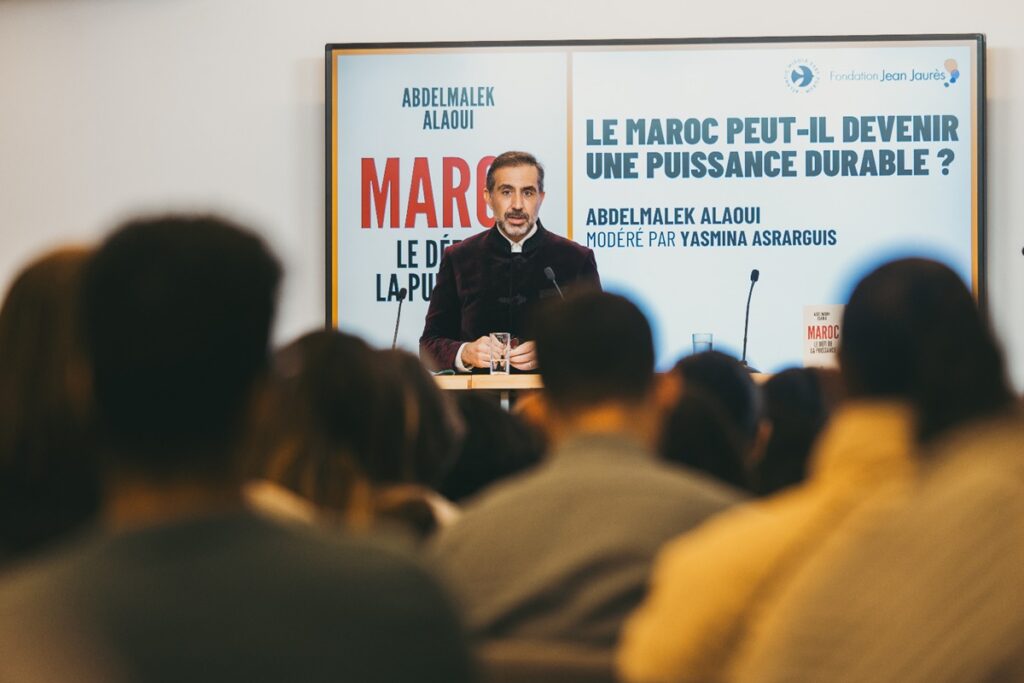
Morocco, the Challenge of Power
by Abdelmalek Alaoui
596 pages, Le Cherche Midi.
The book will be available in Morocco at the end of this week and will also be featured at SIEL, where the author will meet readers at a signing ceremony on Sunday, May 3, at 11:30 a.m. at the Sochepress stand.
à lire aussi

Article : Au-delà du bilan Akhannouch, lecture des indicateurs du marché du travail
Sous le gouvernement Akhannouch, le marché de l’emploi reste le principal point de fragilité de l’économie. Ce problème est ancien mais s’aggrave au fil du temps. Médias24 confronte les engagements du gouvernement à ses réalisations et analyse, au-delà du mandat, plusieurs indicateurs du marché du travail sur une longue période.
Article : Secteur minier. Après une année 2025 record, 2026 s'annonce déjà comme un cru très prometteur
2025 restera comme un millésime d'exception pour les mines marocaines. Cours au plus haut, volumes en hausse, nouveaux projets en maturation... Le secteur profite pleinement d'un cycle mondial porteur. Et 2026 s'annonce tout aussi favorable, sous l'effet de plusieurs signes.

Article : Ordre des experts-comptables. Élections sur fond de réflexion sur l’ouverture du capital
Le 21 mai 2026, les experts-comptables élisent les membres du Conseil national et des conseils régionaux de leur Ordre pour les trois prochaines années. Au-delà de ce renouvellement, la profession réfléchit à faire évoluer son cadre, notamment sur la question de l’ouverture du capital des cabinets. Détails.
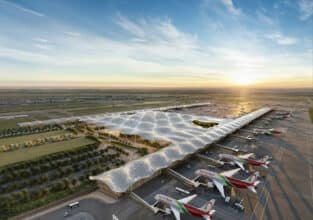
Article : Le trafic aérien en hausse de 11,15% à fin mars 2026
L'Office national des aéroports (ONDA) a annoncé que le trafic aérien commercial dans les aéroports du Royaume a enregistré 8.913.041 passagers à fin mars 2026, soit une croissance de 11,15% par rapport à la même période de l'année précédente.
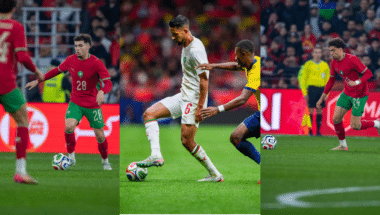
Article : Mondial 2026. Le double pivot, pierre angulaire du projet Ouahbi
Les deux milieux de terrain devant la défense constituent l’élément central du dispositif tactique du sélectionneur national. Un principe qui assure l’équilibre des Lions de l’Atlas, conditionne la récupération du ballon et la première phase de construction. Mais qui n’est pas sans risque.
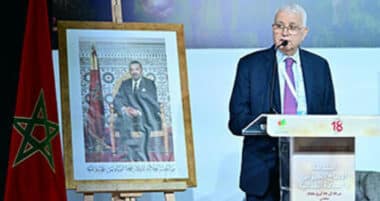
Article : SIAM 2026 : malgré un taux de couverture de 60%, 450 communes rurales restent exclues des services financiers selon Bank Al-Maghrib
À Meknès, le directeur général de Bank Al-Maghrib, Abderrahim Bouazza a indiqué que 450 communes rurales restent sans services financiers malgré une couverture de 60%. Il a aussi annoncé l’équipement de 50 coopératives en TPE et rappelé que 25% des programmes d’éducation financière ont ciblé le monde rural.