
Private 5G. How factories, ports and hospitals could be transformed in Morocco
Remote-controlled robots, factories able to transmit data in real time, smoother port operations, safer mines, connected stadiums for tens of thousands of spectators… In Morocco, private 5G is no longer a theoretical concept. In an interview with Médias24, Ouassim El Arroussi, Director of Studies and Development at Inwi, takes us behind the scenes of the country’s first industrial deployment of the technology and explains why it could open up a new strategic market for the Kingdom. A deep dive.
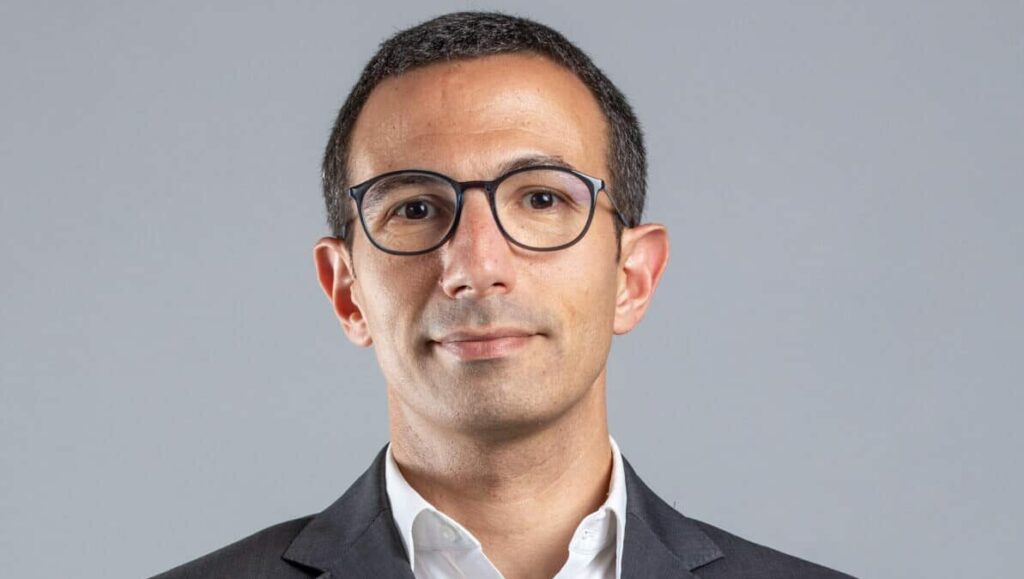
Inwi announced on February 7, 2026, a partnership with China Mobile International to deploy the first private industrial 5G network in Morocco.
The operator will be responsible for the design, deployment and operation of this infrastructure, intended for a “major industrial client of its partner in the region.”
Unlike public 5G, industrial or private 5G is deployed with resources fully dedicated to a single client
- Médias24: Before going into the details of the project, could you explain what an industrial 5G network actually is? It may seem obvious, but it is worth clarifying for a broader audience.
- Ouassim El Arroussi, Director of Studies and Development at Inwi: Indeed. “Industrial 5G” or “private 5G” is essentially the same as the 5G we use every day, but deployed with resources entirely dedicated to a single company.
If we take the example of the factory for which we are designing this industrial 5G network, Inwi, as the operator, will deploy a complete infrastructure including both radio and core components. All resources are dedicated to that client, ensuring maximum performance in terms of throughput and latency.
When remotely operating a machine or robot in a factory, latency must be close to zero. At the same time, defects must be minimized and precision maximized.
Dedicated resources — not shared with the public or other companies — optimize performance, particularly in terms of latency, enabling the deployment of sensitive and critical use cases.
Private 5G can be deployed across multiple sectors, notably industry and Industry 4.0, as well as ports, airports and large-scale logistics platforms. It also has applications in healthcare, particularly across large university hospital campuses or for remote surgical procedures.
The use cases we have developed with our clients — first with 4G and now with 5G, especially private 5G — include remote control of automated industrial production lines. In practice, a production chain can be monitored and adjusted remotely, either by human operators or via AI. This makes it possible to control each stage of the production process in real time, instantly collect data, and improve decision-making, whether human or AI-assisted.
- Private or industrial 5G therefore means greater responsiveness and significantly lower latency.
Absolutely. And above all, greater precision in execution. In simple terms, it means providing industrial or logistics players with dedicated resources that guarantee both performance and cybersecurity.
In most cases, although not systematically, we are approached for isolated deployments. Whether with clients we have already worked with or those currently in discussions, the most mature use cases in Morocco today involve environments where companies do not want to connect their private network to the internet or other networks. They prefer fully isolated, dedicated systems reserved exclusively for their machines and equipment. In such cases, the network is effectively shielded from external cyberattacks.
This is complemented by the introduction of industrial artificial intelligence. Today, robots are programmed to perform specific tasks. Tomorrow, the objective is to enable them to execute these tasks optimally. Factories will therefore operate in the most efficient way possible, depending on daily productivity targets or external factors such as market conditions or weather.
Private 5G provides the data required to integrate industrial AI into automation and control systems.
Investment costs vary depending on project size, with shared intangible expertise
- Does this technology require significant investment?
It depends on the scale of the project. For a factory, we are talking about a few dozen hectares, unlike mining sites, which can be much larger and therefore more costly.
What we deploy today are private networks, meaning dedicated investments. However, part of the resources is still shared.
- Such as?
Today, we offer a “design, build and run” approach. We design, deploy and operate the network on behalf of the client, with the same standards as a public network. This requires specific expertise and dedicated human resources to ensure optimal response times.
Beyond the technical dimension, it also involves leveraging an intangible asset: our expertise. The economic value for companies lies in relying on capabilities developed by operators over several years.
- Let’s return to the project. Inwi recently announced a partnership with China Mobile International to deploy the first private industrial 5G network for a client whose identity has not been disclosed. Can you tell us more about the scope and objectives?
The project concerns an industrial player recently established in Morocco, for whom access to private 5G infrastructure was a key factor in its location decision. The goal is to develop a “factory 4.0”, integrating automation and real-time data flows, with future AI applications.
This client works globally with China Mobile International on such deployments. As China Mobile is not an operator in Morocco, it relies on local partners. In this case, it acts as project management advisor, applying a global set of requirements to its partners. Inwi was selected following a technical evaluation.
In practical terms, China Mobile International is our direct client and oversees the project on behalf of the industrial company. We were assessed across all phases — design, deployment, and especially operations and maintenance — as we commit to service levels and network resilience.
This project is a showcase, but its real significance lies in execution
- What stage has the project reached?
We are currently preparing equipment ahead of deployment.
- Is this a one-off showcase or the beginning of a structured market?
It is indeed a showcase, but once implemented, it could unlock further projects. We are seeing a dynamic similar to cloud computing: widely discussed for years, but requiring concrete deployments to take off.
Today, private 5G has a viable business model. Some industrial players have identified clear use cases to automate operations, improve productivity and reduce failure-related costs. These projects act as catalysts for broader adoption.
- So Inwi is the first operator in this segment?
Factually, Inwi has delivered the first use case, but it will benefit the entire ecosystem.
We are somewhat of a pioneer in this field, but the benefits will extend to all operators and sectors — industry, logistics, healthcare — as adoption accelerates.
Ports, airports, mining and logistics among priority sectors for private 5G
- Which sectors are most likely to adopt private 5G?
Mining, industry and logistics are leading sectors, primarily because of their maturity internationally. Mining operators already integrate IoT and “smart mining” approaches. This enables greater automation of production and more precise adjustment of volumes and timing based on market conditions.
It is also a sector with high physical risk, where automation can significantly improve safety. Even without full automation, there are already use cases for worker protection in underground environments, which become even more relevant with 5G due to real-time requirements.
More broadly, industry is naturally well suited to these applications.
Logistics is another key sector, particularly ports and airports, where real-time visibility, congestion management and operational efficiency are critical.
Morocco can position itself as a regional hub for private 5G
- Can Morocco become a regional hub in this field?
Clearly. In terms of expertise, both operators and solution providers will develop capabilities that can be exported across the region.
- So the key is to take the first step?
Exactly. The transition must be made from theoretical business cases to real-world deployment.
This first step reassures the market and accelerates the shift from study phases to planning and execution.
Private 5G builds on an already robust telecom infrastructure. It is not a standalone revolution, but an additional layer strengthening an existing, mature digital ecosystem.

à lire aussi

Article : Mondial 2030 : Le Grand Stade de Marrakech entame bientôt sa mise à niveau à 883 millions de DH
L’Agence nationale des équipements publics (ANEP) vient de lancer l'appel d'offres pour la transformation du Grand Stade de Marrakech, avec une enveloppe de 883 millions de dirhams.

Article : “Parler de data centers verts reste une ambition, plus qu’une réalité absolue” (Sebastien Riez)
Les data centers sont devenus l'infrastructure nerveuse de l'économie numérique et le Maroc entend en faire un levier de rayonnement régional. Mais ces équipements énergivores s'implantent dans un pays sous tension hydrique et dépendant d'un mix électrique encore largement carboné. Sébastien Riez, directeur Afrique & Levant de Schneider Electric, explique où en est le secteur dans cette équation complexe.

Article : Attaques terroristes au Mali : le Maroc réaffirme sa solidarité “constante” avec Bamako
Devant le Conseil de paix et de sécurité de l’Union africaine, le Maroc a réaffirmé sa solidarité constante avec le Mali, condamnant fermement les attaques terroristes et séparatistes ayant visé des zones civiles et militaires.

Article : Revue des FAR. Inondations de Ksar El Kébir et de la plaine du Gharb, récit d’une mobilisation historique de notre armée
Face aux intempéries exceptionnelles qui ont frappé le nord-ouest du Royaume début 2026, les Forces armées royales (FAR) avaient déployé un dispositif d’urgence d’une envergure rare. De Ksar El Kébir à la plaine du Gharb, les unités de génie, la Marine royale et l’Intendance ont conjugué leurs efforts pour secourir les populations sinistrées, illustrant une fois de plus leur rôle central dans la gestion des catastrophes naturelles.

Article : Cash Plus lance le virement bancaire instantané sur son application mobile
Cash Plus lance le virement bancaire instantané sur son application Cash Plus Mobile. Ce nouveau service permet aux utilisateurs d’envoyer et de recevoir de l’argent en temps réel, 24h/24 et 7j/7, vers toutes les banques marocaines.
Article : CMT. Ayrad Group franchit plusieurs seuils et se positionne pour le contrôle du groupe minier marocain
À la faveur du rachat d’OSEAD Fund, le holding porte indirectement sa participation à 37,04 % du capital via OSEAD Maroc Mining, selon une déclaration publiée le 27 avril par l’AMMC.