

Giulio Boccaletti
Chief strategy officer at The Nature ConservancyClimate Constitutionalism
LONDON – In January, the Netherlands hosted a digital Climate Adaptation Summit where representatives of governments from around the world discussed their post-pandemic recovery plans. To take advantage of remarkably cheap public finance, many emphasized state-directed investments in green infrastructure to promote climate adaptation and stimulate the economy.
Given the increasing evidence that unavoidable shifts in the climate system are already underway, this focus on adaptation should be applauded. But the constitutional implications of increased state interventionism should not be underestimated. Any time a state promises to wield power on a society-wide scale – in this case, to climate-proof the entire economy – the sources and scope of its legitimacy will be hotly debated. In many countries’ courts, they already are. In 2015, Urgenda, a nongovernmental organization, sued the Dutch government on the grounds that it had failed to protect the Dutch people from the heightened risk that climate change poses to low-lying countries. The implication was that a failure to meet national emissions-reduction targets constitutes evidence of state negligence. In 2019, the Supreme Court in The Hague agreed; ruling in Urgenda’s favor, it compelled the state to pursue larger emissions cuts. Though the Urgenda case was initially framed as an application of tort law, it ultimately hinged on the obligations of the Dutch state under the European Convention on Human Rights. And because the focus shifted to risks experienced by the entire population, it became a constitutional issue. The Supreme Court’s decision cast the effects of climate change (projected by the science) as an infringement on human rights, and thus ruled that the state has a duty to act. Presumably, the same duty that applies to climate mitigation (emissions cuts) will also apply to investments in adaptation. Nonetheless, systematic climate adaptation implies a transformation of the physical landscape on a scale that is certain to provoke pushback. In the early twentieth century, the human population tripled with the shift from rural, agricultural societies to urban consumer economies. As a result, expectations changed. A wealthier, enfranchised population could no longer tolerate risks (namely, floods and droughts) that previously had been an accepted part of life. When the Great Depression arrived, governments responded with infrastructure-led modernization programs designed to control an unruly environment and prevent it from threatening economic growth and stability. The proliferation of dams, embankments, and canals amounted to an extraordinary display of sovereignty. The essence of this technocratic crusade against economic insecurity was similar to what some would like to see in the state’s response to climate change today. In the United States, the Tennessee Valley Authority became the archetype of state-led modernization. Wielding extraordinary executive power as a federally owned corporation, the TVA could expropriate land in the name of the public interest and command substantial federal resources. Yet despite its success in transforming one of the poorest regions of the US, the TVA faced such strong opposition from those who saw it as federal overreach that no project of its kind has been replicated in the US. Indeed, the response to the TVA sowed the seeds of an anti-infrastructure, anti-dam movement that swept the world in the second half of the twentieth century. Without a shared understanding of where individual rights end and collective responsibility begins, any systematic transformation of the landscape will be an uphill battle, whatever the intent. Climate-adaption projects cannot become a staple of public policy if they are merely technocratic in nature. Rather, they must embody a new contract between the state and its citizens. There must be a constitutional arrangement that defines the risks a society is willing to endure, and that sets a threshold for taking collective action against intolerable threats. Because modern constitutionalism developed alongside smallpox and yellow fever crises, public health offers a helpful analogy for how such arrangements arise. In its 1905 decision in Jacobson v. Massachusetts, the US Supreme Court ruled that a community’s right to protect itself against a deadly epidemic allowed it to take action against individuals who refused to be vaccinated against smallpox – including by legislating compulsory inoculation. In most democracies since then, a century of judicial review has produced a large body of constitutional doctrines conferring legitimacy on state policies to manage public health. These prerogatives have been on full display during the COVID-19 pandemic: government-ordered lockdowns have curtailed individual freedoms in ways that rarely happen without trial. Citizens have largely accepted these interventions not just because of past jurisprudence, but because of all the social and political history that the legal system has metabolized to get to where it is today. We are the beneficiaries of decades of debate on the importance of public health; of large bodies of epidemiological data, which have won the confidence of both courts and politicians; and of huge investments in a complex web of institutions – government agencies, universities, regulators – that have built trust over time. These and other factors have helped citizens converge on a set of principles making public health a top collective priority. Humanity has now reached the critical juncture where climate change is acquiring normative value. The evidence justifying concerted state action continues to grow. But while climate adaptation is as urgent and salient an imperative as public health, it has yet to gain the same level of broad-based acceptance. For climate policy to become more than a technocratic project, governments will need to invest not just in infrastructure and land-use changes, but also in intellectual capital, regulatory institutions, research, and education. Now is the time to drive public engagement in the debates that will define the boundaries between individual rights and collective responsibility in the era of climate change. Insofar as limits on the exercise of state power are the bedrock of modern constitutionalism, the societal embrace of climate adaptation represents a significant constitutional moment. Giulio Boccaletti, an honorary research associate at the Smith School of Enterprise and Environment, University of Oxford, has been a climate scientist at Princeton University and MIT, a partner at McKinsey & Company, and the chief strategy officer of The Nature Conservancy. He is the author of Water: A Biography.
© Project Syndicate 1995–2021
à lire aussi
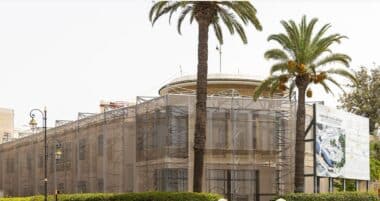
Article : Le musée du continent africain devrait ouvrir à la fin de 2027 (Mehdi Qotbi)
Porté par la Fondation nationale des musées (FNMM), le futur musée du Continent africain a franchi une étape décisive. Après avoir révélé que les travaux de gros œuvre ont dépassé 85 %, le président Mehdi Qotbi nous annonce que le plus grand complexe muséal d'Afrique entre dans sa phase finale avant une ouverture au public lors du dernier trimestre 2027.

Article : Le jardinier marocain de Jany Le Pen expulsé vers le Maroc pour séjour irrégulier
Selon une information révélée par Le Parisien, Hatim B., un Marocain de 32 ans qui effectuait des travaux de jardinage chez Jany Le Pen, veuve de Jean-Marie Le Pen, a été expulsé jeudi 23 avril vers le Maroc. En situation irrégulière en France depuis 2017, il faisait l’objet d’une mesure d’éloignement décidée par le préfet des Hauts-de-Seine.

Article : Maghreb : une visite américaine dans un contexte de pression croissante sur l’Algérie
Annoncée par le département d’État, la tournée de Christopher Landau, du 27 avril au 1er mai, intervient dans un contexte marqué par l’implication croissante de Washington dans le suivi du dossier du Sahara et de ses prolongements onusiens.

Article : Ordre des experts-comptables : le scrutin s’annonce serré (liste)
Le scrutin du 21 mai pour le renouvellement du Conseil national de l’Ordre des experts-comptables met en concurrence 41 candidats pour 11 sièges. Parmi eux, se dégagent des profils issus de grands cabinets internationaux, comme EY, Deloitte, Mazars, BDO, KPMG ou Grant Thornton, des figures expérimentées déjà présentes dans les instances de l’Ordre et des profils plus récents, illustrant les équilibres internes de la profession.

Article : Protection des femmes victimes de violence : lancement officiel de la cellule centrale à Rabat
À Rabat, le ministère de la Solidarité a lancé la cellule centrale de prise en charge des femmes victimes de violence, chargée de renforcer la coordination institutionnelle, de superviser les structures territoriales et d'améliorer l’accompagnement juridique, psychologique et social des victimes.

Article : Bourse de Casablanca : le MASI chute de 1,69%, les volumes grimpent à 667 MDH
La Bourse de Casablanca a clôturé la séance du 24 avril 2026 en baisse, avec un MASI en recul de 1,69% à 18.815,18 points. Les échanges ont atteint 667,11 MDH, dominés par Managem, Minière Touissit et Attijariwafa bank.