
Agriculture After the Pandemic
PRETORIA – As the COVID-19 pandemic forces countries to close their borders, their agricultural sectors are confronting major challenges. Even in countries that are unlikely to face food insecurity – such as those in Europe and North America – farms are facing severe labor shortages, owing to new barriers that keep low-cost workers out. And the impact of the disruption on the supply of workers is likely to spur permanent shifts within the sector after the pandemic ends.
The risks inherent in depending on foreign seasonal workers have materialized in several European countries, including France, Germany, Italy, and the Netherlands, which depend on labor from Eastern Europe. Between border closures and fears of sickness and quarantine, those workers are not coming this season, and many Western European crops are set to rot in the fields.
In parts of the United States, fears about agricultural-labor shortages were mounting even before the COVID-19 crisis. Americans do not want to work in the fields, so farmers depend largely on seasonal Mexican migrant workers. Participants in the H-2A visa program – covering those who have been hired to fill agriculture jobs lasting less than one year – comprise 10% of all farmworkers in the US.
Yet the cost and complexity of the H-2A program has long amounted to a significant barrier for migrant workers. With the COVID-19 pandemic, that challenge has been compounded. Although US consular officers may now waive the visa interview for first-time applicants and returning workers, H-2A processing has slowed considerably. Add to that new health and safety burdens for employers, who must uphold social-distancing protocols not only at work, but also in the housing and transport they provide to H-2A workers, and agricultural productivity is set to decline significantly.
After this experience, it seems unlikely that farmers will return to business as usual. Instead, many will probably attempt to mitigate the risks stemming from dependence on foreign seasonal workers by automating more of their operations.
To be sure, automation requires considerable up-front investment, and some jobs (such as harvesting fruits and vegetables) are more difficult to automate than others. But technologies like drones, autonomous tractors, seeding robots, and robotic harvesters imply a dramatic reduction in farmers’ reliance on migrant labor.
If large agricultural producers in advanced economies take these steps, their peers in developing countries may follow suit, even in places without labor shortages. For example, South Africa has a large supply of unskilled, often unemployed workers well suited to farm work. (It does, however, face skilled-labor shortages.)
With the entire food supply chain having been classified as “essential” during the COVID-19 lockdown, agricultural activities have continued uninterrupted. Even before the COVID-19 crisis, South Africa’s 2012 National Development Plan (NDP) had set the target of increasing employment in agriculture and agricultural processing by roughly a million by 2030, including through the promotion of labor-intensive subsectors and an increase in farmland.
So far, such efforts have led to the expansion of crops like citrus fruit, macadamia nuts, apples, table grapes, avocados, and soybeans. Employment in primary agriculture grew from 718,000 in the last quarter of 2012 to 885,000 in the last quarter of 2019 – a 23% increase.
But, after the pandemic, technological diffusion is also likely to accelerate, not because of domestic market conditions, but because of the need to compete in global markets with advanced-country producers that do embrace automation. In fact, the NDP also aims to increase agricultural investment in irrigation, boost productivity, and expand export markets – all objectives that could enable, or necessitate, greater automation.
The same goes for the increase in agricultural land. South Africa has plenty of space to do so, especially in the former homelands and underperforming land-reform farms. The provinces of KwaZulu-Natal, the Eastern Cape, and Limpopo collectively have 1.6-1.8 million hectares of underused arable land, according to a 2015 study by McKinsey Global Institute. Automation could be built into the process of developing this land for agriculture.
More broadly, during the post-COVID-19 recovery phase, policymakers and industry in all countries with large-scale agriculture will have to pay close attention to trends in automation. As for workers, while agricultural jobs in countries like South Africa are likely to remain plentiful, those who depend on seasonal jobs in the advanced economies should prepare for even more uncertainty ahead.
à lire aussi

Article : Brief Médias24. L'analyse de l'attaque terroriste visant Bamako le 25 avril 2026
Le Mali a été frappé, le 25 avril 2026, par une offensive d’une ampleur exceptionnelle, visant jusqu’aux abords du pouvoir à Bamako. À travers ce “brief”, nouveau format d’analyse de Médias24, nous revenons sur les faits, les enjeux et les zones d’ombre d’une attaque qui pourrait marquer un tournant dans la crise malienne. Ou pas.

Article : En Tanzanie, le sifflet marocain à l'honneur pour le choc Simba SC-Young Africans
Reconnaissant l'expertise marocaine à l'échelle continentale, la Fédération tanzanienne de football a sollicité l'appui de la FRMF pour assurer l’arbitrage de son choc national.
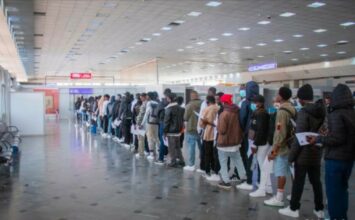
Article : Migration irrégulière : 113 ressortissants guinéens rapatriés du Maroc
Les autorités guinéennes, en partenariat avec l’Organisation internationale pour les migrations, ont organisé le retour de 113 migrants depuis le Maroc, dont 29 femmes et 14 enfants.

Article : Washington Hilton. Ce que l’on sait de l’assaut contre le gala de la presse où se trouvait Donald Trump
Dans la soirée du samedi 25 avril 2026, le prestigieux gala annuel des correspondants de la Maison-Blanche, qui se tenait dans la grande salle de bal du Washington Hilton, a basculé dans le chaos. Alors que le gratin du journalisme, de la politique et des célébrités s’apprêtait à dîner en présence du président Donald Trump, des coups de feu ont retenti, déclenchant une évacuation d'urgence et une traque immédiate au cœur de l'hôtel.
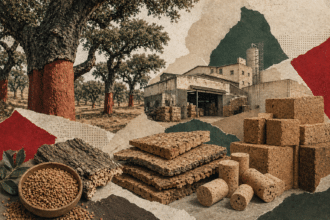
Article : ETRUR Maroc. Lourde sanction contre le dirigeant après la chute de l'industriel du liège
Jugée à Rabat le 23 avril 2026, l’affaire ETRUR Maroc met en jeu une procédure de comblement du passif aux conséquences patrimoniales majeures pour son dirigeant, à la suite de la liquidation prononcée l’été dernier.

Article : قطاع التعمير: المصادقة على تصميمين جديدين للتهيئة بأكادير
.صادقت وزارة إعداد التراب الوطني والتعمير والإسكان وسياسة المدينة مؤخراً على تصميمَي تهيئة يخصّان منطقة أكادير الشمال والقطب الحضري الصحي،الرياضي والحضري